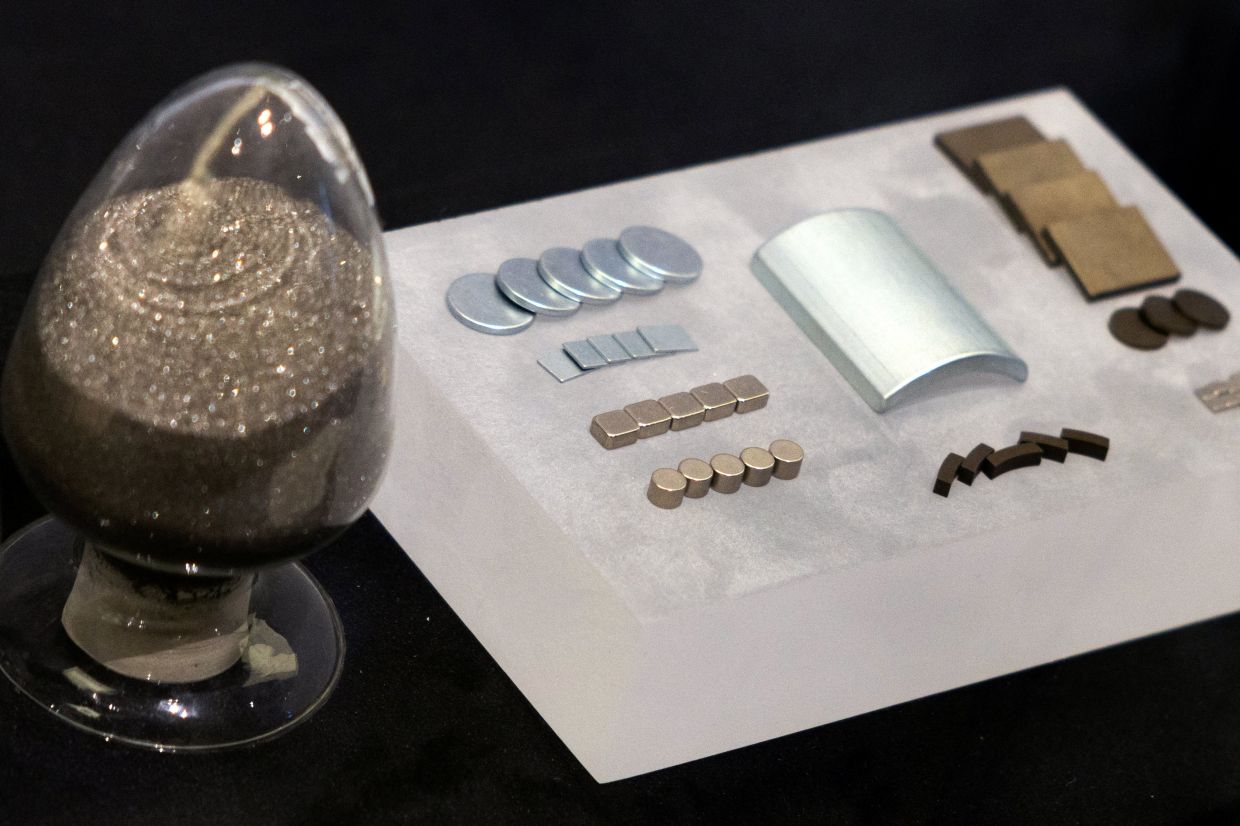
China is deepening its scientific engagement with Iran through a newly expanded programme focused on rare earth exploration and processing, signalling Beijing's intent to secure alternative sources of these strategically vital materials beyond its own borders. The initiative represents a significant broadening of an existing research partnership between the two nations' scientific foundations and arrives at a moment of intense geopolitical competition for control of critical minerals that underpin modern military and technological systems.
The collaboration operates through joint workshop funding mechanisms, with the Chinese National Natural Science Foundation (NSFC) committing 30,000 yuan—approximately US$4,200—to support each workshop. These funds cover the logistical costs of scientific exchange, including venue expenses, accommodation for participating researchers, and domestic travel arrangements. To facilitate the participation of Iranian scientists and visiting Chinese specialists, the Iranian National Science Foundation takes responsibility for international travel costs and lodging arrangements when Chinese researchers visit Iranian institutions. This shared investment model reflects a structured approach to building sustained research collaboration across borders.
The timing of this partnership expansion carries particular significance given the contemporary context of strategic competition over critical materials. Rare earths represent a group of 17 metallic elements possessing distinctive magnetic and electronic characteristics that make them indispensable in advanced military applications. Modern weapons systems—including precision-guided missiles, fighter aircraft, sophisticated radar installations, and associated electronic components—all depend fundamentally on rare earth materials for their functionality and performance. The control and supply of these resources has thus become intertwined with national security considerations across multiple major powers.
The United States has recently taken aggressive steps to counter Chinese dominance in the rare earth supply chain. The Trump administration announced US$3 billion in strategic investments directed towards developing domestic critical mineral and battery manufacturing capacity, explicitly designed to replenish military equipment stockpiles while reducing American dependence on Chinese suppliers. This government intervention underscores the militarily sensitive nature of rare earth access and reflects Washington's assessment that supply vulnerabilities in this sector pose genuine national security risks.
China's current position in the global rare earth market is singularly dominant. The country possesses the world's largest verified reserves of these materials and controls the vast majority of global extraction and refining capacity. Beyond its natural advantages, Beijing has progressively restricted the export of rare earth processing technologies to other nations, creating a bottleneck that gives China outsized influence over international supply chains. When former president Donald Trump initiated trade tensions with China last year, Beijing responded by implementing export controls on rare earths that reverberated through American manufacturing sectors, demonstrating the leverage that dominance in these materials provides.
Iran's rare earth endowment, by contrast, remains substantially under-explored and incompletely understood, though geological indicators suggest potentially valuable deposits lie within the country's borders. The nation's subsurface geology features iron ore and phosphate-bearing formations that experts consider geologically favourable for harbouring rare earth concentrations. A February assessment conducted by the Hague Research Institute identified rare earth anomalies distributed across approximately 7,000 square kilometres of Iran's central regions, suggesting the presence of mineable deposits. However, the current state of Iranian capability remains rudimentary; the country has not yet developed extraction and processing facilities operating at industrial scale, meaning development of these resources would require substantial technological transfer and infrastructure investment.
The framework for Sino-Iranian scientific cooperation predates the current rare earth focus by several years. In 2017, the two nations' scientific foundations signed a memorandum of understanding in Beijing establishing the institutional foundation for long-term research partnership. Within this broader agreement, the NSFC characterised Iran as holding particular importance within China's Belt and Road Initiative framework—language that emphasises geopolitical dimensions alongside scientific objectives. The signing of the 2017 memorandum was framed as serving mutual development interests while advancing scientific collaboration.
Since that initial commitment, the bilateral research partnership has expanded considerably in scope and ambition. Joint research initiatives now span multiple scientific disciplines and applied fields, encompassing theoretical mathematics and biological sciences at one end of the spectrum through to clinical medicine, renewable energy technologies, advanced materials development, climate change science, and cutting-edge artificial intelligence research. This diversified portfolio demonstrates that while rare earth materials represent a new and strategically significant focus, the broader partnership encompasses diverse areas of mutual scientific interest.
The joint workshop programme itself is a relatively recent initiative, having been established in 2024 as a mechanism for funding collaborative research and researcher exchange. The original 2024 iteration allocated 150,000 yuan per workshop and initially concentrated on four thematic areas: climate change responses, artificial intelligence applications, advanced materials science, and advanced manufacturing techniques. The expansion announced this year substantially broadens the scope of eligible research topics while maintaining the competitive funding model.
Beyond rare earth exploration and processing, the expanded 2024 call for proposals encompasses several other technologically significant domains. These include development of nano-scale materials applicable to disease detection and medical diagnostics, technologies for environmental pollution monitoring, engineering approaches to constructing earthquake-resistant infrastructure, and manufacturing processes designed to reduce environmental impact and improve sustainability. The breadth of this portfolio suggests that the rare earth initiative, while strategically important, forms part of a more comprehensive scientific engagement strategy rather than representing the sole focus of bilateral cooperation.
For Malaysia and other Southeast Asian nations, this Sino-Iranian partnership carries implications across multiple dimensions. The development of alternative rare earth sources outside of China's direct control could gradually reduce global dependence on Chinese supply chains, potentially stabilising prices and access for regional manufacturers and defence industries. Conversely, Chinese scientific engagement in Iran through these channels represents an element of Beijing's broader strategy to expand geopolitical influence and secure strategic resources, a pattern that has manifested across Southeast Asia through similar science and technology cooperation agreements. The parallel American investment in critical minerals development and military industrial capacity building suggests the region will experience increasing great-power competition for access to rare earths and other critical materials, with potential implications for regional supply chains and technology partnerships.

