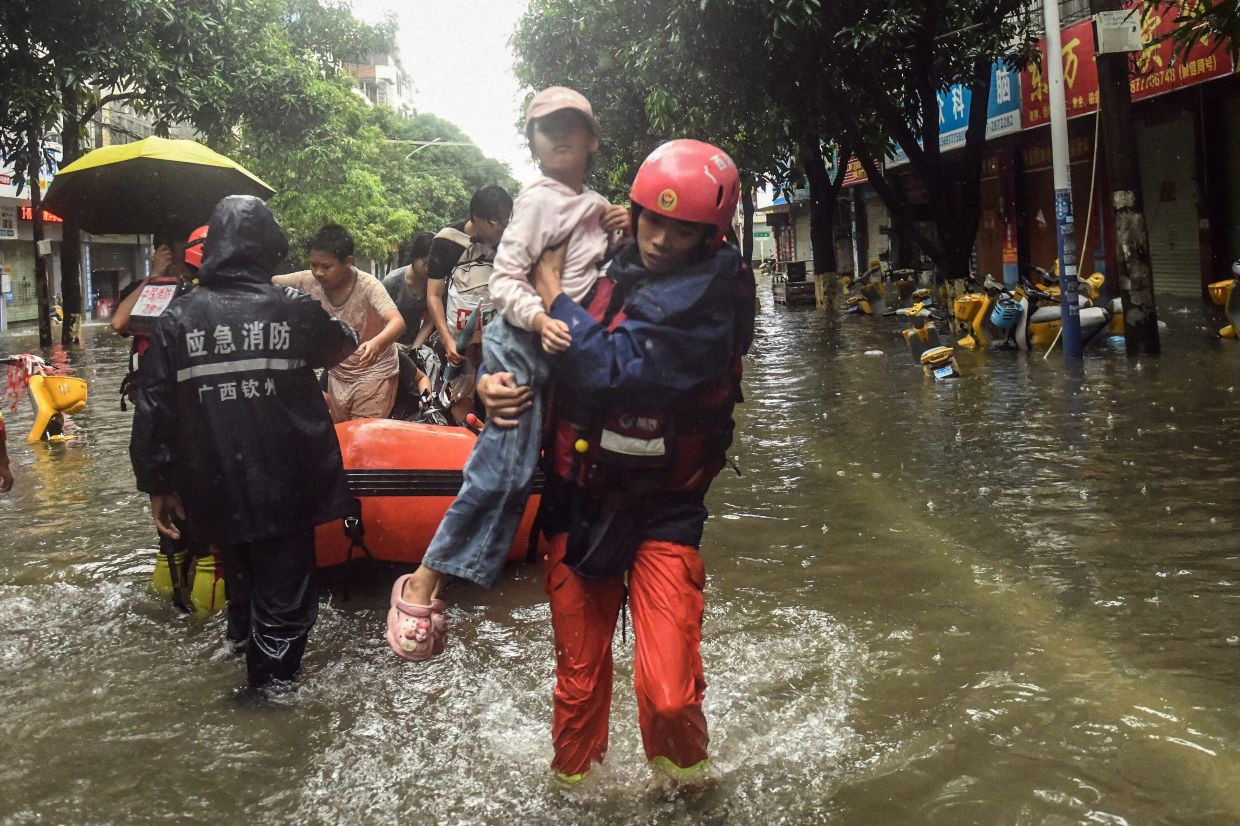
China's emergency services confronted a mounting humanitarian crisis mid-July as a succession of catastrophic weather events claimed dozens of lives and displaced tens of thousands of residents across the country. The deadliest impacts centred on Guangxi in the south, where six fatalities and the displacement of at least 100,000 people resulted from torrential downpours spawned by Typhoon Maysak, whilst concurrent storms in Hubei claimed another 11 lives and a separate landslide in Gansu province killed 21 more. Officials warned that conditions would deteriorate further, with heavy rainfall expected to persist across southern regions throughout the week, compounding the already severe challenges confronting rescue and relief operations.
The scope of destruction in Guangxi was particularly alarming, with floodwaters breaching the banks of 40 separate rivers and waterways across the region. Agricultural devastation was widespread, with nearly 13,000 acres of farmland submerged or destroyed. Most dramatically, a reservoir dam burst under the weight of accumulated runoff, creating a spectacle of destruction captured by state television showing torrents of murky water pouring through collapsed concrete sections whilst rescue personnel in life vests navigated inflatable boats through the deluge. This infrastructure failure exemplified the enormous hydraulic pressures generated by the sustained heavy rainfall, raising fresh concerns about the structural integrity of other dams and embankments throughout the affected zone.
The Ministry of Water Resources issued ominous forecasts for continued deterioration. Officials projected that the Wuzhou Hydrological Station would experience flood peaks exceeding safe warning thresholds by more than six metres by early Thursday, adding to mounting apprehension about further dam failures and embankment ruptures. Water Resources Minister Li Guoying emphasised that the combination of relentless rainfall and sustained high water levels posed an unprecedented test to the structural resilience of reservoirs and defence systems across the disaster zone. His remarks underscored the genuine anxiety within China's technical establishment regarding the capacity of existing infrastructure to withstand the magnitude and duration of the inundation.
Government response mobilised rapidly across multiple fronts. The State Flood Control and Drought Relief Headquarters maintained the second-highest emergency alert level for Guangxi, signalling the gravity with which authorities treated the unfolding crisis. Logistical support operations commenced to deliver essential supplies including food rations, protective rain gear and rescue equipment to isolated communities. President Xi Jinping instructed rescue teams to mobilise all available resources and personnel to conduct comprehensive search and recovery operations, reflecting leadership concern about both the immediate humanitarian toll and the political implications of perceived sluggish official response. Such high-level involvement typically accelerates resource allocation and coordination among provincial and central government agencies.
The concurrent disaster in Hubei province demonstrated the geographic breadth of the meteorological disturbance. Thunderstorms combined with damaging winds to produce 11 fatalities and leave 331 people injured across the province. Structural damage was severe, with nearly 5,000 residences suffering damage or destruction. A single missing person was reported, suggesting that search operations remained incomplete. The diversity of hazards—flash flooding, wind damage, and secondary structural collapses—complicated rescue coordination and created overlapping demands on emergency medical and rescue resources.
Far to the northwest, Gansu province grappled with a distinct but equally devastating natural catastrophe. A landslide that struck Rencang village in Dangchang County at approximately 6:56 am on Tuesday claimed 21 lives following initial reports suggesting 33 people had been buried. Rescue teams completed search operations at the site, though investigators continued examining causative factors behind the mass ground failure. The confirmed death toll of 21 represented a sobering outcome for rescue personnel who mobilised with urgency to the remote location. Local authorities moved swiftly to establish financial recovery mechanisms, allocating 30 million yuan (approximately US$4.4 million) in reconstruction funding to support affected communities and begin infrastructure rehabilitation.
These cascading disasters reflected a seasonal pattern characteristic of China's geography and climate dynamics. Summer months routinely produce intense precipitation in certain regions whilst others experience severe drought and extreme heat, generating a range of secondary hazards including flooding, landslides, and infrastructure failures. The concentration of multiple major disasters within days highlighted the vulnerability of densely populated regions to compound meteorological events, a situation likely to intensify as climate variability increases across eastern Asia. For policymakers across the region, including Malaysian counterparts managing their own flood-prone territories, the scale and rapidity of China's crisis offered sobering lessons regarding disaster preparedness infrastructure investment and community evacuation protocols.
The implications of these events extended beyond immediate casualty figures and displaced populations. Infrastructure damage, supply chain disruptions, and agricultural losses across multiple provinces would generate secondary economic effects rippling through provincial and national economies. Insurance claims would strain both private and public resources, whilst reconstruction efforts would absorb governmental attention and budgetary capacity for months ahead. Additionally, the concentration of disasters across such a large geographic area strained China's emergency response apparatus and demonstrated that even well-resourced national systems face capacity constraints when facing simultaneous major incidents.
Regional cooperation mechanisms also warranted consideration, as typhoons and major weather systems respect no borders. The impact of Typhoon Maysak resonated across Southeast Asian territories as well, providing impetus for enhanced cross-border early warning systems and coordinated emergency response frameworks. Malaysia and other neighbours faced similar seasonal vulnerabilities to extreme weather, flooding, and landslides, making China's experience directly relevant to regional disaster management strategies and infrastructure planning priorities.

