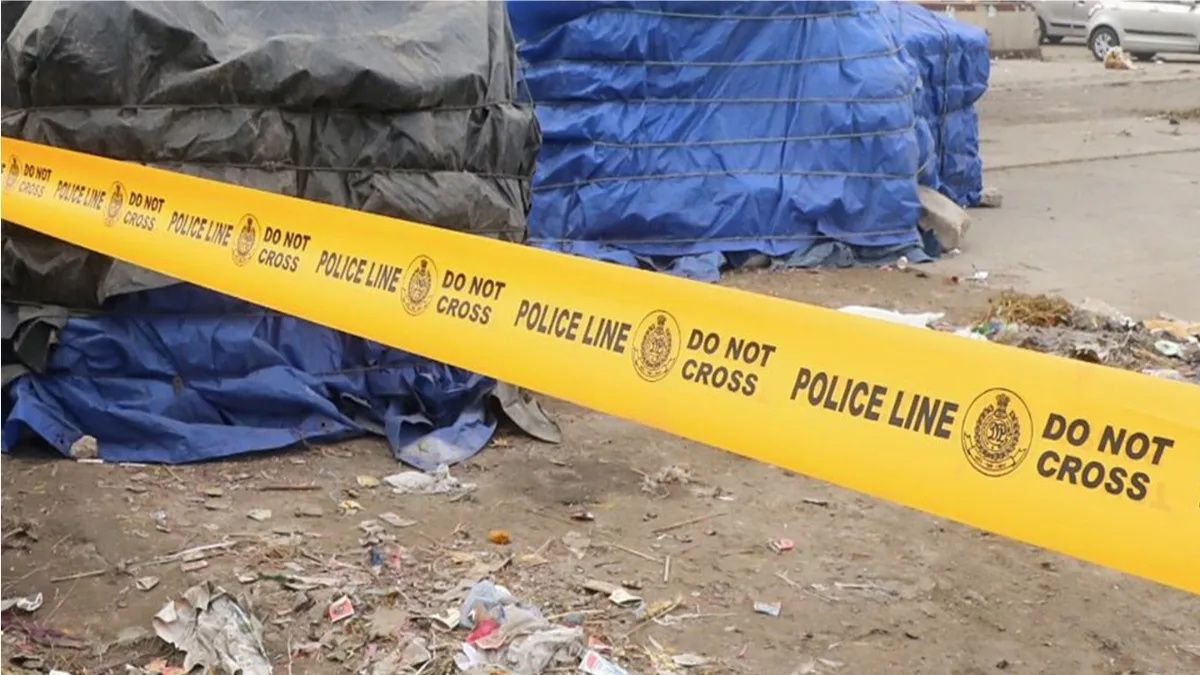
A 12-year-old girl's alleged gang rape and murder in Baruipur, South 24 Parganas district of West Bengal, ignited a firestorm of community anger that spiralled into mob violence, traffic disruptions and the suspected lynching of a local youth on Sunday, July 5. The discovery of the child's body, recovered from a pond near her home at Suryapur, set off a chain of events that exposed both the severity of the crime and the volatile emotions it unleashed among residents demanding swift justice in a region already sensitive to violent crimes against children.
According to the victim's family, the girl had ventured out on Saturday evening to purchase food from a shop within walking distance of her residence. She never returned, prompting a frantic overnight search that ended tragically when villagers spotted her body wrapped in a sack floating in the adjacent pond the following morning. The family has stated that four individuals forcibly abducted the child, though police investigations would later focus on a smaller group of suspects. The discovery transformed a missing child case into a full-scale emergency, with the community rapidly mobilizing to confront what many viewed as a failure of local law enforcement to protect vulnerable residents.
News of the recovery spread swiftly through Suryapur, drawing hundreds of distraught and furious villagers to the pond. For several hours, residents refused to permit police personnel to remove the body, effectively seizing control of the crime scene and using their blockade as leverage to demand immediate arrests. This act of defiance reflected deep-seated mistrust in institutional mechanisms, a pattern increasingly visible across rural and semi-urban India where communities feel abandoned by inadequate policing and delayed justice systems. The standoff highlighted how grassroots desperation can overwhelm procedural norms when citizens believe formal institutions are failing them.
The protests escalated dramatically as word spread. Villagers constructed multiple barriers across the main roads in the area and occupied the railway tracks at Suryapur station on the Sealdah-Namkhana section, services that connect this region to Kolkata and beyond. For nearly five hours, the area was effectively sealed off—vehicles were torched, property was damaged, and both train and vehicular traffic came to a halt. The rail blockade disrupted normal operations for approximately one hour before police intervention allowed services to resume, though tensions remained high. Such disruptions carry significant consequences for the regional economy and inconvenience thousands of commuters, yet they remain a common protest tactic when communities feel unheard through conventional channels.
As anger boiled over, vigilante justice emerged. A local youth who residents believed to be involved in the crime, allegedly spotted in the company of some suspects, became the target of mob retribution. According to witnesses and police accounts, the young man was beaten to death by the assembled crowd. Police attempted to rescue him but encountered fierce resistance, with protesters hurling stones and vandalising police vehicles. The situation devolved into a confrontation between law enforcement and an enraged community, with several police personnel sustaining injuries, including one officer who required nursing home treatment. This secondary act of violence—the apparent lynching—reflects how grief and outrage can metastasize into extrajudicial killings that undermine both justice and civil order.
Police investigations subsequently led to the formal arrest of two individuals connected to the case, while a third suspect was apprehended by local residents and transferred to official custody. The identity and details of these three men remain subject to ongoing investigation, with police examining their precise roles in the crime. Authorities have committed to pursuing the strongest possible charges, though the involvement of the lynched youth in the actual crime remains unconfirmed, raising troubling questions about whether the mob's victim was genuinely culpable or an unfortunate casualty of collective violence.
Inspector General of Police Kankar Prasad Barui arrived at the scene to assess the situation and appeal for calm. Speaking through a public address system, Barui pledged that no perpetrator would escape accountability and assured residents that the post-mortem examination would proceed with proper legal oversight at the earliest opportunity. His assurances, while intended to restore public confidence, carried the weight of institutional pressure to demonstrate responsive governance in a context where perceived indifference fuels further unrest. The messaging aimed to convince angry villagers that official channels would deliver justice, even as parallel investigations examined the mob's own violent actions.
West Bengal's Chief Minister Suvendu Adhikari intervened at the political level, telephoning the victim's father to express condolences and pledge maximum legal consequences for those responsible. The Chief Minister extended an invitation for the bereaved parent to meet at Nabanna, the state secretariat in Kolkata, on Tuesday to discuss the case and coordinate assistance. This high-level engagement signals political recognition of the severity of the incident and attempts to channel community demands through official mechanisms rather than allowing them to fester as unresolved grievances that might trigger further violence.
By Sunday afternoon, police had negotiated an end to the road and rail blockades, restoring circulation to the area and resuming normal train schedules. The girl's remains were transferred to Baruipur Sub-Divisional Hospital for the post-mortem examination, a procedure essential for establishing cause of death and gathering forensic evidence. Security was substantially reinforced across the district to prevent recurrences of communal violence, while investigations proceeded on multiple fronts—identifying all perpetrators of the rape and murder, examining police conduct during the protests, and investigating the mob's actions in the lynching.
The case underscores the persistent vulnerability of children in rural and semi-urban West Bengal, where crime prevention mechanisms often prove inadequate and community desperation frequently overrides legal restraint. For Southeast Asian readers, particularly those in Malaysia, such incidents abroad serve as important reminders that child safety remains a critical challenge across the region, requiring sustained investment in police capacity, victim support systems, and community trust in institutions. The scenario also illuminates how institutional weakness—whether in investigation, prevention, or response—can catalyse cycles of vigilantism that ultimately compromise both justice and social stability, outcomes that demand not just punishment of perpetrators but comprehensive reform of child protection infrastructure.

