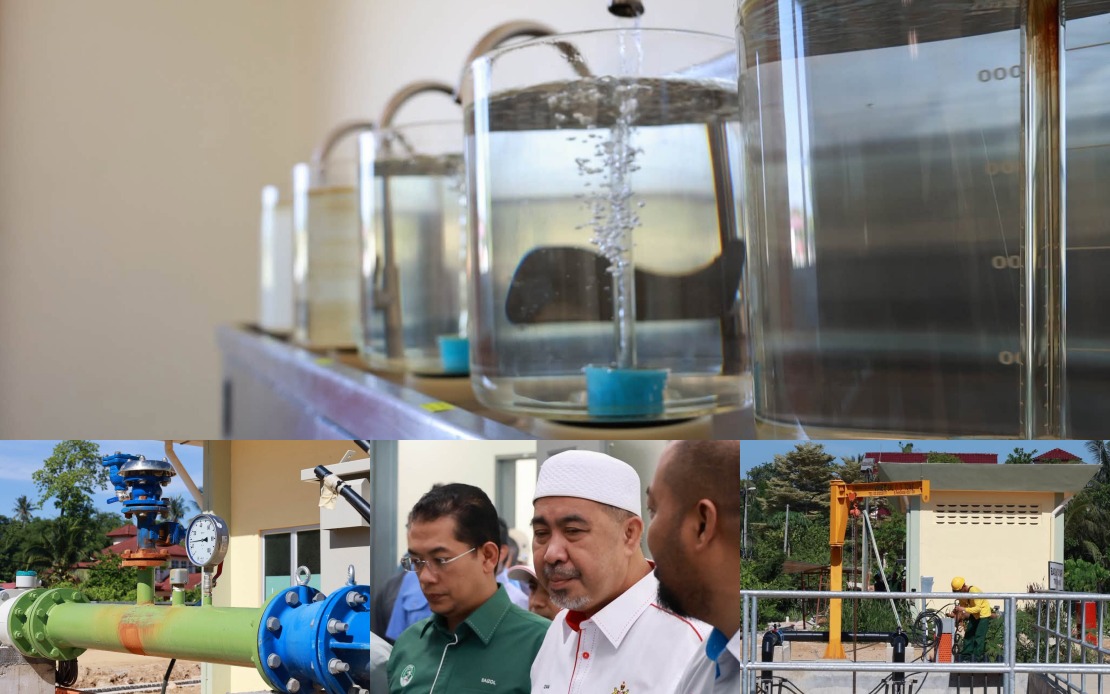
The Chicha 2 Water Treatment Plant in Pasir Hor, near Kota Bharu, is on track to begin serving Kelantan's water-stressed communities by September, marking a significant milestone in the state's efforts to address chronic water supply challenges. The RM54.98 million facility has reached 97 per cent completion and will ultimately benefit more than 13,000 consumers across the surrounding localities, according to Datuk Dr Izani Husin, chairman of Kelantan's Public Works, Infrastructure, Water and Rural Development Committee. The project, which broke ground in 2024, represents part of a broader regional strategy to modernise water infrastructure in a state where supply reliability has long plagued residents and businesses alike.
With a treatment capacity of 20 million litres per day, the Chicha 2 facility will distribute treated water throughout Pasir Hor, Telipot, Kota Seribong, Mulong and Tunjong. This coverage area encompasses communities that have historically struggled with inadequate or intermittent water access, making the plant's completion particularly significant for household and small commercial consumers who have faced substantial service disruptions. The strategic geographic placement of the facility allows for efficient distribution across multiple administrative zones, reducing the need for extensive pipeline extensions and thereby lowering operational costs that would otherwise be passed to end-users.
What distinguishes Chicha 2 from existing treatment infrastructure is its groundwater extraction and aeration technology. The 1.84-hectare facility taps into deep aquifer reserves through a 100-metre excavation process, avoiding surface water sources that may be contaminated or subject to seasonal depletion. An integrated aeration system then purifies the extracted water, producing high-quality treated output suitable for domestic consumption. Dr Izani highlighted that this aeration methodology represents the first deployment of such technology within Kelantan, and its success could pave the way for similar installations at other treatment plants throughout the state, potentially transforming how the region approaches water purification.
Beyond immediate supply expansion, the Chicha 2 plant is expected to reactivate approximately 10,000 inactive consumer accounts in the service area. These dormant connections—representing households and businesses that disconnected or were disconnected due to inadequate service—represent untapped revenue potential and reveal the scale of historical dissatisfaction with water provision. Reconnecting these consumers will inject fresh income into the water utility's operating budget while simultaneously expanding the customer base, creating a virtuous cycle that strengthens financial sustainability and improves capacity for future infrastructure investments. For residents, reconnection means restored access to piped water without the expense and inconvenience of sourcing water through alternative methods.
Kelantan's chronic water supply deficit stems from ageing infrastructure that predates current demand levels. The state currently loses more than 50 per cent of treated water through non-revenue water—leakage from deteriorating pipes, underground burst mains, and defective metering equipment. This astronomical loss rate places Kelantan among Malaysia's worst performers in water distribution efficiency and substantially inflates per-unit costs for the utility operator. The Chicha 2 project, while important, represents only one component of a comprehensive remediation strategy that extends well beyond 2024. State authorities have committed to resolving Kelantan's water supply crisis by 2030 through a phased implementation of multiple major infrastructure initiatives and the construction of additional treatment plants, suggesting a recognition that no single facility can address decades of underinvestment.
The phased approach acknowledged by Dr Izani reflects both the financial constraints of state budgets and the technical complexity of retrofitting water systems across sprawling rural and semi-urban territories. Rather than attempting to achieve full resolution simultaneously—which would require astronomical capital expenditure and create construction-related disruptions across entire regions—authorities are prioritising projects that deliver measurable improvements while minimising community impact. The Chicha 2 plant exemplifies this incremental strategy: it addresses a specific geographic area, leverages indigenous water resources, and employs proven technology adapted locally, all while leaving room for subsequent projects to build upon its foundation.
The utility's emphasis on reducing non-revenue water through pipe replacement and meter repairs demonstrates an understanding that infrastructure rehabilitation must accompany capacity expansion. New treatment plants serve limited purpose if a substantial portion of their output vanishes into the ground before reaching consumers. Kelantan's authorities are therefore pursuing a dual-track reform: increasing supply through new facilities while simultaneously minimising losses through network upgrades. This comprehensive approach, though resource-intensive, offers the only sustainable path to resolving water security across the state.
For Malaysian water utilities observing from other regions, Kelantan's experience offers both cautionary and instructive lessons. The state's prolonged struggle with water access reflects what can occur when infrastructure investment lags behind population growth and agricultural demand—a risk that other developing states face. Conversely, the methodical pivot toward groundwater extraction, aeration technology, and infrastructure rehabilitation demonstrates that solutions exist and are commercially deployable. The successful completion of Chicha 2 will provide case study data on the operational efficiency and cost-effectiveness of aeration-based treatment, potentially influencing technology selections at utilities throughout Southeast Asia.
The September operational commencement of Chicha 2 also carries implications for Kelantan's broader development trajectory. Reliable water supply constitutes a prerequisite for industrial expansion, agricultural modernisation, and residential growth. Communities that have endured water insecurity often experience depressed property values, limited business establishment, and outmigration to areas with more predictable utilities. As the Chicha 2 facility comes online and contributes to improved service reliability, the state may expect gradual revitalisation in affected localities, including renewed business investment and stabilised population retention. This economic stimulus, though difficult to quantify in near-term metrics, represents perhaps the most significant long-term benefit of the project.
Dr Izani's call for public patience as the state pursues staged resolution of water challenges acknowledges public frustration accumulated over years of inadequate service. Residents and business operators have borne genuine hardship through water rationing, boil-water advisories, and supply interruptions, creating legitimate grievances against both current and previous administrations. The Chicha 2 project, visible and tangible, offers concrete evidence that authorities are addressing systemic problems. The facility's scheduled September debut will serve as a measurable progress marker and a demonstration that ambitious infrastructure commitments can reach completion, potentially rebuilding confidence in governmental capacity to deliver on similar pledges.
As Kelantan navigates the decade to 2030, success will depend not merely on completing treatment plants but on sustaining the political will and financial commitment required to see through network rehabilitation across hundreds of kilometres of piping. The Chicha 2 facility represents the easy part—constructing new infrastructure with modern technology. The harder work lies ahead: replacing leaking pipes in congested areas, upgrading metering systems, managing demand-side conservation, and maintaining operational discipline over years of sometimes unglamorous maintenance. The state's trajectory on water security over the next half-decade will reveal whether the current momentum can persist and translate infrastructure completions into actual service improvements felt daily by households.

