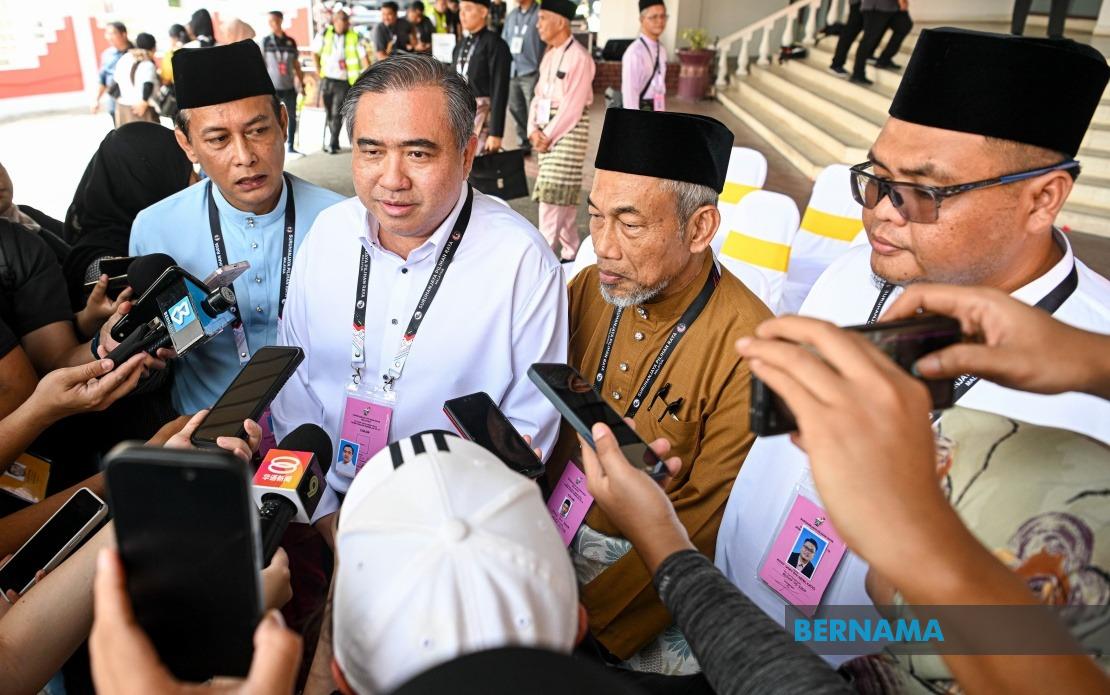
Transport Minister Anthony Loke has underscored the strategic importance of the Chennah state seat to Pakatan Harapan's electoral prospects in Negeri Sembilan, positioning it as one of four pivotal constituencies within the Jelebu parliamentary constituency that will determine whether the coalition can retain state government after two terms in office.
Speaking in Jelebu following the completion of nomination proceedings at Dewan Besar Kuala Klawang, Loke articulated confidence in PH's ability to secure another mandate based on the governing coalition's track record since assuming power in 2018. The Transport Minister's emphasis on specific seats reflects the razor-thin majorities that often characterise Malaysian state politics, where a handful of constituencies can determine overall control of a state legislature.
The Chennah contest will unfold as a direct two-candidate race between Loke, the incumbent, and Siow Kong Choon, the Barisan Nasional candidate formally announced by returning officer Abdul Rahim A Aziz during the nomination process. This head-to-head matchup in a traditionally competitive constituency carries disproportionate weight within the broader Negeri Sembilan contest, signalling that both major political coalitions view this seat as a bellwether for their respective performance across the state.
Loke's references to the 2018 state election carry particular resonance for understanding the mathematical realities of Negeri Sembilan politics. In that earlier contest, the Chennah and Kelawang state seats proved instrumental in enabling PH to form a governing coalition, demonstrating how individual constituencies can be decisive in states with relatively modest numbers of assembly seats. For a coalition seeking to retain power, losing even a single seat from its previous base becomes strategically problematic, particularly when the majority margin remains tight.
The emphasis on development and service delivery articulated by Loke reflects a campaign strategy increasingly centred on PH's performance in government rather than opposition-focused messaging. By highlighting two consecutive terms in office and framing the incumbent administration's work in concrete terms—progress and stability—the Transport Minister appeals to voters on the basis of proven capability rather than promises or alternative visions. This represents a tactical shift common among governing coalitions seeking re-election in Malaysian state contests.
Negeri Sembilan's political trajectory over recent years has been characterised by competitive and sometimes volatile electoral outcomes. The state's relatively small number of assembly seats means that demographic shifts, dissatisfaction with specific policies, or localised grievances can produce outsized electoral consequences. Jelebu, as a parliamentary constituency containing multiple state seats, functions as a microcosm of these broader state-level dynamics, making it essential terrain for any coalition harbouring realistic ambitions to govern.
The straight fight configuration in Chennah potentially advantages the incumbent candidate, as PH's organisational machinery and ministerial resources can be concentrated without the distraction of multi-cornered contests. However, BN's historical strength in rural Negeri Sembilan constituencies and its continued appeal to conservative voters in traditional communities could provide Siow Kong Choon with structural advantages that offset any incumbent protection effect. The outcome in Chennah will substantially indicate whether PH has successfully consolidated its 2018 breakthrough or whether the state is reverting to historical BN dominance.
For Malaysian observers monitoring state-level politics, the Negeri Sembilan election represents a significant mid-term test of PH's electoral viability after the federal coalition's 2023 electoral disappointment. A state government retention would signal that PH retains electoral strength in peninsular Malaysia outside of urban centres and younger demographic strongholds. Conversely, losses in states like Negeri Sembilan could accelerate perceptions of PH's waning political influence, potentially reshaping calculations about the 2028 general election landscape.
The Transport Ministry portfolio held by Loke provides him with both opportunities and constraints as an incumbent candidate. Infrastructure development and transportation initiatives funded through federal resources can benefit constituencies substantially, creating tangible evidence of government performance that resonates with voters concerned about local amenities and development priorities. However, ministerial responsibilities also restrict personal campaign availability and can invite criticism if national-level policy decisions prove unpopular locally.
For Negeri Sembilan voters, particularly those in Jelebu and the Chennah seat specifically, the contest represents a fundamental choice about political direction and governance priorities. The stakes extend beyond state-level administration to questions about federal coalition configuration, as performance in state contests influences internal political dynamics within larger coalitions and shapes perceptions about which partners carry electoral weight. The Chennah race thus embodies broader questions about Malaysia's political trajectory that resonate far beyond Negeri Sembilan's borders.
Chennah's status as a critical battleground reflects the peculiar mathematics of Malaysian electoral politics, where state governments often rest on narrow majorities vulnerable to even modest swings in voter preference. For both PH and BN, securing constituencies like Chennah becomes an exercise in consolidating existing support while persuading persuadable voters that their coalition represents preferable governance alternatives. The straight fight format ensures that the contest will pivot fundamentally on the relative appeal of these two candidates and the coalitions they represent to the constituency's electorate.

