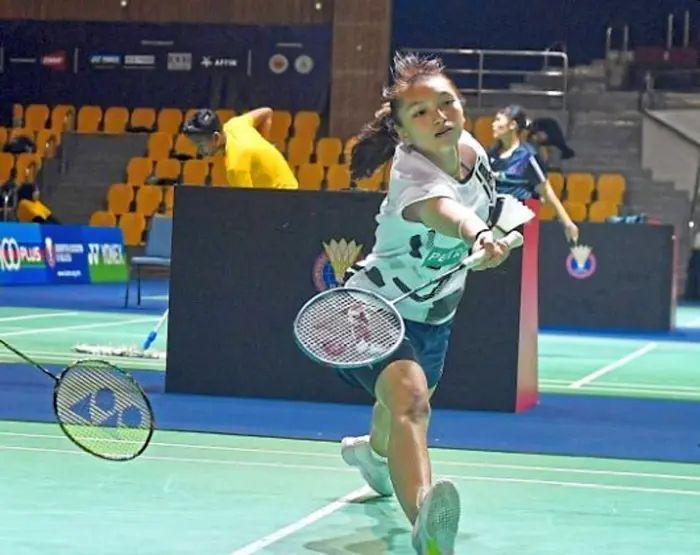
Mixed doubles coach Nova Widianto has identified character building as the missing ingredient that will separate rising shuttler Noraqilah Maisarah Ramdan from merely talented players to truly elite competitors. While the 19-year-old's technical prowess across multiple disciplines is undeniable, Nova's coaching philosophy extends far beyond the court, addressing the psychological and emotional challenges that derail many promising young athletes as they accumulate success and public recognition.
Noraqilah has demonstrated impressive range by competing effectively in both women's doubles and mixed doubles, a versatility that catches the eye of observers and coaches alike. Her recent performance at the second leg of the Under-21 National Championship in Kuantan, where she and scratch partner Ong Xin Yee captured the women's doubles title, exemplifies her adaptability and tactical acumen. The win underscores her ability to integrate quickly with different partners and adjust her playing style accordingly—a valuable asset in the modern badminton landscape where flexibility often matters as much as technical mastery.
Her partnership with Low Zi Yu has yielded even more impressive results on the international stage. The pair recently reached the quarter-finals at the Australian Open, a significant achievement that propelled their world ranking to a career-high No. 70, demonstrating that Noraqilah's abilities transcend domestic competition. In mixed doubles, she has paired with Loo Bing Kun to reach the second round in Sydney, where they currently occupy world No. 115, further validating her range across different formats of the game.
Nova's coaching observations, however, reveal a deeper understanding of what separates sustained excellence from a brief flash of brilliance. Having watched Noraqilah develop from childhood, he witnessed firsthand the emergence of an athlete with exceptional raw talent. Yet he recognizes that in a competitive sport like badminton, where Malaysia has traditionally produced world-class talent, technical skill alone provides insufficient foundation for reaching the highest echelons. The influx of praise and attention that accompanies early success poses a genuine psychological hazard, one that can destabilize a young player's focus and undermine the discipline required for continuous improvement.
The coaching team's deliberate approach to managing Noraqilah's progression reflects a maturity in Malaysian badminton development. Rather than accelerating her career trajectory through exposure and tournament scheduling, they prioritize stabilization of her mental and emotional responses to both success and inevitable setbacks. This philosophy acknowledges that the Malaysian badminton ecosystem, while rich in talented players, sometimes struggles to convert potential into sustained performance because developmental systems neglect the psychological dimension of elite sport.
Nova's observation about Malaysia possessing numerous talented players with considerable ability encapsulates a national reality. The country's badminton tradition has generated multiple world champions and Olympic medalists, yet the pipeline from junior to senior excellence remains leaky, with many promising players plateauing or declining unexpectedly. This pattern suggests that talent identification and technical training, while necessary, prove insufficient without corresponding investment in character development and mental resilience.
Regarding Noraqilah's future specialization, Nova indicates that while competing across multiple disciplines currently benefits her development as a young player, ambitious goals demand eventual focus. The Olympics represent badminton's pinnacle, and the demands of that competition require concentrated preparation in a single discipline. The strategic insight here reflects how elite badminton has evolved: the technical and physical demands of competing at championship level in mixed doubles or women's doubles exceed what any player can sustainably manage while splitting training, recovery, and tactical focus between both.
Nova's stance on allowing youth to explore multiple formats before specialization aligns with developmental science principles that emphasize broad athletic foundations during formative years. The varied demands of different doubles formats expose young players to diverse tactical scenarios, movement patterns, and partner dynamics. However, the transition from exploration to specialization represents a critical juncture where character becomes paramount. The maturity to commit fully to one discipline, to accept the limitations that focus imposes, and to persist through the inevitable plateaus that follow requires precisely the kind of psychological strength Nova emphasizes.
For Malaysian badminton stakeholders, Noraqilah's trajectory offers a case study in how coaching philosophy shapes long-term athlete development. Her potential to become a top-ranked shuttler depends not on a single brilliant performance but on sustained improvement across years. The competitive environment at the international level has intensified dramatically, with players from China, South Korea, Thailand, and Indonesia producing technically superior and more physically resilient competitors. In that context, the mental and emotional resilience that Nova advocates becomes not a luxury but a necessity for Malaysian players aiming to compete consistently at the world's highest tier.
The challenge ahead for Nova and the Malaysian coaching structure involves maintaining this balanced developmental approach while navigating the pressures to deliver immediate competitive results. Young athletes like Noraqilah benefit from patient nurturing, yet national federations and sponsors increasingly demand visible progress and medal-winning performances. This tension between development time and competitive expectation will determine whether Noraqilah fulfills her potential or becomes another talented player whose promise never fully crystallized into sustained achievement.

