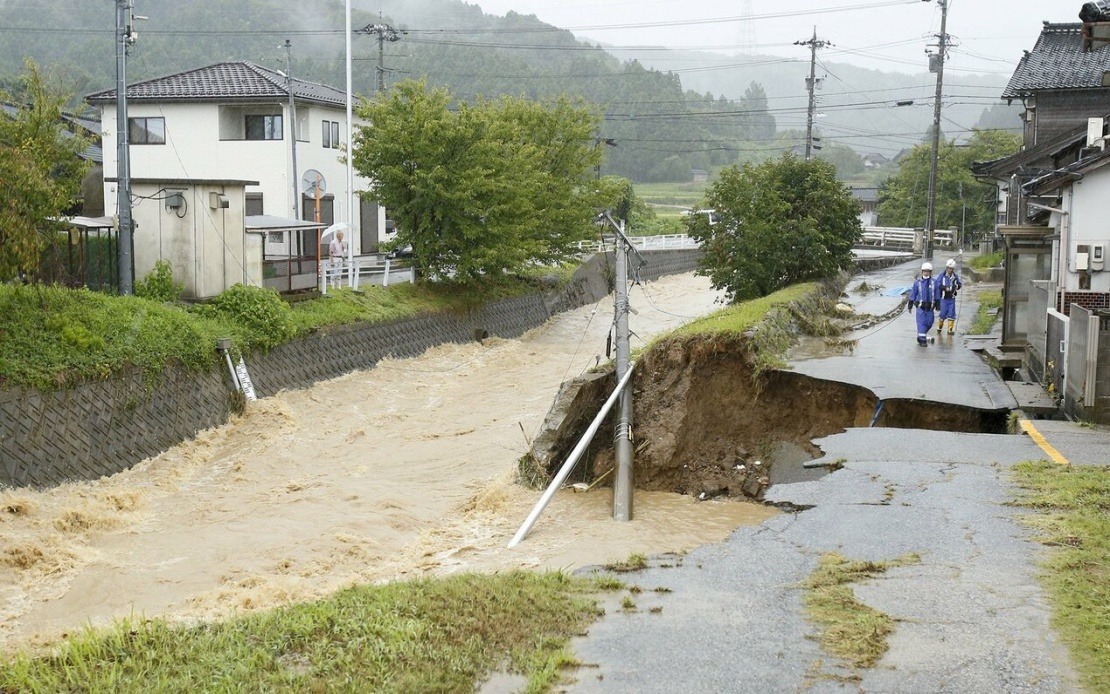
Central Japan confronted a natural disaster unfolding in real time on Thursday as heavy rain pounded the region, triggering widespread flooding, landslides, and numerous incidents of submerged vehicles stranded on inundated roads. Authorities in the affected areas scrambled to coordinate emergency responses, with reports streaming in of motorists trapped by rising water levels and urgent appeals for rescue assistance emanating from multiple locations across the stricken prefectures.
The Japan Meteorological Agency escalated its response by issuing special heavy rain warnings for portions of Ishikawa and Toyama prefectures, underscoring the exceptional nature of the meteorological threat. Officials cascade communications down to residents emphasizing the gravity of the situation and calling for immediate protective action to shield lives from the mounting hazard.
The agency deployed its most serious alert classification, designating Level 5 status—its maximum intensity—across several municipalities. This designation signals that catastrophic conditions have either already materialised or are virtually certain to materialise imminently. Five municipalities across the two prefectures received this classification: Himi in Toyama Prefecture, and Hakui, Shika, Hodatsushimizu, and Nakanoto in Ishikawa Prefecture. Approximately 180,000 residents across these administrative divisions received directives to either evacuate their residences or implement immediate safety protocols.
On-the-ground accounts captured the severity of the situation. A member of Himi's local firefighting corps, speaking to Kyodo News by telephone, described how local watercourses had breached their banks, inundating the surrounding landscape and trapping multiple vehicles beneath the surging waters. Despite the chaotic circumstances, the Ishikawa prefectural government reported no confirmed fatalities as of the latest updates, though rescue operations continued throughout Thursday.
Rainfall intensity reached unprecedented levels in affected localities. During a twelve-hour window ending at 7:20 am, Himi and Hakui each recorded more than 300 millimetres of precipitation, whilst Hodatsushimizu registered accumulations exceeding 200 millimetres. These figures established fresh rainfall records at each location, reflecting the extraordinary nature of the atmospheric disturbance.
The meteorological mechanism driving this deluge involves a weather front progressing eastward from the Sea of Japan, extending across northern and eastern portions of the archipelago and anticipated to shift southward through Friday. Simultaneously, the incursion of a cold-air mass combined with a deep atmospheric low-pressure trough is destabilising conditions further, creating an environment conducive to sustained heavy precipitation and intensified convective activity.
The Japan Meteorological Agency projects continued substantial rainfall through Friday noon. The Hokuriku region faces potential accumulations reaching 200 millimetres over a twenty-four-hour period, whilst the Kanto-Koshin and Tokai regions may experience up to 150 millimetres. These forecasted totals underscore that the meteorological threat remains far from concluded, with significant additional rainfall expected before conditions stabilise.
Niigata Prefecture, sharing borders with Toyama, also fell within the path of this weather system and experienced heavy precipitation independently. The geographical distribution of the rainfall across multiple prefectures suggests this represents a substantial synoptic-scale weather event rather than a localised phenomenon.
The current episode echoes recent precedent in Japan's disaster management challenges. Earlier in August, municipalities within Chiba Prefecture—situated near Tokyo—received identical Level 5 warnings triggered by similarly intense rainfall. That event produced devastating consequences, resulting in thirteen confirmed deaths. The deluge immobilised vast numbers of vehicles, with approximately 2,500 automobiles abandoned across prefectural roads at the crisis's peak. That episode underscores the cascading risks when extreme precipitation overwhelms urban and peri-urban infrastructure designed within historical rainfall envelope assumptions.
For Malaysian and Southeast Asian observers, these events carry instructive implications. Tropical and subtropical Asian regions increasingly experience intensified precipitation events exceeding historical norms, a pattern consistent with evolving climate dynamics. Japan's sophisticated meteorological infrastructure, early warning systems, and coordinated evacuation protocols represent a developed-nation response model, yet even advanced systems face challenges when rainfall intensity transgresses previous records. Malaysia and other regional nations confronting monsoon-driven precipitation hazards face comparable challenges in infrastructure adequacy and response coordination, particularly as rainfall extremes potentially intensify. The Japanese experience demonstrates that even well-resourced nations must continuously evaluate and upgrade hazard preparedness frameworks to accommodate shifting precipitation distributions and record-breaking events.

