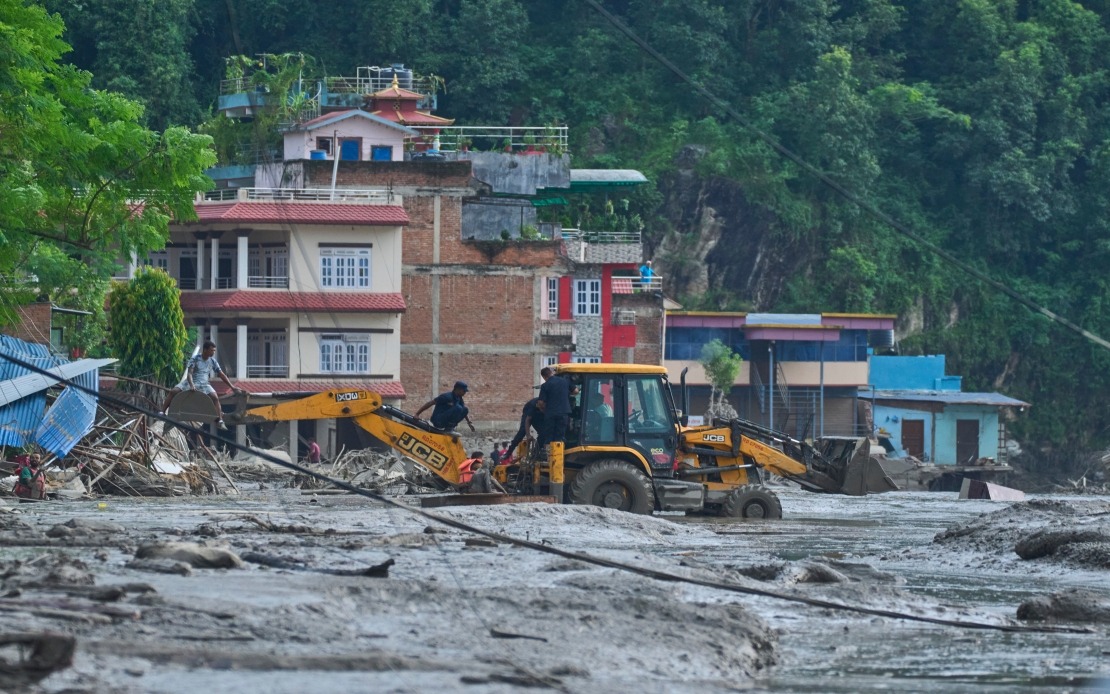
A catastrophic natural disaster unfolded along the Nepal-China border this week as torrential flash floods and destructive mudslides swept through the region, leaving behind a trail of death and destruction. The confirmed death toll has reached 160, with Nepalese police reporting 157 bodies recovered so far, whilst rescue operations have managed to save 54 individuals from the affected areas. However, the full scope of the tragedy remains unclear, as authorities on both sides of the border continue searching for more than 680 people reported missing across Nepal and China's Tibet region.
The scale of the disaster extends far beyond the immediate fatalities. Among the missing are military and civilian personnel deployed on infrastructure projects in the region. According to the Nepalese Prime Minister's Office, 44 army personnel, 28 police officers and 13 armed police personnel have vanished in the floods. Additionally, 60 civilian employees working on hydropower development projects remain unaccounted for. The missing also include a substantial number of tourists and travellers, with initial reports identifying 484 individuals unaccounted for—comprising 391 foreign nationals and 93 Nepali citizens. This sudden loss of so many people from diverse backgrounds underscores the indiscriminate nature of the disaster and raises urgent questions about safety protocols in the region.
China's state media has separately reported three confirmed deaths and 265 people missing within the Tibet region's jurisdiction, indicating that the calamity has affected areas across the border with devastating consequence. The Gyirong Port area, a crucial gateway for cross-border commerce and travel between Nepal and China, suffered a particularly severe mudslide strike. The disaster severed critical infrastructure including roads, communications networks and power supplies on the Chinese side, effectively isolating communities and complicating rescue efforts. Chinese President Xi Jinping responded swiftly by ordering comprehensive search and rescue operations, emphasizing the need to evacuate at-risk residents and provide immediate medical care to minimize further casualties.
The physical devastation across the affected zones has been monumental. Nepalese authorities have assessed that at least 19 bridges have been completely swept away by the torrential waters, whilst approximately 40 kilometres of road infrastructure has been destroyed or rendered impassable. Thirteen hydropower projects—critical components of Nepal's energy development agenda and economic infrastructure—have suffered significant damage. Foreign Minister Sishir Khanal addressed parliament on the disaster's implications, describing how the floods obliterated numerous hydropower installations, government administrative offices and transportation networks throughout the region. The hardest hit districts were Rasuwa, Dhading and Chitwan, areas that bore the full force of the water and debris flows.
The missing persons come from numerous countries, reflecting both the region's popularity as a trekking and religious pilgrimage destination and the international nature of modern labour forces. Nationals from Nepal, India, the United Kingdom, South Africa, Malaysia, Australia and the Netherlands have been reported missing, with many more identities still pending confirmation. South Korea's Foreign Ministry separately reported eight nationals unaccounted for, whilst ten South Korean citizens remain stranded in the flood-affected zones. The Rasuwagadhi area, near which the disaster struck, serves as a gateway for trekkers heading to the celebrated Langtang region, one of Nepal's premier hiking destinations. Many travellers also use this border crossing to access Mount Kailash and Lake Mansarovar in Tibet, both significant pilgrimage sites for Buddhist and Hindu devotees.
Response efforts have mobilized across both nations with considerable urgency. The Nepalese government deployed personnel from the Nepal Police, Armed Police Force and Nepal Army, equipping rescue teams with helicopters, drones and specialized rafting equipment to navigate the devastated terrain. In Kathmandu, the capital, government-run medical facilities and security agency hospitals were cleared to receive and treat the injured streaming in from the disaster zone. Chinese authorities similarly launched comprehensive rescue operations across the Xizang region, coordinating emergency response efforts with local administration in Gyirong County and Xigaze City.
Regional powers have responded to the crisis with offers of support and expressions of solidarity. Indian Prime Minister Narendra Modi confirmed that he had spoken directly with his Nepalese counterpart Balendra Shah to convey condolences and pledge India's assistance. New Delhi immediately dispatched ten tonnes of humanitarian aid, including disaster relief supplies and essential medicines, to bolster Nepal's response capacity. Indian officials also issued precautionary directives to eastern Bihar state authorities, instructing continuous monitoring of embankments and heightened vigilance across sensitive districts given the potential for cross-border hydrological impacts. These coordinated responses reflect the interconnected nature of disaster management in South Asia, where water systems and climate events do not respect political boundaries.
The disaster highlights the vulnerability of infrastructure and human life in border regions experiencing rapid development. Hydropower projects, whilst essential for meeting energy demands across the Himalayan region, can amplify flood risks by altering water flow patterns and creating reservoirs that may breach during extreme weather events. The concentration of workers on these projects in remote locations, combined with the seasonal nature of monsoon flooding in the region, creates a high-risk environment for casualties. The presence of numerous international tourists further complicates rescue operations, as linguistic and logistical barriers can hinder coordination and identification efforts. Search and rescue teams face arduous terrain, severed communications infrastructure and the challenge of operating across an international border where jurisdictional and procedural differences may slow information sharing and resource deployment.

