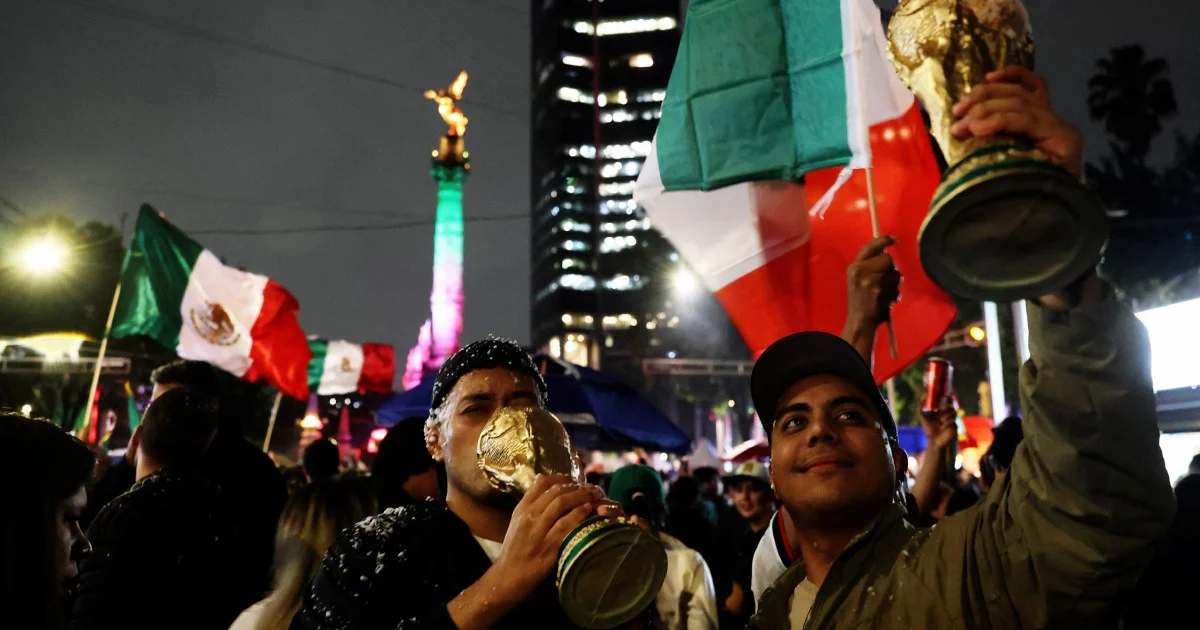
A festive atmosphere celebrating Mexico's World Cup victory turned tragic in Cabo San Lucas on Wednesday night when a black car deliberately accelerated into a crowd of supporters, leaving 17 people injured and raising serious questions about public safety during mass celebrations in the popular tourist destination. According to a statement from Los Cabos city hall, the incident occurred as fans gathered to mark their team's match result, transforming what should have been a moment of national pride into a chaotic scene of violence and injury.
Social media footage verified by Reuters captured the moments leading up to and following the collision. Videos show the vehicle surrounded by jubilant supporters wearing Mexico's national football team jerseys, with no indication of the violence about to unfold. The car then suddenly accelerated directly into the assembled crowd, propelling multiple people into the air as bodies scattered across the pavement. The vehicle subsequently struck bollards positioned along the street, bringing the collision to a halt but not before causing significant trauma and injury to those in its path.
The immediate aftermath proved equally disturbing, with eyewitness videos showing members of the crowd physically attacking the driver as they pulled him from the vehicle. These recordings depict numerous injured persons lying bloodied on the ground, though their precise conditions remained unknown at the time the footage circulated. The chaotic scene reflected both the shock and anger of bystanders confronted with the sudden violence in their midst.
Authorities moved quickly to respond, with the driver taken into custody following the incident. Los Cabos city hall's statement confirmed that all 17 people who required medical treatment—including the driver himself—received care, though specific details regarding their injuries and current conditions were not provided in the initial official communication. The arrest suggests authorities are treating the incident as a criminal matter rather than a simple traffic accident.
The incident carries significant implications for public safety protocols during major sporting celebrations throughout Mexico and the broader Latin American region. Cabo San Lucas, situated at the southern tip of the Baja California Peninsula, is one of Mexico's most prominent tourist destinations, attracting hundreds of thousands of international visitors annually. The town's popularity means large crowds frequently gather in public spaces, creating venues both for celebration and potential vulnerability.
For Malaysian and Southeast Asian readers, this event underscores a broader challenge facing urban centers worldwide—balancing the desire to allow citizens to celebrate significant national moments with the need to implement effective crowd management and security measures. Large-scale public gatherings, whether for sporting events or cultural celebrations, present organisers with complex security considerations. The incident raises questions about whether adequate barriers, police presence, and traffic management protocols were in place before the violence occurred.
The World Cup context adds another dimension to this incident. As one of the world's most widely followed sporting events, World Cup matches generate extraordinary emotional investment and draw massive crowds into public spaces. Mexico's participation in World Cup tournaments historically generates intense national celebration, with fans taking to streets throughout the country. While the vast majority of these celebrations remain peaceful, the Cabo San Lucas incident demonstrates that large gatherings also create opportunities for violence, whether intentional or reckless.
The apparent deliberate nature of the vehicle attack—evidenced by the acceleration into the crowd rather than an accidental impact—raises questions about the driver's motivation. Whether this stemmed from personal animosity, alcohol impairment, mental health issues, or other factors remains unclear from available information. However, the incident illustrates how individuals with harmful intent can weaponise vehicles to inflict mass casualties, a concern that security professionals in cities across the world have increasingly recognised and attempted to address through infrastructure modifications like bollards and street barriers.
Cabo San Lucas authorities and Mexican national authorities will likely conduct thorough investigations into both the circumstances of the attack and the adequacy of existing safety measures. Investigators will seek to establish the driver's identity, motive, and whether any premeditation occurred. Simultaneously, city administrators may review crowd management protocols and consider whether additional protective infrastructure or policing strategies should be implemented during future large public gatherings.
The incident may also prompt broader conversations within Mexico's tourism and sports sectors about balancing celebratory freedom with security necessity. Destination cities, tourism boards, and event organisers face constant pressure to welcome crowds and foster vibrant public life, yet simultaneously bear responsibility for visitor and resident safety. The Cabo San Lucas incident represents the darker possibility when those competing interests intersect.
As investigations continue, the focus will remain on the injured parties and ensuring they receive appropriate medical care and support. The 17 individuals affected by the incident will likely serve as a sobering reminder of how celebrations, however joyous their origin, can be upended by violence in seconds. For Mexico's football community and the nation's supporters, the incident may cast a temporary shadow over what should have been an unambiguously positive World Cup moment.

