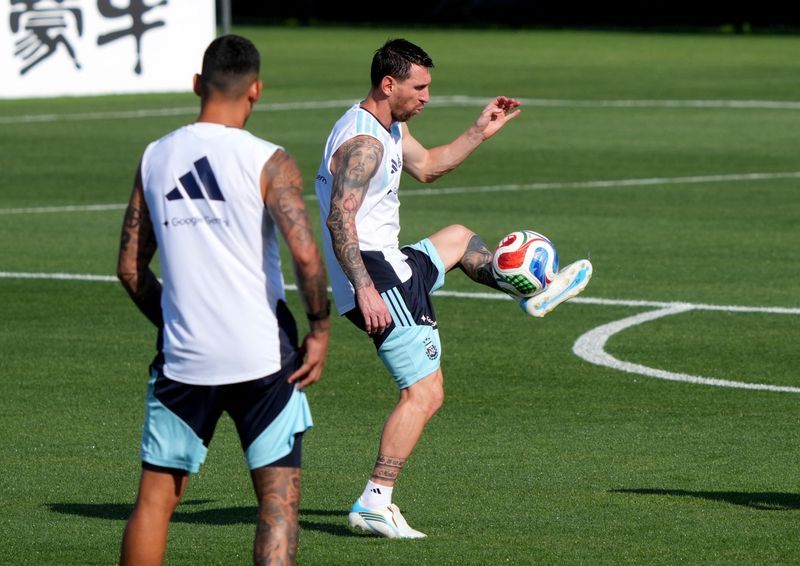
Cape Verde enters their World Cup knockout match against Argentina on Friday as overwhelming underdogs, yet the African nation approaches the fixture with remarkable self-assurance. Having already surprised observers by advancing from the group stage, the islanders now prepare to face the tournament favourites and their superstar Lionel Messi, a prospect their coaching staff embraces rather than dreads.
The Cape Verdean fairytale gained momentum through an extraordinary group campaign that defied conventional wisdom about their chances. Draws against Spain and Uruguay, both former World Cup champions with vastly superior resources and international pedigree, proved sufficient to secure passage to the knockout rounds. Rather than viewing the draw against Argentina as cruel misfortune, assistant coach Humberto Bettencourt reframed the encounter as an honour, telling reporters at the team's Tampa base that facing the reigning champions would constitute "a pleasure."
Bettencourt's perspective underscores a philosophical approach that prioritises belief over statistical analysis. When addressing the media, he dismissed the relevance of probability forecasts, arguing that historical precedent demonstrates football's capacity to confound predictions. The coaching staff acknowledges that pre-tournament assessments assigned them minimal chances, yet dismisses updated odds as equally irrelevant to their mission. This mindset reflects a deliberate choice to construct confidence internally rather than derive motivation from external validation.
Central to Cape Verde's approach is an unwillingness to fundamentally compromise their tactical identity in pursuit of defensive security against Argentina's attacking prowess. Bettencourt explicitly stated that the team would maintain their established style and patterns rather than implementing substantial modifications tailored specifically to neutralising the opposition. The coaching hierarchy rejected conventional strategic options, most notably declining to deploy individual defensive markers focused exclusively on containing Messi's influence.
Instead, Cape Verde's defensive philosophy emphasises collective organisation and awareness of spatial relationships across the pitch. Bettencourt framed their approach around monitoring Argentina's attacking patterns as a coordinated unit, identifying potential passing combinations and positional movements rather than fixating on one individual. This perspective acknowledges Messi as a transformative player whilst insisting that comprehensive team structure remains paramount to their defensive operation.
Cape Verde's achievement holds significance extending well beyond sporting competition, transforming the small island nation's international visibility. As the least populous country to reach a World Cup knockout stage, their participation has elevated global awareness of their football programme and, more broadly, their cultural identity. The squad itself embodies the diaspora patterns that have characterised Cape Verdean history, with players born across the Netherlands, Portugal, France, the United States, and Ireland representing their country of origin or heritage, reflecting generations of migration and family connections stretching to Argentina itself.
Team availability enters the equation as a secondary consideration in Cape Verde's preparation. Assistant coach Bettencourt confirmed that midfielder Telmo Arcanjo's participation remains uncertain due to a lower leg injury, with the skilled playmaker unavailable for training midweek. Conversely, combative left back Sidny Lopes Cabral returns to full availability after completing a suspension incurred through accumulated yellow card accumulation during group matches against Spain and Uruguay, strengthening their defensive depth for the encounter.
Argentina's preparations suggest manager Lionel Scaloni intends to restore Messi to his starting formation after deploying the forward as a substitute during the group finale against Jordan. That decision proved tactically prescient, with Messi entering the match to add his sixth tournament goal in a comfortable 3-1 victory that maintained Argentina's perfect group record. Scaloni now faces the challenge of selecting personnel best equipped to penetrate Cape Verde's resistance whilst avoiding an upset that would rank among World Cup history's most stunning outcomes.
The contrast in trajectories reflects broader tournament dynamics. Argentina progressed with maximum points from three group matches, demonstrating the consistency expected from defending champions. Cape Verde achieved identical advancement through draws, showcasing a different variety of resilience. For Southeast Asian observers, the narrative resonates with themes of athletic aspiration and competitive parity that define regional football culture, where smaller nations increasingly compete against traditional powerhouses.
The diplomatic tone employed by Cape Verde's coaching staff suggests they view Friday's encounter not as a desperate last stand but as an opportunity to test themselves against elite opposition under the world's brightest spotlight. This perspective transforms what might appear as an insurmountable challenge into a validation of their programme's progress and a platform for demonstrating their capabilities to a global audience. Whether tactical execution matches philosophical confidence will determine whether their fairytale continues.

