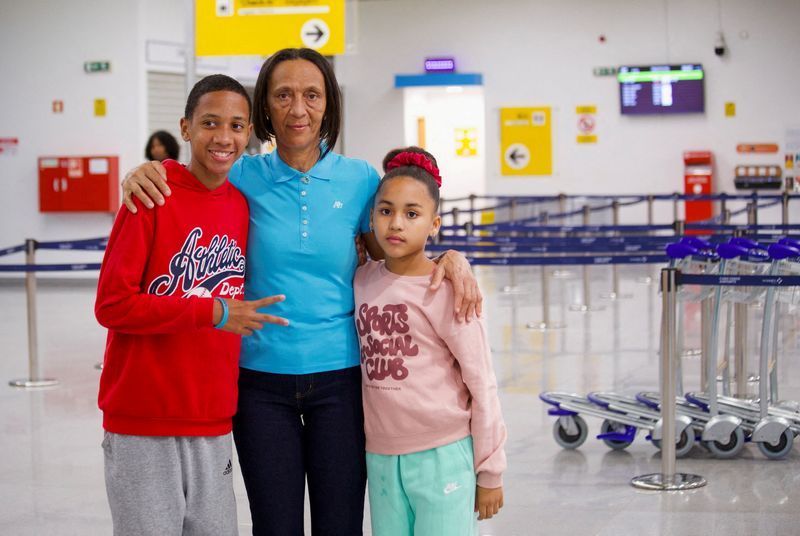
In an emotional turn that reflects both the human drama of international competition and the complexities of contemporary immigration policy, the mother of Cape Verde goalkeeper Vozinha has finally received clearance to travel to the United States and witness her son's World Cup journey. The approval came swiftly after the 40-year-old shot-stopper's publicly disclosed heartbreak that his mother, Ana Candida Evora, could not attend his remarkable performance in Cape Verde's opening fixture, prompting intervention from the US State Department itself.
Vozinha's contribution to his nation's tournament opener proved nothing short of spectacular. Playing against the European champions Spain in Atlanta, the goalkeeper delivered a masterclass in shot-stopping and positioning, making seven crucial saves to shepherd Cape Verde to a stunning 0-0 draw. In a World Cup context where first matches often determine a team's psychological momentum, his performance was not merely competent but genuinely heroic—the kind of display that turns relatively unknown players into tournament talking points and earns player-of-the-match accolades.
Yet this triumph was fundamentally diminished for Vozinha by absence. When he spoke publicly about his mother's inability to witness his heroics, the revelation carried genuine emotional weight. The goalkeeper's disclosure that Evora had been unable to secure travel to Atlanta struck a chord well beyond sports discourse, touching on broader themes of opportunity, exclusion, and the sometimes arbitrary barriers that separate families across borders.
The circumstances behind Evora's initial exclusion stemmed from visa complications and the associated financial barriers to entry. Under immigration enforcement measures implemented during the period in question, citizens of numerous countries—Cape Verde among them—faced the prospect of posting substantial bonds, reaching as high as $15,000 USD, to gain entry to the United States. For an elderly mother living in Cape Verde, such sums represent impossible obstacles rather than mere inconveniences. The financial threshold alone constituted an effective prohibition on her participation in her son's moment of international achievement.
When word of Vozinha's predicament spread through both sports media and broader news channels, it triggered a response from official channels. The US State Department, recognizing both the humanitarian dimension and the public relations implications, moved decisively. Officials confirmed that their visa processing team based in Praia, Cape Verde's capital, had been placed in direct contact with Evora and was providing expedited services to facilitate her application. The bureaucratic machinery, once configured toward resolution rather than obstruction, moved with notable speed.
A State Department representative provided public confirmation of the successful outcome, emphasizing that the approval had proceeded fully in accordance with established policies, procedures, and standards—language that suggested the decision represented not exceptional favouritism but rather the proper functioning of visa protocols when applied with appropriate human consideration. The official statement reflected a careful balance between demonstrating responsiveness to legitimate humanitarian concerns while maintaining procedural legitimacy.
Evora's newfound ability to travel to the United States carries particular significance because it permits her attendance at upcoming Cape Verde matches in the tournament. Her son's squad faces Uruguay in their second group-stage fixture in Miami on the following Sunday, offering the first opportunity for mother and son to share the World Cup experience directly. For a goalkeeper whose performance level clearly matters to him emotionally—as evidenced by his initial tearful response to her absence—her presence in the stands may carry psychological importance beyond the typical supporter role.
The episode illuminates the broader context surrounding World Cup hosting and international travel. The tournament's expansion and the associated movement of hundreds of thousands of supporters, families, and observers across borders inevitably encounter immigration frameworks and security protocols. Nations hosting football's premier competition must balance genuine security considerations with the fundamental purpose of the event—which includes enabling families to share in players' achievements.
Cape Verde's participation in this World Cup itself represents significant achievement for a small island nation with limited resources. The squad's opening draw against Spanish opposition, rather than yielding the heavy defeat many would have anticipated, demonstrated competitive quality and resilience. Within this context, Vozinha's individual excellence served as a symbol of what smaller footballing nations can accomplish when preparation and determination align with tactical acumen.
The resolution of Evora's visa situation also carries subtle implications for how major sporting events interact with immigration policy. The rapid intervention following public attention suggests that diplomatic and public pressure can achieve what standard application processes might not, raising questions about consistency and equity in how such cases are ultimately resolved. Whether similar compassionate considerations would have been extended to other families facing comparable barriers remains an open question.
Looking forward, Cape Verde's World Cup campaign will unfold with Evora now positioned to witness subsequent developments. Her presence in the stands, secured through official channels and public attention, represents more than a simple family reunion. It stands as a reminder that international football tournaments carry significance extending well beyond tactical formations and match statistics, touching instead the fundamental human desire to share moments of achievement with those closest to us.
%22%2F%3E%3C%2Fpattern%3E%3C%2Fdefs%3E%3Crect%20width%3D%22100%25%22%20height%3D%22100%25%22%20fill%3D%22url(%23ph2dfp0g)%22%2F%3E%3Crect%20width%3D%22100%25%22%20height%3D%22100%25%22%20fill%3D%22url(%23ph2dfp0p)%22%2F%3E%3Ctext%20x%3D%2250%25%22%20y%3D%2250%25%22%20text-anchor%3D%22middle%22%20dominant-baseline%3D%22central%22%20fill%3D%22rgba(255%2C255%2C255%2C0.95)%22%20font-family%3D%22Georgia%2C%20'Times%20New%20Roman'%2C%20serif%22%20font-weight%3D%22700%22%20font-size%3D%22272%22%20letter-spacing%3D%22-0.02em%22%3EPerak%3C%2Ftext%3E%3C%2Fsvg%3E)