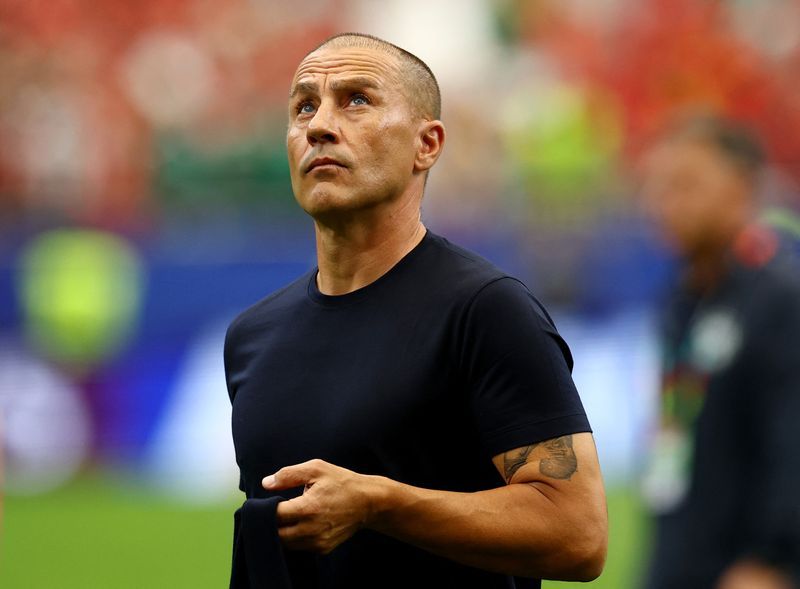
Uzbekistan's debut World Cup campaign hit a devastating milestone when the Central Asian nation suffered a 5-0 thrashing at the hands of Portugal in Houston, leaving their hopes of progression hanging by a thread. Coach Fabio Cannavaro, the Italian World Cup winner from 2006, faced the media in the aftermath of the June 23 encounter to deliver an unambiguous message: the responsibility for the lopsided scoreline rested solely with him and not his players. Despite the calamitous result, Cannavaro struck a defiant tone, insisting that Uzbekistan would extract crucial lessons from their maiden World Cup experience and channel the disappointment into future improvement on the international stage.
The defeat represents a compounding disaster for Uzbekistan's tournament prospects. Having already surrendered a 3-1 result to Colombia in their opening fixture, the team now sits in a precarious position entering their final Group K encounter against the Democratic Republic of Congo scheduled for Saturday. Mathematically, Uzbekistan require nothing short of victory in that match to maintain any realistic chance of becoming the third team from their group to advance to the knockout rounds. The arithmetic is brutal: two losses and a win would likely prove insufficient given their goal differential and the strength of their rivals. Cannavaro's measured response to the Portugal debacle suggests a coach determined to preserve squad morale and prevent the mounting losses from fracturing team cohesion.
When addressing the media, Cannavaro emphasised his commitment to shouldering accountability for tactical and strategic missteps rather than deflecting blame towards his squad members. He articulated a philosophy rooted in his decades of professional experience, both as a commanding centre-back for some of Europe's elite clubs and more recently as a manager navigating the treacherous landscape of international football. "All my life I have taken responsibility, as a player and as a coach. If we lost 5-0, it is because today I made mistakes, and not them," he stated, signalling his understanding that effective leadership requires absorbing criticism when results disappoint rather than scapegoating individual performers.
Cannavaro's insistence on protecting his players' confidence during such a painful introduction to World Cup football reveals a nuanced understanding of team psychology. He acknowledged that mistakes would inevitably occur when players operated in unfamiliar and pressure-laden circumstances, and that nurturing their development demanded unconditional faith in their capabilities rather than criticism that might stifle their willingness to attempt creative play. By publicly absolving his squad of blame, Cannavaro sought to create an environment where players could take calculated risks without fear of recrimination, a delicate balance essential when competing against vastly more experienced and technologically superior opponents.
One moment particularly crystallised Uzbekistan's frustration during the Portugal match: a stunning goal scored by Azizjon Ganiev was chalked off for an infringement detected in the build-up. This disallowance, though technically correct under the regulations, came at a critical juncture when the match remained competitive at 2-0, and Cannavaro identified it as a pivotal turning point in the psychological trajectory of his team. The coach suggested that seeing a well-constructed goal wiped from the record board deflated his players' confidence and diminished their willingness to persist with the attacking approach they had successfully employed against Colombia. Rather than retreat into defensive caution, Cannavaro had encouraged his squad to play with boldness and ambition, understanding that conservative tactics would only accelerate the inevitable defeat against superior opposition.
The broader context of Uzbekistan's World Cup participation adds poignancy to their struggles. As a nation competing at the tournament for the first time, the team carries immense expectations and historical significance at home, where football commands passionate support across all social strata. The contrast between the excitement of qualification and the harsh realities of competing against established footballing powers inevitably produces disillusionment. Cannavaro's repeated emphasis on learning and growth rather than immediate results reflects a mature perspective on the developmental trajectory of an emerging football nation. Uzbekistan cannot realistically expect to compete at the level of Portugal, Colombia, or the Democratic Republic of Congo in this cycle, but the experience accumulated through exposure to world-class opponents will theoretically facilitate improvement in future tournaments.
Cannavaro's message to his players after the Portugal defeat stressed perseverance despite the mathematical improbability of advancing further. He urged them to maintain belief and continue competing with intensity against the Democratic Republic of Congo, resisting the temptation to surrender mentally once progression became mathematically implausible. This insistence on professional standards and commitment regardless of circumstances reflects the disciplinary culture Cannavaro absorbed during his playing career and demonstrates his commitment to instilling values that transcend immediate results. Victory against the Democratic Republic of Congo would at minimum provide a psychological platform for rebuilding confidence before the next qualification cycle commences.
For Malaysian and Southeast Asian observers, Uzbekistan's World Cup journey carries particular relevance as a case study in how emerging footballing nations navigate the formidable challenge of competing at sport's grandest stage. The region's own aspirations to develop competitive national teams that might one day reach a World Cup finals tournament require understanding how countries manage the cultural shock and tactical disparity inherent in playing established footballing powers. Cannavaro's approach—emphasising learning, protecting player confidence, and accepting managerial accountability—offers a blueprint for how coaches might guide less experienced squads through similar adversity.