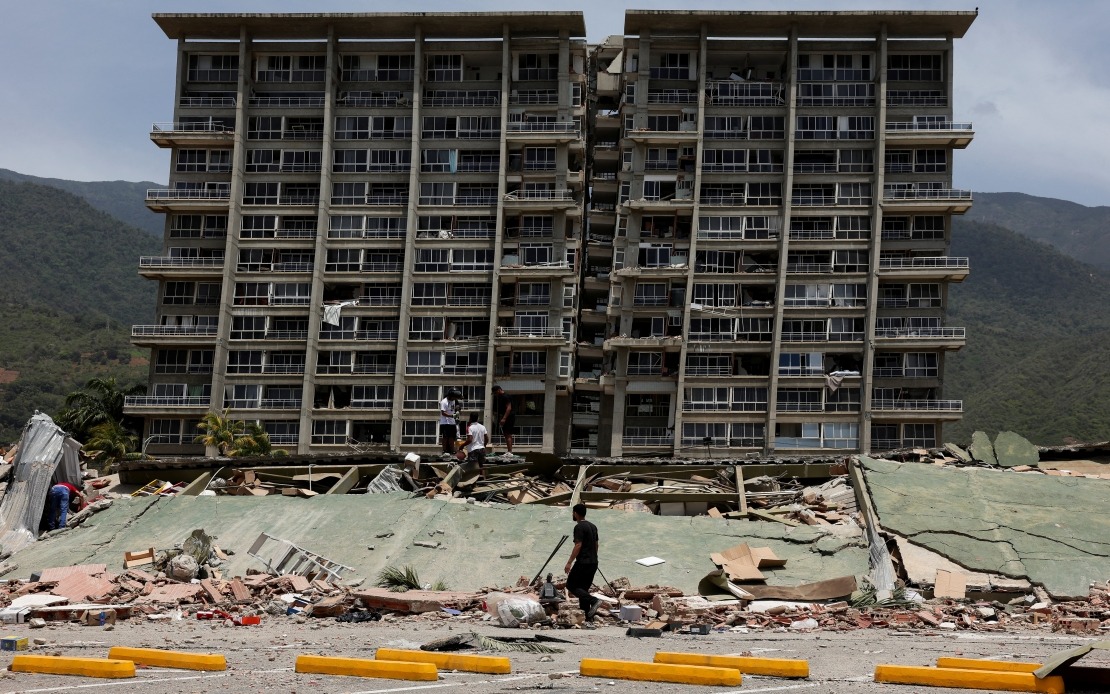
Canada is mobilizing US$5 million in immediate humanitarian assistance to support emergency relief operations in Venezuela following a series of devastating earthquakes that have claimed lives and left widespread destruction across the nation. Foreign Minister Anita Anand announced the commitment on Thursday, acknowledging the profound human toll and infrastructural damage wrought by the natural disaster. The Canadian government characterized the scale of devastation as heartbreaking, with entire communities facing displacement and loss of life among families torn apart by the seismic activity.
The precise extent of the disaster remains uncertain as assessments continue across affected regions. However, preliminary indications suggest that hundreds of thousands of people may be experiencing the direct consequences of the earthquakes, requiring coordinated and urgent humanitarian intervention. Canadian officials have emphasized that the scope of need is expanding as initial surveys reveal the true scale of displacement, injury, and infrastructure damage. This reality underscores the critical importance of rapid mobilization of resources to prevent secondary humanitarian crises stemming from inadequate food, water, medical care, and sanitation in the immediate aftermath.
The US$5 million commitment will flow through established humanitarian partner organizations that possess operational capacity and local presence in Venezuela. These partners will prioritize emergency food distribution to populations facing acute hunger, water provision to communities with disrupted supply systems, and sanitation facilities to prevent disease outbreaks. Equally crucial is the deployment of health services, including emergency medical care, trauma treatment, and disease surveillance to identify and respond to potential epidemics. The funding also encompasses protection mechanisms safeguarding vulnerable populations, particularly women, children, and the elderly who face heightened risks during humanitarian crises.
Logistical support represents a vital but often overlooked component of effective relief operations. The Canadian funding will enable humanitarian organizations to establish supply chains, coordinate transportation of aid materials to remote or isolated communities, and manage distribution networks. In Venezuela's current context, where infrastructure has been strained by broader economic and political challenges, logistical capacity becomes particularly critical for reaching vulnerable populations in outlying areas that may lack direct road access or have suffered infrastructure damage.
This new commitment builds upon Canada's existing engagement with Venezuela's humanitarian crisis. Earlier in the current year, the Canadian government had already allocated nearly US$4.5 million in humanitarian funding to address pressing needs within Venezuela. The additional US$5 million represents a significant escalation in Canada's response posture, reflecting both the magnitude of the earthquake disaster and Canada's ongoing concern for the Venezuelan population's wellbeing. Cumulatively, Canada has now committed approximately US$9.5 million in humanitarian support to Venezuela in 2024, positioning the country as a meaningful contributor to regional relief efforts.
Canadian officials remain actively engaged with regional partners throughout the Americas and with international humanitarian organizations operating in Venezuela. This diplomatic engagement serves multiple purposes: maintaining awareness of evolving humanitarian needs as the crisis unfolds, coordinating Canadian assistance with contributions from other nations to maximize impact and minimize duplication, and ensuring that relief resources reach intended beneficiaries efficiently. Minister Anand indicated that Canadian representatives continue monitoring the situation closely and will provide additional details regarding how the new funding will be specifically allocated among priority needs.
From a Southeast Asian perspective, Venezuela's humanitarian crisis carries particular resonance for the region's earthquake-prone nations. Malaysia, Indonesia, and the Philippines all face significant seismic risks, making international humanitarian cooperation frameworks increasingly relevant. The Canadian response demonstrates how developed nations mobilize resources and coordinate with humanitarian organizations when natural disasters strike, providing a potential model for regional cooperation. Additionally, the crisis underscores the importance of maintaining robust humanitarian funding mechanisms and pre-positioned supply chains that can be rapidly deployed following major natural disasters affecting developing nations.
The Venezuelan situation also illustrates how humanitarian crises can compound existing vulnerabilities. Venezuela has faced sustained economic and political challenges that have already strained public health, water systems, and food security infrastructure. Earthquakes strike this weakened foundation, potentially creating cascading failures across multiple sectors simultaneously. This pattern is not unique to Venezuela—many developing nations throughout Asia, Africa, and Latin America face similar vulnerabilities where natural disasters intersect with pre-existing institutional and infrastructural weaknesses. Regional nations in Southeast Asia should view Venezuela's experience as instructive regarding the importance of maintaining resilient systems and disaster preparedness even during periods of economic stress.
Canada's willingness to provide sustained humanitarian support despite Venezuela's complex political situation reflects an international norm prioritizing human suffering over geopolitical considerations. The humanitarian assistance is directed toward supporting populations regardless of their government's political alignment or international standing. This approach aligns with the humanitarian principles of neutrality and impartiality that guide organizations like the International Committee of the Red Cross and shape the broader international humanitarian system. For Malaysian policymakers and humanitarian practitioners, this reinforces the principle that catastrophic natural disasters create obligations to respond based on need rather than political calculus.
The coming weeks will determine whether the US$5 million commitment, combined with other international assistance, proves adequate for Venezuela's immediate humanitarian needs. Canadian officials have signaled flexibility in potentially providing additional support as the situation evolves and needs become clearer. The ongoing monitoring and commitment to provide updated allocation details suggest that Canada views this as an initial response rather than a final determination of support levels. As Venezuelan communities begin the longer process of reconstruction following the earthquakes, the international community's sustained engagement will likely prove decisive in determining whether affected populations can rebuild effectively or face prolonged humanitarian distress.

