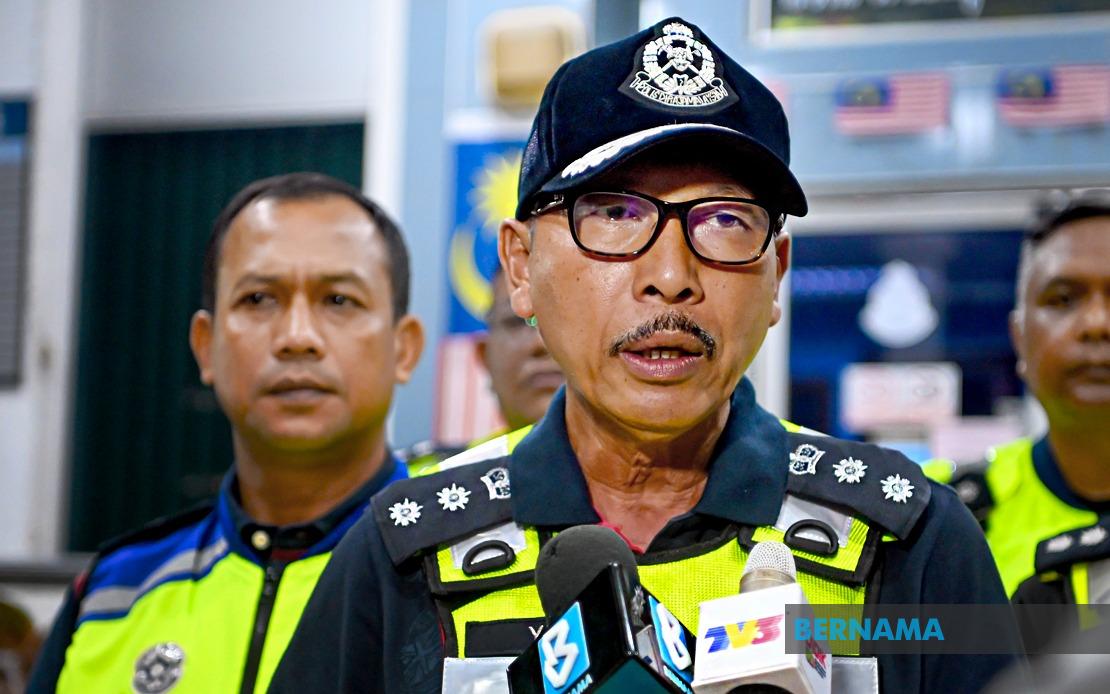
A tragic accident has claimed the life of a campaign worker engaged in routine election duties in Negeri Sembilan, casting a sobering shadow over the state's electoral campaign period. The 34-year-old victim was performing flag installation work for the 16th Negeri Sembilan state election when struck by a vehicle on Jalan Kuala Sawah-Rantau near Kampung Belangkan on the afternoon of July 19. Seremban district police chief ACP Mohd Yatim Osman confirmed the fatality, which occurred at approximately 6.40 pm when the man was positioned on the roadside preparing campaign materials.
According to preliminary investigations, the sequence of events involved an unidentified lorry that first collided with a signpost before the vehicle veered toward the victim stationed along the shoulder of the thoroughfare. The impact of the collision inflicted severe injuries to the man's face and head region. Despite immediate response to the scene, the victim's injuries proved fatal, and he was pronounced dead before any medical intervention could be administered. The severity of the trauma sustained suggests a substantial collision rather than a glancing blow, indicating the lorry was likely travelling at considerable speed when it struck the campaign worker.
The circumstances surrounding the incident have immediately complicated the investigation, as the driver of the lorry abandoned the scene rather than remain to render assistance or submit to police questioning. This flight from the scene has transformed what might have been classified as a vehicular accident into a hit-and-run matter, substantially elevating both the severity of potential criminal charges and the urgency of locating the responsible party. Police have initiated comprehensive efforts to identify the vehicle through registration records and eyewitness accounts, though the preliminary investigation notes that the lorry's registration plate has not yet been established.
The timing of this tragedy carries particular significance for the electoral cycle in Negeri Sembilan. Campaign volunteers across Malaysia routinely undertake numerous hazardous tasks during election periods, from roadside flag installation to door-to-door canvassing, often working in high-traffic areas with minimal safety infrastructure or protection. The incident raises uncomfortable questions about the adequacy of occupational safety protocols for campaign workers, who frequently operate along busy highways and major thoroughfares during peak traffic hours. Many such workers are volunteers with limited training in traffic management or personal safety procedures, making them vulnerable to precisely the type of accident that claimed this victim's life.
Police have classified the investigation under Section 41(1) of the Road Transport Act 1987, which addresses hit-and-run offences involving motor vehicles. The statutory framework provides significant penalties for drivers who flee accident scenes, reflecting the legislature's recognition that such conduct compounds the gravity of the original incident by obstructing investigation and denying victims' families the accountability they deserve. The investigating officer, Inspector Nor Fadzilah Mohd Zainuddin, has appealed for public assistance in identifying the lorry and its driver, requesting that anyone possessing relevant information contact either the investigator directly or the Seremban police operations room.
For campaign organisations across the peninsula, this incident serves as a stark reminder of the practical dangers inherent in election-related activities. While Malaysian political campaigns have generally avoided the security challenges faced by their counterparts in more volatile regions, the routine traffic hazards of conducting roadside promotional work remain substantial and insufficiently acknowledged. Political parties and their volunteer networks would be prudent to institute enhanced safety measures for campaign staff engaged in roadside activities, including high-visibility clothing, traffic direction personnel, and adjusted working hours to coincide with lower traffic volumes.
The identity of the campaign worker and his affiliation with a specific political party or organisation remain unreleased in police statements, though such details typically emerge during formal investigations. The victim's family now faces the dual burden of grief and the additional trauma of seeing their relative's death investigated as a criminal matter rather than a simple accident. Beyond the immediate family, the broader volunteer and campaign communities throughout Negeri Sembilan are likely to reassess their operational procedures in response to this tragedy, with particular attention to traffic safety protocols.
The unidentified lorry driver's decision to flee rather than stop compounds the tragedy by potentially transforming what might have been treated as an accident of misfortune into a matter of criminal culpability. Security camera footage from properties along Jalan Kuala Sawah-Rantau may prove crucial in identifying both the vehicle and its driver, potentially providing registration details, vehicle colour and condition, and temporal information that could narrow the investigation's scope considerably. Similar footage from nearby commercial establishments or government traffic monitoring infrastructure may also yield relevant evidence.
This incident also highlights the broader challenges facing Malaysian road safety authorities in an environment where hit-and-run offences remain disturbingly common. The willingness of some drivers to abandon accident scenes without reporting reflects either panic, impaired judgment, or criminal intent, yet in many cases remains unpunished due to investigative obstacles. Strengthening camera surveillance on major highways, implementing automated vehicle identification systems, and enhancing public awareness of the legal and moral imperatives to report accidents could substantially improve both accident prevention and post-incident resolution rates across the nation.

