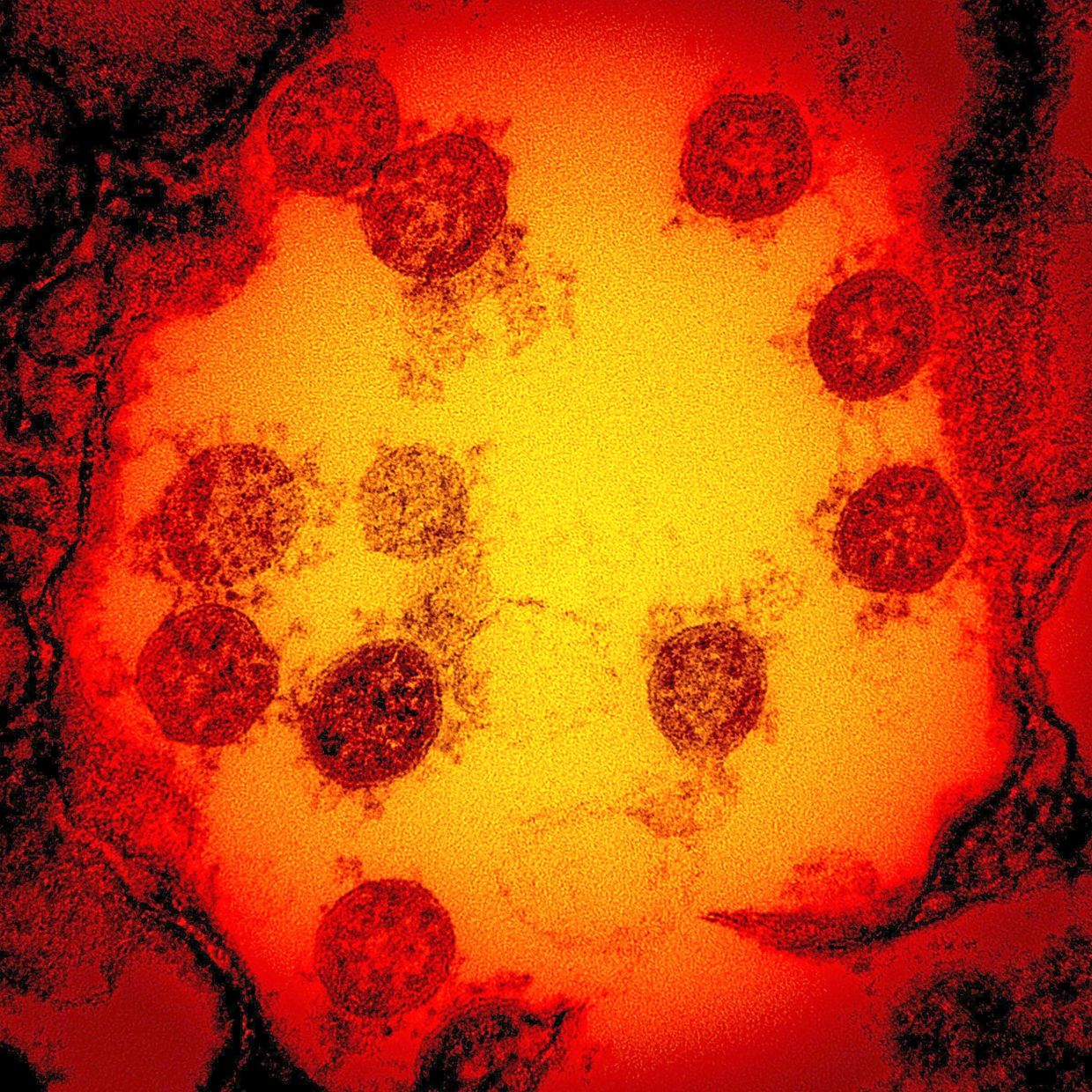
A breakthrough in vaccine development emerging from Cambridge University could fundamentally reshape how the world responds to viral threats, offering protection against entire families of viruses rather than specific strains. The technology, developed with artificial intelligence assistance, represents a paradigm shift away from the reactive approach that has long dominated immunisation strategies. Researchers liken the innovation to possessing a master key that unlocks immunity across multiple related pathogens, a contrast to the current model where vaccines chase individual virus variants in perpetual pursuit.
The conventional challenge facing vaccine developers lies in their inherent temporal lag. Dr Jonathan Heeney, who leads the project at Cambridge's Department of Veterinary Medicine, explains that existing vaccines are fundamentally backward-looking, targeting strains known at the time of development rather than variants that may emerge months or years later. By the time a population receives immunisation against one version of a virus, nature has often already produced successors against which that vaccine offers limited protection. This endless cycle of adaptation means public health systems remain perpetually behind the epidemiological curve, responding to threats rather than anticipating them.
The genesis of this research reflects the harsh lessons of recent viral catastrophes. Professor Heeney, a Canadian virologist, began conceptualising the approach following the devastating 2013-2016 Ebola outbreak in West Africa, an epidemic that claimed approximately 11,300 lives according to the World Health Organization. The outbreak originated in Guinea before spreading rapidly to Sierra Leone and Liberia, yet initial diagnosis proved elusive—health authorities spent three to four critical months attempting to determine whether they faced Ebola, Lassa fever, gastroenteritis, or cholera. This diagnostic delay, during which the virus crossed international borders and infected healthcare workers, underscored the fragility of reactive disease response systems.
The experience catalysed a determination among Cambridge's research team to fundamentally reimagine vaccine development timelines and strategies. Rather than waiting to identify a specific pathogen before commencing vaccine work, the researchers theorised that analysing commonalities across viral families could identify shared immune targets present across numerous variants and strains. This approach required harnessing advances in artificial intelligence to process vast datasets about diverse pathogens, identifying patterns within viral structures that the human immune system could recognise and mount defences against, regardless of which specific variant an individual encounters.
The methodology represents a sophisticated application of computational biology. By aggregating all available scientific data about related viruses, the team's algorithms sift through genetic and molecular information to pinpoint similarities in the components that trigger immune responses. This analysis moves beyond identifying single variants to recognising the fundamental characteristics shared across entire virus families—the equivalent of learning the architectural principles underlying an apartment complex rather than memorising individual door specifications. Such comprehensive recognition means immunity conferred by the vaccine should protect against not only current threats but unknown future variants within the same viral family.
The urgency of developing such technology intensifies against a backdrop of accelerating viral emergence. Population growth, increased international travel, and human expansion into previously undisturbed animal habitats create unprecedented opportunities for zoonotic spillover events. Viruses that have coexisted harmlessly within animal populations for millennia suddenly encounter human hosts lacking any inherited immunity or evolutionary adaptation. In these encounters, animal pathogens adapted to their original hosts transform into ferocious human pathogens, spreading with the speed and lethality characteristic of novel infectious agents encountering a completely susceptible population.
Initial clinical validation of the Cambridge-developed vaccine, created in partnership with British biotechnology firm DIOSynVax, involved 39 volunteers through a trial sponsored by University Hospital Southampton. These preliminary results provided sufficient evidence of safety and efficacy to warrant advancement to larger-scale trials, the standard progression for vaccines destined for broader deployment. The promising initial data suggests the technology's theoretical advantages translate into practical immunological benefits, though extensive additional testing remains necessary before widespread public health implementation.
The implications of this technological advance extend across Southeast Asia and the developing world with particular significance. The region's rapid urbanisation, dense population centres, and extensive contact between human and animal populations create environmental conditions favourable to viral emergence. Many nations in the area lack the resources for rapid vaccine development indigenous to their territories, making them dependent on global vaccine availability and distribution networks often controlled by wealthier countries. A universal vaccine platform capable of swift adaptation to emerging viral families could dramatically improve pandemic preparedness across economically diverse regions.
Professor Heeney identifies influenza as his foremost concern among potential pandemic threats, characterising the virus family as particularly challenging due to its genetic fluidity and transmission efficiency. Historical precedent reinforces this assessment—the 1918-1920 influenza pandemic killed an estimated 25 to 50 million people globally, while countless other plague-like outbreaks throughout history demonstrated humanity's vulnerability to viral catastrophe. Even the bubonic plague of medieval Europe, though bacterial rather than viral, serves as a sobering reminder of pandemic severity when medical countermeasures remain inadequate.
The technological trajectory outlined by the research team incorporates increasingly sophisticated artificial intelligence applications beyond those initially employed. The team now utilises cutting-edge machine learning systems to construct more powerful computational platforms capable of analysing exponentially larger datasets and identifying subtler patterns within viral structures and immune responses. This evolutionary advancement in the underlying technology suggests the vaccine development process could accelerate substantially in coming years, compressing the timeline between viral emergence and vaccine availability.
The research represents a philosophical and practical departure from historical vaccine development patterns. Rather than developing separate immunisations for individual pathogens as they emerge—a model that served adequately when pandemics occurred on generational timescales—the new approach anticipates rapid succession of viral threats characteristic of the modern epidemiological landscape. By creating platforms capable of addressing entire viral families simultaneously, researchers position public health systems to shift from perpetually reactive defensive postures toward proactive protection grounded in understanding fundamental viral biology.
Proof-of-concept success with initial trials marks not an endpoint but a beginning. Demonstrating safety, efficacy, and practical manufacturability across larger, more diverse populations remains essential before regulatory agencies approve deployment. Yet the preliminary validation of the master key concept suggests the scientific community may finally possess tools to address the persistent challenge of outpacing rapidly evolving pathogens. If subsequent trials validate the promise demonstrated thus far, the technology could indeed inaugurate a transformative era in pandemic preparedness and vaccine development.

