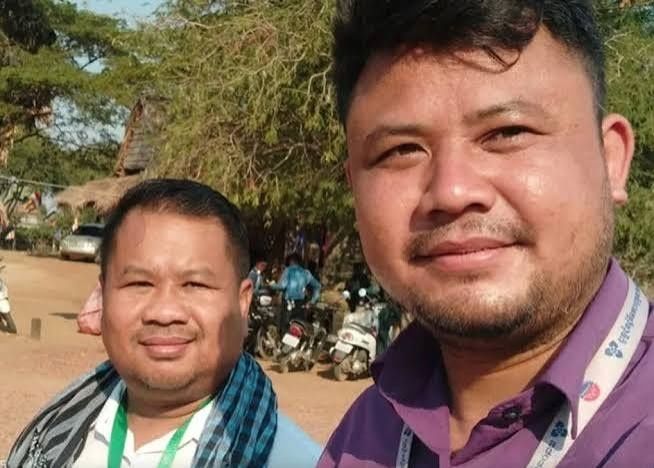
Cambodia's Supreme Court faced a significant test of its independence as it prepared to decide whether to overturn the treason convictions of two journalists who documented military operations along the contentious Thai border. The case of Phorn Sopheap from Battambang Post TV Online and Pheap Pheara of TSP 68 TV Online, both sentenced to 14 years in prison, has become emblematic of broader concerns about judicial impartiality in Phnom Penh, with the verdict expected in late June amid mounting international criticism of Cambodia's treatment of media professionals.
The journalists' troubles began in July of the previous year when they were detained upon returning from reporting assignments in a restricted military zone along Cambodia's northern frontier. Authorities alleged they had violated national security by uploading photographs taken in this sensitive area to Facebook, specifically images depicting land mines and military installations. Both men have consistently maintained they possessed proper authorisation to access the locations where they conducted their photography work, framing the charges as an overreach by state security apparatus determined to suppress unfavourable reporting of the border conflict.
One photograph in particular sparked regional tensions and diplomatic complications. The image showing anti-personnel land mines was subsequently reproduced by Thai news organisations, which used it to substantiate Thailand's allegations that Cambodia had actively deployed new mine systems along their shared border, causing casualties among Thai military patrols. This development put Cambodia in a defensive position, as the government had publicly maintained compliance with international treaties prohibiting landmine manufacture and deployment. Official Cambodian statements instead attributed any mines in border regions to unexploded remnants from decades of civil warfare that concluded in the late 1990s, a more palatable narrative than accusations of active military escalation.
The border tensions that motivated the journalists' arrest had already inflicted substantial humanitarian damage across the region. Fighting that erupted in July and again in December displaced hundreds of thousands of people on both sides of the frontier and claimed approximately 100 lives among soldiers and civilians. The December ceasefire has held since its implementation, though underlying animosities and military posturing persist, keeping the region in a state of fragile equilibrium. The journalists' prosecution occurred within this volatile context, suggesting their reporting may have posed diplomatic complications for Phnom Penh's leadership.
The Siem Reap Provincial Court handed down its guilty verdict in December, finding the pair culpable of "supplying a foreign state with information prejudicial to national defense," a sweeping charge that essentially criminalised factual journalism about events in a military zone. The 14-year sentences were upheld during a March appeal hearing at a lower appellate tribunal, leading to the case's advancement to the Supreme Court. The persistence of the prosecution despite mounting international condemnation underscored the government's determination to establish consequences for reporting deemed harmful to national interests.
The journalists' plight has catalysed an unusual coalition of concern among global media freedom advocates. More than a dozen national and international journalism associations jointly petitioned the government to withdraw charges following the lower court's appeal decision, representing an unprecedented level of collective pressure. The Committee to Protect Journalists, based in New York, explicitly accused Cambodian authorities of weaponising ambiguous national security legislation to prosecute legitimate journalistic work. Such international scrutiny typically exerts pressure on governments sensitive to their global reputation, yet Cambodia's authorities appeared unmoved by external criticism.
The Supreme Court's timing—ruling less than a week after upholding another controversial conviction—cannot be separated from the broader pattern of political prosecution troubling observers of Cambodian governance. In that companion case, Rong Chhun, a 56-year-old opposition figure with considerable public standing, was found guilty of incitement to social disorder after meeting with communities displaced by government-backed development projects. The conviction of this prominent dissident, following a conviction for activities universally recognised as legitimate political engagement, suggested a judicial system functioning as an instrument of state control rather than an impartial arbiter of law.
Human Rights Watch directly attributed these patterns to judicial capture, asserting that Cambodia's courts demonstrably lack independence from the ruling party's political objectives. The government's official response dismissed such characterisations as baseless, insisting the Supreme Court operates with complete institutional autonomy. This fundamental disagreement about judicial independence reflects the broader crisis of accountability afflicting Cambodia's legal system under current leadership.
The country's judicial trajectory becomes more troubling when contextualised against the lengthy tenure of former Prime Minister Hun Sen, whose nearly four decades in power became synonymous with systematic human rights violations encompassing press repression and restrictions on basic freedoms. Hun Sen's departure in August 2023 in favour of his American-educated son, Hun Manet, initially encouraged cautious optimism among reform advocates. However, the intervening months have yielded minimal evidence of meaningful political liberalisation or institutional reform, suggesting continuity rather than transformation in governance philosophy.
The stark numbers tell an unambiguous story about Cambodia's press environment. The country ranked 161st among 180 nations and territories in the 2025 Reporters Without Borders World Press Freedom Index, positioning it among countries where press freedom faces conditions classified as "very serious." This ranking places Cambodia substantially below global averages, indicating systematic rather than incidental constraints on journalism. The journalists' prosecution exemplifies precisely the mechanisms that generate such poor international assessments—the weaponisation of national security statutes against ordinary reporting activities.

