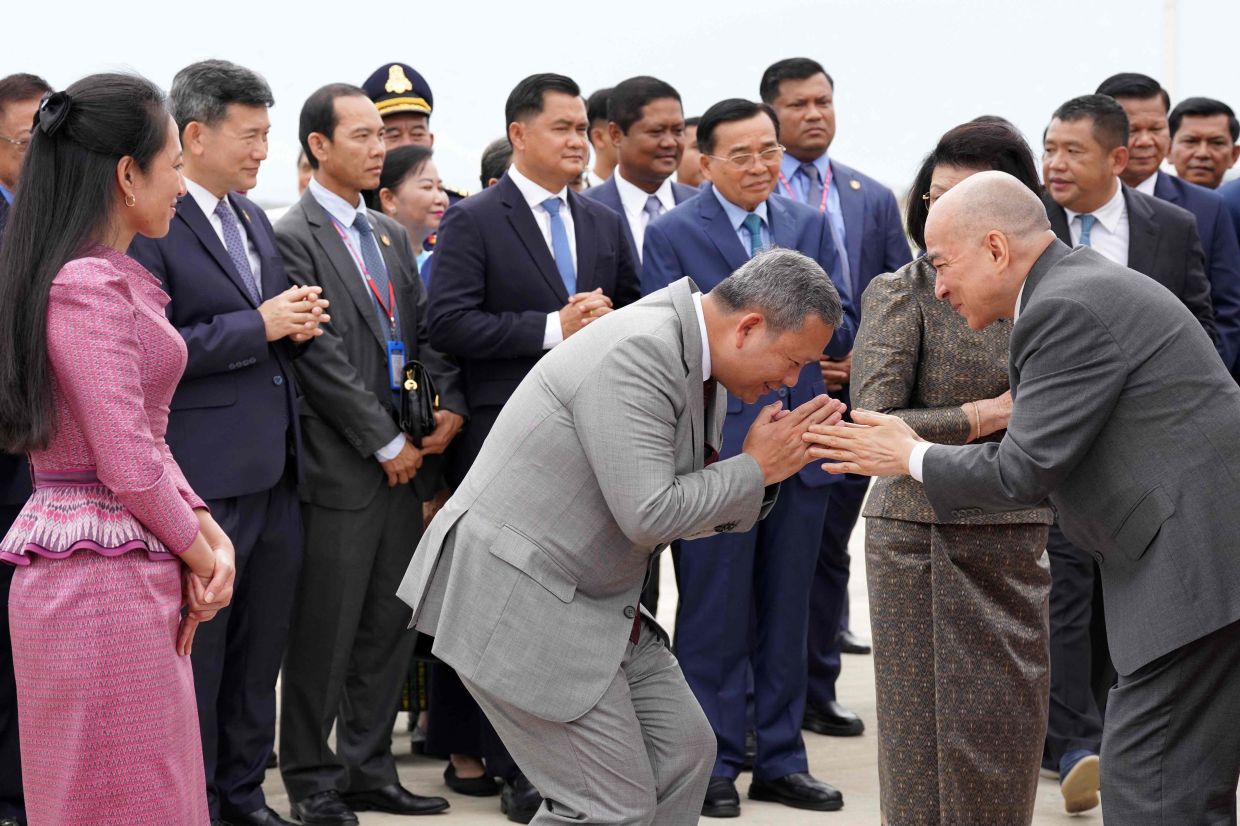
Cambodia's King Norodom Sihamoni touched down in Phnom Penh on Friday afternoon, marking his return from an extended medical sojourn in Beijing where he underwent treatment for prostate cancer. The 73-year-old monarch's homecoming was marked by the presence of senior government officials at the airport, including Hun Sen, the kingdom's influential former prime minister, and Hun Manet, who currently leads the government. The palace statement confirmed that Sihamoni's health had shown marked improvement following more than three months of medical care in China.
The king's diagnosis and subsequent treatment represent a significant moment for Cambodia's royal institution, touching on questions of succession, health governance, and the close relationship between Phnom Penh and Beijing. Sihamoni initially travelled to the Chinese capital earlier in the year for routine health evaluations but was subsequently diagnosed with prostate cancer in April. The Royal Palace released details of the condition only after the diagnosis had been established, indicating a cautious approach to matters affecting the monarch's wellbeing.
During his extended stay in Beijing, Sihamoni underwent what palace officials characterised as "successful" surgery performed by Chinese medical specialists. The decision to seek treatment in China rather than elsewhere underscores the deepening medical and diplomatic ties between Cambodia and its northern neighbour, a relationship that has been reinforced through years of strategic cooperation. Following the surgical intervention, the king remained in Beijing to receive ongoing treatment and monitoring, a common practice for senior leaders undergoing serious medical procedures. By early July, the palace indicated that the treatment regimen had yielded positive results, prompting the decision to allow his return to Cambodia.
Sihamoni's medical journey echoes his father's experience, creating an intriguing historical parallel within the Cambodian monarchy. King Norodom Sihanouk, the previous monarch, similarly travelled to Beijing for cancer treatment before ultimately abdicating in 2004, the same year his son ascended to the throne. Sihanouk remained a revered figure in Cambodia until his death in 2012, demonstrating how the kingdom's royal family has come to rely on Chinese medical expertise for managing serious health challenges. This pattern highlights the extent to which Cambodia has integrated itself into China's sphere of medical and diplomatic influence over the past two decades.
The current king's relatively low public profile in recent years makes his health status a matter of broader institutional significance. Sihamoni, who has never married, spent the majority of his adult years pursuing artistic endeavours across Europe before accepting the throne at an age when most individuals consider retirement. His background in the performing arts, combined with his fluency in multiple languages including Khmer, French, Czech, and English, distinguished him from many of his contemporaries in Southeast Asian royalty. However, since assuming his constitutional role, he has maintained a deliberately circumscribed public presence, focusing on ceremonial duties rather than active political involvement.
The mechanics of the succession question, while not explicitly raised during Sihamoni's treatment period, form an undercurrent in contemporary Cambodian politics. Unlike some neighbouring monarchies where clear succession protocols are extensively documented, Cambodia's royal succession operates within a framework shaped by constitutional provisions and the influence of powerful political actors. Hun Manet's elevation to the prime minister position last year was widely interpreted as positioning him within Cambodia's political hierarchy, though the relationship between executive authority and royal succession remains constitutionally complex.
The timing of Sihamoni's return comes as Cambodia continues navigating regional diplomatic challenges and domestic political consolidation. Hun Sen's ceremonial greeting of the monarch and his publicisation of the airport arrival underscore the symbolic importance of the crown in legitimising governmental authority, a dynamic that has characterised Cambodian politics for centuries. The visible coordination between the palace and current government structures suggests continuity in institutional relationships despite the transition in prime ministerial leadership.
China's role in facilitating Sihamoni's medical treatment extends beyond clinical considerations into the realm of strategic partnership. Cambodia's reliance on Chinese medical facilities and expertise for treating senior state figures reflects broader patterns of economic, security, and diplomatic integration that have accelerated since the mid-2000s. The willingness of Cambodian leadership to publicise the king's treatment in Beijing, rather than seeking alternatives elsewhere, implicitly affirms the confidence placed in Chinese medical capabilities and the comfort within the Cambodian establishment with deepening these bilateral connections.
For regional observers, Sihamoni's successful recovery and return offer reassurance regarding the stability of Cambodia's royal institution during a period when the country's political landscape continues evolving. The monarchy remains deeply woven into Cambodia's national identity and historical consciousness, serving as a continuity symbol in a nation that endured considerable trauma in recent decades. The palace's handling of the health matter—providing measured updates while ensuring the monarch's safe return—reflected both concern for privacy and recognition of public interest in the institution's wellbeing.
The broader implications for Southeast Asia relate to how constitutional monarchies in the region manage health crises affecting revered national figures. Cambodia's approach, emphasising transnational medical expertise while maintaining institutional dignity, offers lessons for neighbouring states considering similar scenarios. As ageing populations and advancing medical complexity characterise governance across the region, the protocols and diplomatic frameworks through which leaders seek and publicise health treatment become increasingly significant for maintaining public confidence and institutional legitimacy.

