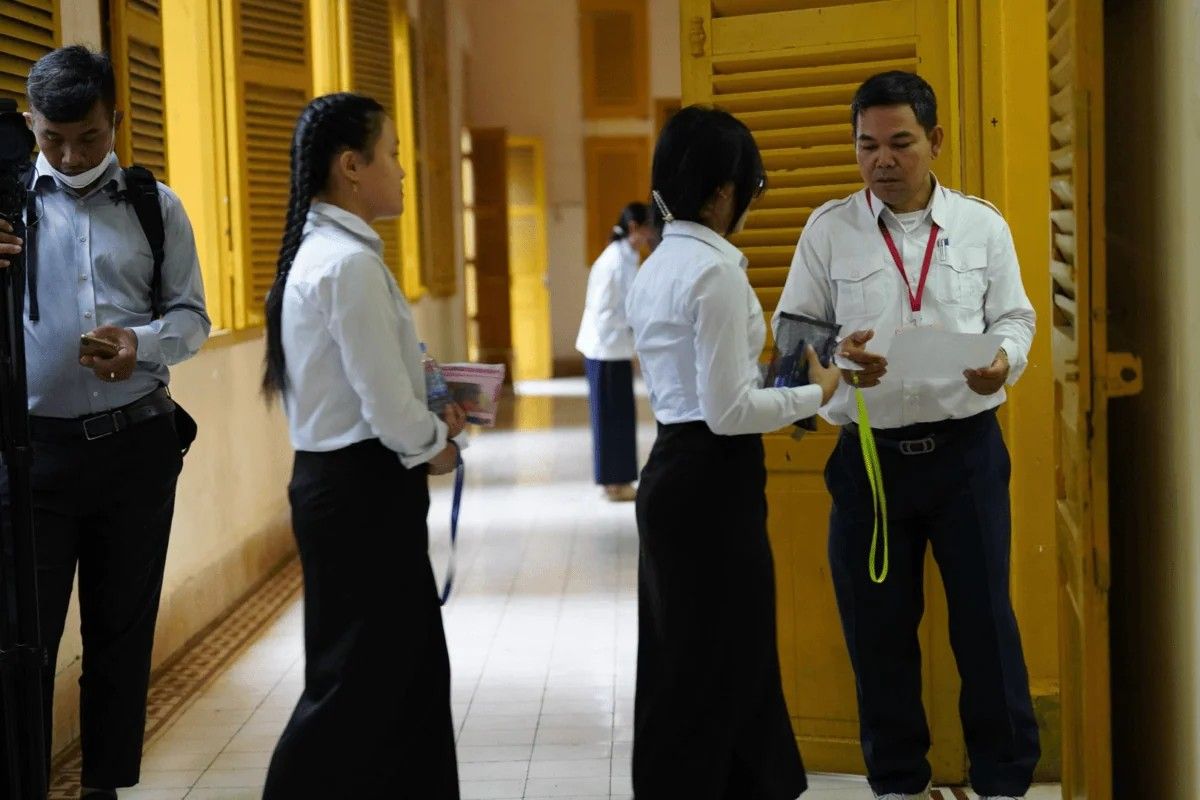
Cambodia's annual high school graduation examinations commenced on August 10, welcoming over 150,000 candidates across the kingdom despite lingering territorial tensions with Thailand that continue to disrupt educational access in border regions. The Education Minister, Hang Chuon Naron, presided over the opening ceremony in Phnom Penh, acknowledging both the progress made since last year's examination period and the persistent challenges facing students and schools caught in disputed territory.
The examination cohort this year includes more than 37,000 students pursuing the science track alongside over 130,000 in the social science stream, reflecting Cambodia's continued emphasis on broader humanities education. The distribution underscores the educational system's capacity to process a substantial portion of the country's secondary school population through a centralized national assessment mechanism, a critical benchmarking exercise that determines university placement and career trajectories for Cambodian youth.
Minister Hang Chuon Naron drew explicit contrasts between this year's examination environment and the fraught circumstances of 2025, when students sat for their finals exactly one month after armed clashes erupted along the Cambodia-Thailand border. Last year's exams, he noted, unfolded amid active military hostilities and civilian displacement, creating psychological and logistical strain on test-takers. The minister referenced anecdotal evidence of remarkable resilience, citing one student from Oddar Meanchey province who had studied from tractors while families evacuated from combat zones, yet still achieved top grades and secured admission to a prestigious tertiary institution.
The most visible consequence of Thailand's military presence remains the continued occupation of 25 schools concentrated in border provinces, preventing thousands of students from accessing their regular educational facilities. This occupancy represents a direct impediment to normalization efforts between the two Southeast Asian neighbours and reflects the protracted nature of the territorial dispute. Among the affected institutions, only Banteay Mean Rith Lower Secondary School in Oddar Meanchey province has established alternative teaching arrangements, with students currently receiving instruction in temporary camps—a makeshift solution that circumvents but does not resolve the underlying closure of permanent facilities.
Cambodia's government has maintained a formal diplomatic stance demanding that Thai forces vacate the occupied schools and permit students unrestricted return to their classrooms. This demand appears less about immediate resolution than about establishing a clear paper trail of Phnom Penh's position for potential future negotiations or international arbitration. The prolonged occupation underscores how territorial disputes in Southeast Asia continue to disrupt civilian infrastructure and educational continuity, with border communities bearing disproportionate costs.
Minister Hang Chuon Naron emphasized organizational measures intended to prevent examination fraud, addressing widespread concerns following reports last year of leaked mathematics papers that compromised examination integrity. The Anti-Corruption Unit deployed over 4,000 observers at testing centres nationwide, a figure matching last year's deployment and suggesting consistent monitoring capacity. Enhanced procedural oversight and stakeholder participation were highlighted as safeguards against administrative lapses that could undermine assessment validity.
The examination framework reflects Cambodia's commitment to maintaining educational standards and credential legitimacy despite external pressures. Universities and employers both domestically and across Southeast Asia rely on Grade 12 examination results as reliable indicators of secondary school attainment. Any compromise in examination integrity would ripple through employment and higher education sectors, potentially devaluing Cambodian qualifications in regional competition for skilled positions. Thailand's border occupation thus creates a dual challenge: directly excluding certain students from examination access while simultaneously raising stakes for institutional credibility among those able to participate.
For Malaysian observers and regional analysts, the situation illustrates how unresolved territorial disputes between neighbouring Southeast Asian states continue constraining educational access and youth development. Cambodia's Grade 12 examination system, while administratively robust, cannot fully compensate for the structural barriers created when military forces occupy civilian schools. The pattern reflects broader vulnerability in the region's institutional frameworks when bilateral tensions escalate to territorial occupation.
The examination's proceeding despite these complications demonstrates institutional resilience but also masks persistent inequities in educational access. Students in closed border schools now face additional barriers beyond standard examination pressure—geographic displacement, temporary learning environments, and psychological stress from military occupation. Merit-based educational systems assume reasonably equitable baseline conditions; when those conditions fragment due to geopolitical factors, meritocratic principles become compromised regardless of examination design quality.
Cambodia's diplomatic framing of the school closures as unacceptable impediments to its citizens' right to education positions education access as a fundamental issue in border negotiations. This rhetorical strategy aligns with international conventions recognizing education as a basic right, though practical enforcement remains contingent on bilateral relations and regional power dynamics. The 25 closed schools represent not merely infrastructure challenges but symbolic markers of Cambodia's limited ability to guarantee educational continuity in disputed territories.
Looking forward, the success of this year's Grade 12 examinations will be measured not only by assessment quality and fraud prevention but also by whether diplomatic efforts produce tangible progress toward reopening border schools. For Cambodia's education sector, resolving territorial access issues matters as much as enhancing examination administration. Southeast Asian educational development depends partly on stable cross-border conditions, making Thai-Cambodian territorial disputes educational policy concerns extending beyond either nation's domestic jurisdiction.

