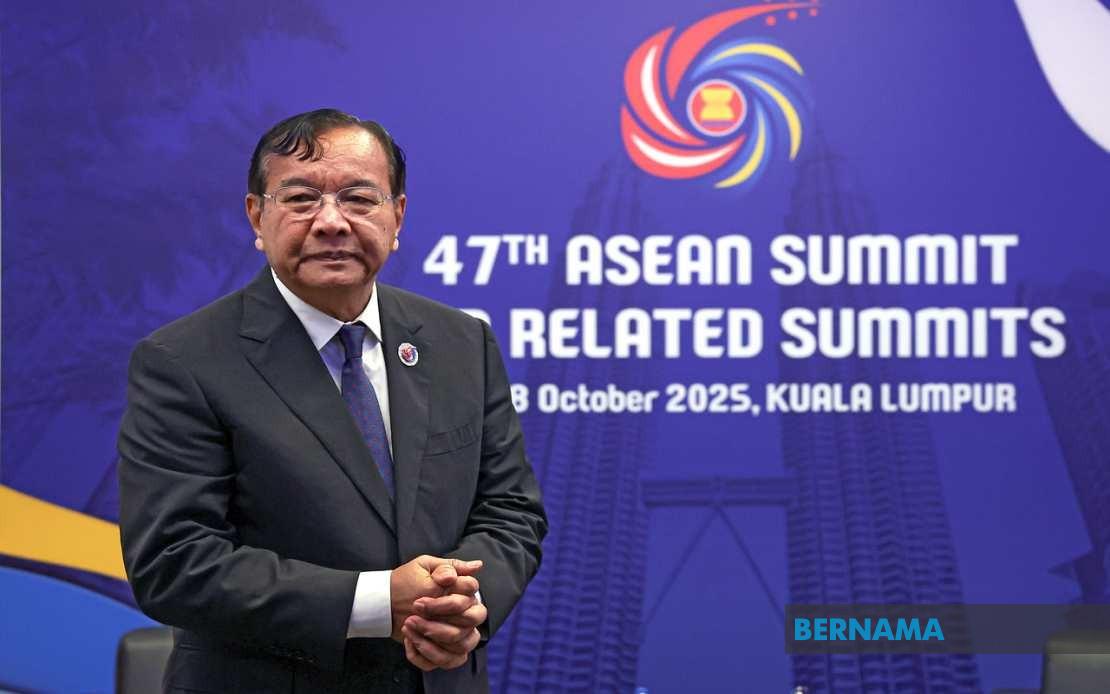
Cambodia's Deputy Prime Minister and Foreign Minister Prak Sokhonn has arrived in Malaysia for an official two-day visit that marks a significant moment in bilateral relations. The centrepiece of his journey is the resumption of the Malaysia-Cambodia Joint Commission for Bilateral Cooperation, a high-level mechanism that has remained inactive for two decades. The third JCBC Meeting, to be held in Kuala Lumpur on Tuesday, will be jointly chaired by Prak Sokhonn and Malaysia's Foreign Minister Datuk Seri Mohamad Hasan, symbolising renewed commitment to strengthening ties between the two Southeast Asian neighbours.
The visit carries considerable symbolic weight, arriving as both countries prepare to commemorate the 70th anniversary of their diplomatic relations in 2027. This timing underscores an intentional effort by Malaysian and Cambodian leadership to revitalise institutional mechanisms of cooperation at a moment when regional partnerships are increasingly valuable. The decision to resurrect the JCBC after a 20-year gap—the previous meeting was held in Siem Reap in 2006—reflects a deliberate shift towards more structured and regular bilateral engagement. For Malaysia, which shares complex historical and cultural bonds with Cambodia, the revival of this commission signals confidence in renewed economic and political partnership.
Prior to the main commission meeting, Prak Sokhonn is scheduled to meet Prime Minister Datuk Seri Anwar Ibrahim on Monday, providing an opportunity for both leaders to engage on broader strategic matters. These courtesy calls, though often ceremonial in nature, serve as crucial forums where leaders can directly exchange views on issues of mutual concern, regional security, trade imbalances, or diplomatic challenges. The bilateral relationship between the two countries extends beyond formal mechanisms; it encompasses deep people-to-people connections and shared regional interests within ASEAN. Such high-level engagement helps maintain political momentum and ensures that bilateral cooperation remains a priority despite the inevitable competing demands on both governments' attention.
The economic dimensions of Malaysia-Cambodia relations have been particularly robust in recent years, providing a strong foundation for renewed diplomatic engagement. Malaysian trade with Cambodia surged significantly in 2025, climbing 27.4 per cent year-on-year to reach RM5 billion (US$1.17 billion). This expansion reflects the growing integration of supply chains across Southeast Asia and the attractiveness of Cambodia as a trade and investment destination. Malaysia's export performance has been particularly strong, with shipments to Cambodia totalling RM4.13 billion (US$970 million), while Malaysian imports from Cambodia reached RM880 million (US$200 million). The trade surplus in Malaysia's favour demonstrates the complementary nature of the two economies and suggests substantial room for further expansion, particularly in value-added manufacturing and services.
Beyond trade flows, Malaysia's investment presence in Cambodia underscores the depth of economic integration. As of 2024, Malaysia's cumulative foreign direct investment in Cambodia stood at US$3.20 billion (RM13.07 billion) spread across 162 registered projects. This positions Malaysia as the third-largest foreign investor in Cambodia, reflecting confidence in the kingdom's economic fundamentals and investment climate. Malaysian investors span diverse sectors including manufacturing, hospitality, real estate, and services, creating employment and transferring technology across Cambodia. The resilience of this investment base, even during periods of subdued diplomatic engagement, speaks to the fundamental strength of underlying business relationships and the integration of Malaysian enterprises into the Cambodian economy.
The resumption of the JCBC presents an opportunity for both countries to coordinate investment facilitation, address regulatory barriers, and discuss sectoral opportunities in emerging areas such as digital economy, green energy, and regional value chains. The commission will likely result in signed Agreed Minutes outlining concrete outcomes and reaffirming commitments to bilateral cooperation. Such formal documents serve multiple purposes: they provide public affirmation of intent, establish benchmarks for measuring progress, and create accountability mechanisms that encourage sustained implementation of agreed initiatives. For Malaysian policymakers, the JCBC provides a structured platform to discuss Cambodia's regulatory environment, intellectual property protection, and dispute resolution mechanisms that affect Malaysian investors operating in the kingdom.
Regionally, the strengthening of Malaysia-Cambodia relations carries implications for ASEAN cohesion and Southeast Asian geopolitics. Both nations are founding members of ASEAN and share interests in maintaining regional stability, managing great power competition, and advancing the ASEAN agenda. A more robust bilateral relationship enhances ASEAN's collective capacity to engage with external powers and address transnational challenges such as connectivity, environmental management, and health security. The timing of this diplomatic revival, as Southeast Asia navigates shifting global alignments and economic pressures, demonstrates that member states remain committed to deepening intra-ASEAN ties alongside their respective international partnerships.
The diplomatic dormancy between the two countries, spanning two decades, likely reflected competing priorities and the absence of high-level political will to maintain regular engagement through formal mechanisms. The activation of the JCBC suggests that this calculus has shifted, potentially driven by leadership changes, emerging shared interests, or recognition that structured bilateral cooperation yields tangible benefits. For Malaysia, revitalising the commission also signals confidence in the stability of Cambodia's political system and economic trajectory, despite international scrutiny of governance issues. The willingness to reengage at such a senior level carries implications for how Malaysia positions itself within Cambodia's broader network of international partnerships, particularly given competition from other regional powers seeking influence.
Looking forward, the effectiveness of the revived JCBC will depend on sustained political commitment and the capacity of implementing agencies to translate broad bilateral goals into specific, measurable initiatives. Trade facilitation, particularly through customs harmonisation and simplified business registration procedures, could yield immediate benefits for private sector actors. Educational and cultural exchanges, people-to-people mobility programmes, and tourism development represent other areas where the commission can drive tangible cooperation. The success of the third JCBC meeting will likely set the tone for whether the mechanism becomes a functioning instrument of regular cooperation or reverts to dormancy, making the outcomes and follow-up mechanisms critical to watch.

