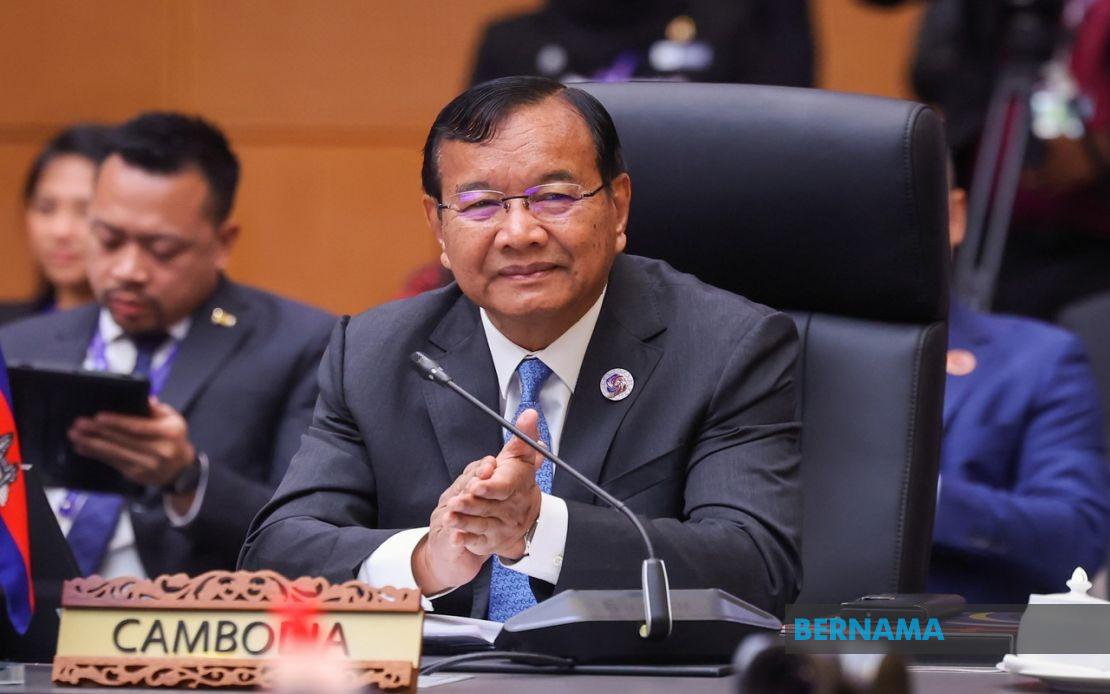
Cambodian Deputy Prime Minister and Minister of Foreign Affairs and International Cooperation Prak Sokhonn touched down at Kuala Lumpur International Airport (KLIA) Terminal 1 on August 3, marking the commencement of a two-day official visit that aims to strengthen the established partnership between Malaysia and Cambodia. His arrival was met by Cambodian Ambassador to Malaysia Ouk Chandara and Datuk Rozainor Ramli, the Malaysian Government's chief ceremony officer, signalling the diplomatic importance both nations place on the engagement.
The timing of Sokhonn's visit underscores the momentum both countries are building across multiple dimensions of their bilateral relationship. Rather than a routine courtesy call, the itinerary reflects substantive collaboration efforts that have been progressing steadily over recent years. Before undertaking his formal engagements, Sokhonn is scheduled to meet Prime Minister Datuk Seri Anwar Ibrahim, a customary diplomatic protocol that nevertheless carries symbolic weight in setting the tone for deeper discussions to follow.
The centrepiece of the visit is scheduled for the following day, when Sokhonn will participate in the third iteration of the Cambodia-Malaysia Joint Commission for Bilateral Cooperation (JCBC) in Kuala Lumpur. This session will serve as a comprehensive stocktake of progress achieved since the second JCBC meeting, examining the implementation status of agreed minutes and previously concluded bilateral agreements. Such institutional mechanisms are crucial for Southeast Asian diplomacy, as they provide structured platforms for reviewing commitments and identifying new areas for expansion.
Separate from the JCBC proceedings, Sokhonn is also expected to conduct bilateral talks with Malaysia's Foreign Minister Datuk Seri Mohamad Hasan. These one-on-one discussions typically address specific outstanding issues, emerging opportunities, and strategic matters that benefit from direct ministerial engagement. The parallel nature of both the formal commission meeting and bilateral talks demonstrates the multi-layered approach both governments are adopting to deepen ties.
The economic dimension of Malaysia-Cambodia relations has emerged as a particularly robust component of the partnership. During 2025, bilateral trade between the two nations expanded dramatically, climbing 27.4 per cent year-on-year to reach RM5 billion, equivalent to USD1.17 billion. This growth trajectory reflects not only increased commercial activity but also the structural deepening of supply chains and trade relationships across sectors ranging from manufacturing to services.
Malaysia's investment footprint in Cambodia has established itself as particularly substantial within the broader foreign investment landscape. As of 2024, Malaysian cumulative investments in Cambodia totalled USD3.20 billion (RM13.07 billion) distributed across 162 registered projects. This concentration of investment capital has elevated Malaysia to the status of Cambodia's third-largest foreign investor, a ranking that carries implications for employment, technology transfer, and regional economic integration.
For Malaysian companies, Cambodia represents an increasingly significant market and production base within the Southeast Asian region. The substantial investment presence reflects both strategic business calculations regarding labour costs and market access, as well as the practical ease of doing business fostered by diplomatic cooperation and established institutional frameworks. The growth in bilateral trade and investment suggests that Malaysian businesses view Cambodia not as a peripheral market but as a core component of their regional strategies.
From a regional perspective, the Malaysia-Cambodia relationship exemplifies the type of deepening economic integration that ASEAN frameworks are designed to facilitate. The two nations share maritime borders, complementary economic structures, and overlapping interests in regional stability and prosperity. The expansion of commercial ties and capital flows between them contributes to the broader process of Southeast Asian economic interdependence, which many analysts view as a stabilising force in the region.
The diplomatic significance of Sokhonn's visit extends beyond bilateral matters to encompass broader regional dynamics. Cambodia currently holds considerable influence within ASEAN discussions, and the state of its bilateral relationships with other Southeast Asian powers carries implications for regional consensus-building on significant issues. Malaysia's strategic engagement with Cambodia through high-level visits and institutional mechanisms demonstrates Kuala Lumpur's commitment to maintaining strong partnerships across the region, particularly with nations that exercise disproportionate influence on ASEAN decision-making.
Looking forward, the outcomes of the third JCBC meeting will provide insight into whether Malaysia and Cambodia intend to expand their cooperation into new sectors or deepen existing partnerships. Potential areas for expansion might include enhanced cooperation in digital economy initiatives, renewable energy projects, or expanded people-to-people exchanges through cultural and educational programs. The success of this visit in generating concrete deliverables would set the trajectory for Malaysia-Cambodia relations over the coming years.
For Malaysian policymakers and business leaders, the visit represents an opportunity to strengthen positioning within Cambodia's economy and politics. As both countries navigate the complexities of regional integration and global economic shifts, the quality of their bilateral relationship becomes increasingly consequential. Sokhonn's presence in Malaysia reinforces that both nations view their partnership not as transactional but as integral to their respective strategic orientations within Southeast Asia.

