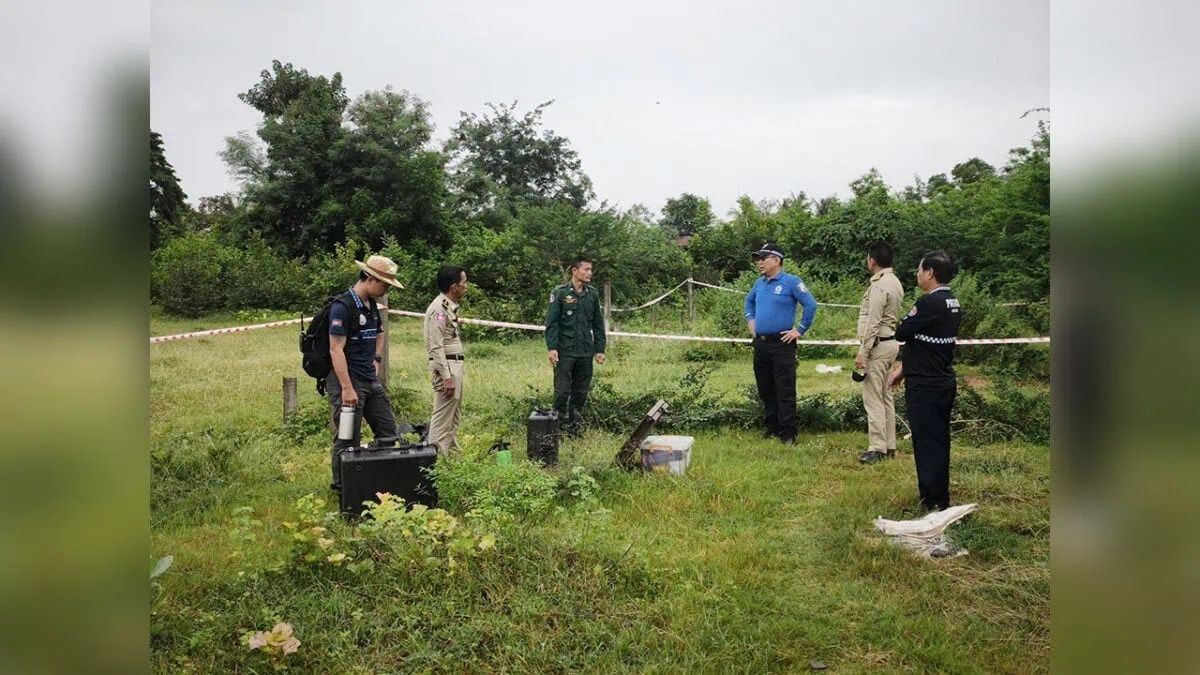
Cambodia's law enforcement agencies have mobilised an active investigation into two separate child homicide cases triggered by the grim discovery of two young bodies in Banteay Meanchey province on July 28. The Cambodian National Police have partnered with the Child Protection Unit (CPU) to conduct independent inquiries into each death, treating them as distinct criminal matters rather than linked offences. The simultaneous investigations represent a significant deployment of investigative resources at both provincial and national levels.
The first body discovered on the morning of July 28 belonged to a 15-month-old child, who was found in a pond within Mongkol Borei district around 8am. Several hours later on the same day, authorities recovered the body of a five-year-old child in Teuk Thla commune, an area located elsewhere in the province. The younger child had been reported missing three days earlier on July 25, with the elapsed time between disappearance and discovery adding to the complexity of the investigation. The coinciding discoveries of two deceased minors within hours of one another prompted immediate escalation to higher levels of provincial law enforcement.
Following notification of the discoveries, the CPU's dedicated homicide investigation team swiftly engaged with provincial police forces and technical specialists from the Minister of Interior's Department of Technical and Scientific Police. This collaborative structure allowed forensic teams to conduct simultaneous crime scene examinations while maintaining separate investigative tracks for each case. The involvement of the national-level technical and scientific division indicates that authorities are deploying advanced investigative methodologies alongside traditional detective work, reflecting increased sophistication in Cambodia's criminal investigation capacity.
CPU director James McCabe issued a formal statement emphasising the agency's commitment to conducting thorough and professional investigations into both deaths. He articulated that the combined efforts of Cambodian police and partner organisations would deploy comprehensive investigative resources to pursue both homicide cases to their fullest extent. McCabe's statement underscored a determination to ensure that anyone identified as involved in either death would face prosecution through Cambodia's court system, signalling that the investigation phase would ultimately lead to judicial proceedings if evidence supports charges.
The CPU's August 3 statement clarified that both cases are being treated as completely separate incidents with no apparent connection between them. This distinction carries investigative significance, as it means authorities are not pursuing a theory of serial activity or a common perpetrator. Instead, each death is being examined as an isolated homicide requiring its own evidentiary foundation and investigative strategy. Such compartmentalisation allows investigators to focus resources efficiently without pursuing potentially misleading investigative threads.
For regional observers monitoring child safety issues across Southeast Asia, the Cambodian cases underscore ongoing vulnerabilities facing young children in parts of the region. While Cambodia has implemented child protection mechanisms including the dedicated CPU, which operates with international support, such tragic discoveries periodically surface concerning gaps in child welfare infrastructure. The existence of the CPU itself reflects Cambodia's recognition of the need for specialised units dedicated to child-related crimes, though questions remain about resource levels and rural coverage areas where some incidents occur.
The investigative deployment in this instance demonstrates that when child deaths occur, Cambodia's authorities mobilise multiple agencies and technical capabilities. However, the severity and frequency of such cases often depend on broader child protection frameworks extending beyond criminal investigation to prevention, education, and community safeguarding. The relatively sparse information released publicly suggests authorities are maintaining operational security to protect investigative integrity, a standard practice in active homicide inquiries.
Authorities have indicated that no further operational details will be disclosed while investigations remain active. This information restriction, while potentially frustrating to observers seeking transparency, reflects standard investigative protocol designed to preserve evidence integrity and avoid compromising ongoing work. Public release of investigative details in active cases can alert potential suspects, complicate witness management, and prejudice potential future legal proceedings.
The involvement of international personnel at leadership levels within the CPU, as evidenced by director James McCabe's prominent role, reflects Cambodia's engagement with international child protection standards and expertise. This external partnership component has characterised Cambodia's justice sector development over recent decades, particularly in specialised areas requiring technical capacity. The CPU's cooperation with Cambodian National Police illustrates how domestic and international agencies can coordinate in response to serious crimes affecting vulnerable populations.
For Malaysian policymakers and child welfare advocates, the Cambodian situation offers comparative perspective on child protection systems across the region. Malaysia maintains its own child protection mechanisms and investigative protocols, yet comparative case studies from neighbouring countries can illuminate emerging vulnerabilities and effective practices. The resource intensity evident in Cambodia's dual investigation demonstrates the operational demands that child homicide cases place on law enforcement systems, particularly in provinces with fewer urban concentrations of investigative specialists.
The pathway from investigation through to prosecution and judicial resolution will likely extend over months or years, during which families await justice while agencies work through forensic evidence, witness testimony, and legal procedures. Cambodia's courts system, while strengthened over recent years, continues to manage substantial caseloads with variable resources, meaning the ultimate resolution of these cases may unfold gradually. The CPU and National Police's commitment to pursue cases to prosecution represents an important institutional obligation to victims' families and to broader principles of accountability for crimes against children.

