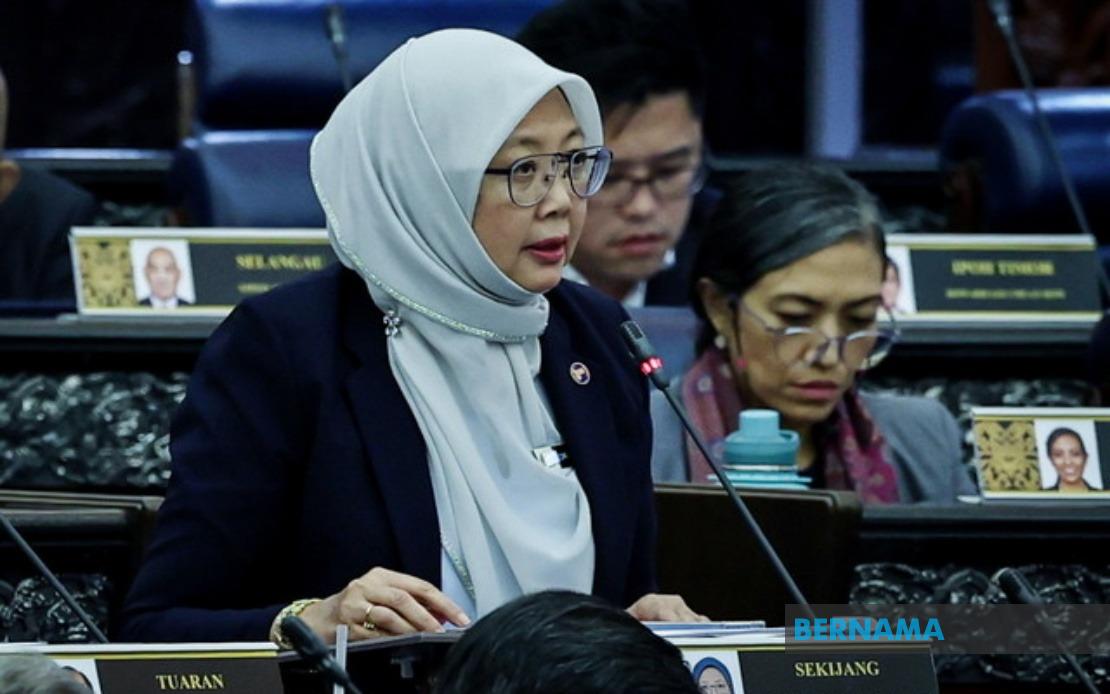
The chairman of the Government Backbenchers Club has called for full public disclosure of efforts to reform Malaysia's Tabung Haji, arguing that transparency is essential to rebuilding trust among the millions of Muslims who depend on the institution for managing their savings for the haj pilgrimage. Datuk Seri Dr Zaliha Mustafa, the MP for Sekijang, made the appeal during parliamentary debate following a ministerial briefing on findings from the Royal Commission of Inquiry that examined the organisation's operational collapse. She emphasized that while government progress in implementing the 25 RCI recommendations was welcome, Parliament and the public deserved far greater detail about which proposals had been completed, which remained underway, and realistic timelines for those still pending.
The Tabung Haji crisis represents one of Malaysia's most significant institutional failures in recent memory, with the organisation recording substantial losses that threatened the retirement and religious savings of hundreds of thousands of Malaysians. Established as a sacred trust to facilitate pilgrimage to Mecca while preserving depositors' capital through prudent investment, the institution instead became embroiled in poor financial decisions, governance lapses, and questionable asset purchases that eroded public confidence. The Royal Commission's investigation, conducted over roughly eighteen months before its report reached the Yang di-Pertuan Agong in late August 2022, uncovered systemic weaknesses spanning the period from 2014 to 2020. By the time the 211-page document was eventually released to the public, the damage to Tabung Haji's reputation had already been severe.
Dr Zaliha's intervention reflects growing parliamentary and public frustration with the pace and transparency of institutional recovery. Although Tabung Haji reported having implemented three-quarters of the RCI's recommendations as of late July, the absence of publicly detailed progress reports means ordinary Malaysians remain uncertain about whether their savings face ongoing risk. The call for a formal, published implementation status document aligns with broader demands for accountability in how Malaysia's major institutions are managed and reformed following scandals. It also underscores a critical point: institutional recovery requires not merely technical compliance with reform measures, but sustained restoration of public confidence, particularly among the Muslim community who view Tabung Haji as a distinctly Islamic financial instrument deserving of special custodianship.
Dr Zaliha structured her parliamentary intervention around three core concerns that cut to the heart of why Tabung Haji failed so dramatically. The first addresses the organisation's financial health and how profits are distributed to depositors—a fundamental measure of whether reform is genuinely protecting and growing members' capital. The second examines investment practices, recognising that the RCI investigation revealed major errors in asset acquisition and portfolio management. The third, and perhaps most politically charged, concerns governance accountability and the role of leadership in permitting such widespread institutional decay. These three dimensions represent the primary mechanisms through which Tabung Haji can either restore itself or continue to deteriorate, making them essential priorities for any reform agenda.
Central to Dr Zaliha's critique is the RCI's own finding that political pressure ahead of general elections materially contributed to Tabung Haji's financial crisis. This revelation cuts against easy narratives blaming external economic conditions or individual administrative errors. Instead, it suggests that Tabung Haji became compromised by electoral considerations, with leadership making decisions designed to satisfy short-term political objectives rather than protect long-term depositor interests. The commission appears to have concluded that the institution was exploited for political advantage, a conclusion that carries profound implications for how Malaysians should view the governance of state-linked organisations more broadly. If major institutions can be bent to serve electoral calendars rather than their constitutional mandates, the entire system of public trust is undermined.
Dr Zaliha specifically raised questions about the conduct and involvement of Datuk Seri Abdul Azeez Abdul Rahim, the former chairman of Tabung Haji's board. While Abdul Azeez officially served as a non-executive chairman, the evidence suggests his hands were far more active than the title implies. Beyond his board position, he held multiple roles across Tabung Haji's subsidiary companies and related entities, affording him substantial influence over investment decisions and strategic initiatives. Most provocatively, Dr Zaliha referenced allegations that cash held in accounts connected to the former chairman once reached RM170 million, a figure that raises acute questions about internal financial controls and the movement of institutional resources. These details have not been fully explained in public discourse, leaving a significant transparency gap that invites speculation and erodes confidence.
The timing of the RCI's establishment and its eventual public release reflects the Malaysian government's own gradual acknowledgement of institutional crisis. Announcing the commission in 2021 and appointing members in January 2022 represented official recognition that problems at Tabung Haji had become too serious to manage through routine administrative channels. Yet the delay in releasing the 211-page report to the public—it was presented to the Yang di-Pertuan Agong in August 2022 but only recently made widely available—suggests ambivalence about full accountability. This pattern of delayed disclosure, combined with the absence of comprehensive implementation reports, reinforces perceptions that the government may prefer managing the scandal quietly rather than achieving genuine institutional transformation through public scrutiny and debate.
For Malaysian policymakers and citizens, the Tabung Haji situation carries lessons extending far beyond one institution. It demonstrates how state-linked organisations can become vulnerable to political interference when governance structures lack sufficient independence and transparency. It shows that technical compliance with reform recommendations, by itself, cannot fully restore institutional legitimacy if the public remains uncertain about whether underlying problems have genuinely been addressed. It illustrates the particular vulnerability of institutions designed to serve specific communities or religions, which may be subject to distinctive political pressures and expectations. Most fundamentally, it reinforces the principle that institutional reform in a democratic society must include transparent public accounting of progress, failures, and future direction.
Dr Zaliha's proposal for formal, published progress reports on RCI implementation represents a straightforward mechanism to address these concerns. Such reports would document which of the 25 recommendations have been fully adopted, which remain incomplete, and what timelines govern remaining work. They would also require the government and Tabung Haji leadership to publicly explain the substance of recovery efforts related to lost assets and compromised investments. This transparency would serve multiple functions: it would demonstrate good faith commitment to institutional reform, provide depositors with factual bases for assessing their ongoing risk, enable Parliament to perform meaningful oversight, and begin rebuilding the public trust that institutional failure had shattered. Without such disclosure, recovery efforts risk remaining opaque initiatives that may satisfy technical requirements without genuinely restoring public confidence.
The broader implications for Southeast Asia and the Islamic financial sector merit consideration. If Malaysia's largest Islamic savings institution can suffer such a dramatic institutional collapse linked to political interference, other developing democracies managing Islamic financial instruments must grapple with similar vulnerabilities. The Tabung Haji case becomes a cautionary example of how religious financial institutions require special protections against political manipulation and how transparency serves not merely Western liberal values but fundamental Islamic principles regarding honesty and protection of entrusted wealth. As Islamic finance expands across Southeast Asia, the lessons from Tabung Haji's recovery—or continued stagnation—will influence how other nations structure governance of their own institutions serving Muslim communities.

