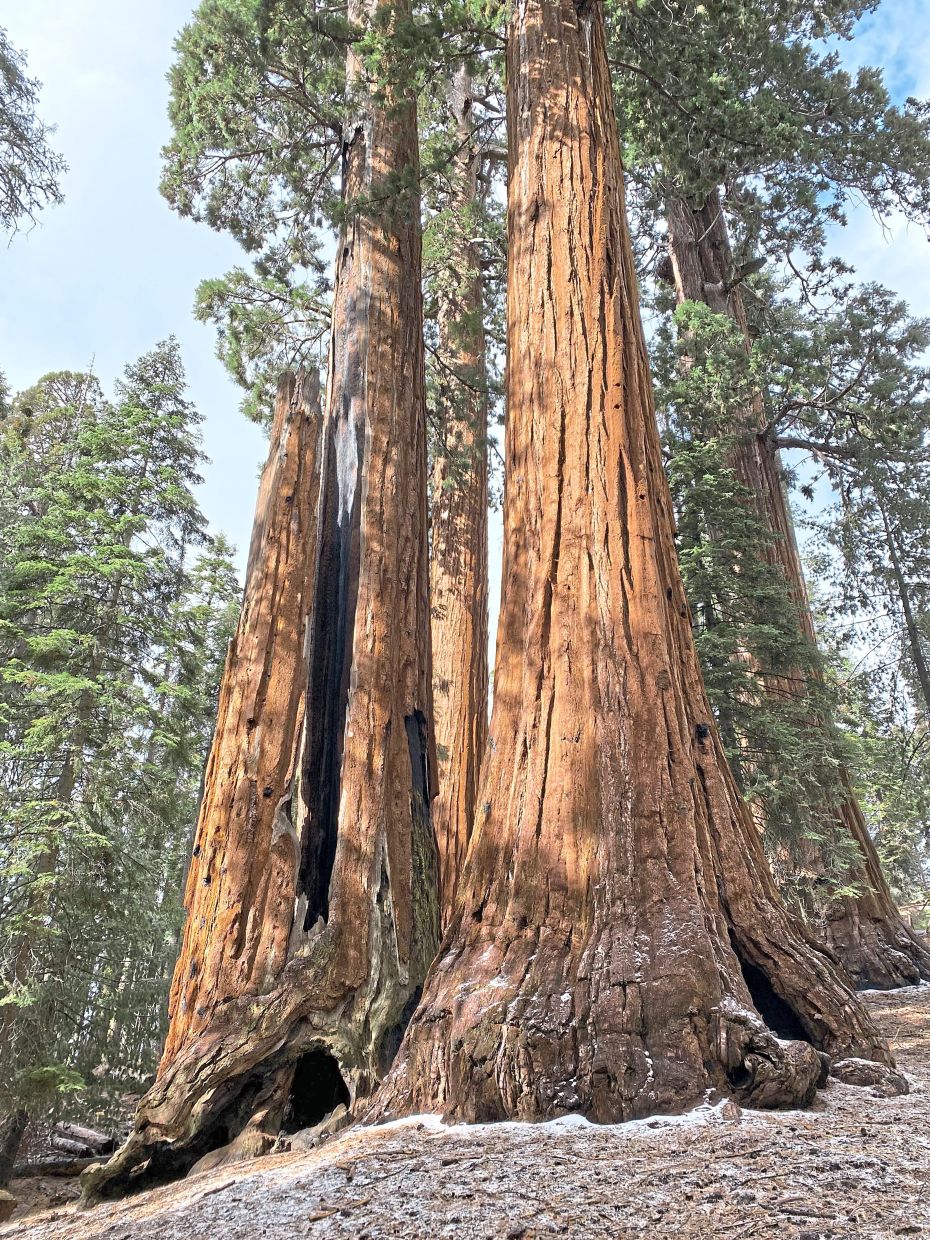
A collaborative restoration programme spanning California's ancient giant sequoia forests represents one of the most significant environmental recovery efforts in the western United States. Initiated in response to devastating wildfires that claimed roughly one-fifth of the world's remaining giant sequoias in 2020 and 2021, the Giant Sequoia Lands Coalition has spent the past four years systematically treating nearly 9,500 hectares across the southern Sierra Nevada to reduce catastrophic fire risk and restore these irreplaceable ecosystems.
The tragedy that spurred this effort unfolded across multiple fire seasons, when unprecedented wildfire intensity swept through Sequoia National Park, Sequoia National Forest and surrounding areas, killing thousands of the planet's most massive trees. These iconic giants, which can tower over 91 metres and live for three millennia, represent a biological legacy unmatched anywhere else on Earth. The scale of the losses left scientists, park administrators and conservationists confronting uncomfortable questions about management failures and what preventative measures might have been deployed to avert the disaster.
The eight primary organisations steering the restoration partnership—ranging from California State Parks and the National Park Service to the US Forest Service, Bureau of Land Management, Tulare County, and tribal authorities—recognised that reactive firefighting alone would prove inadequate. Since 2022, crews have completed fuel reduction work across 44 of California's 94 giant sequoia groves, while also replanting 682,000 sequoia seedlings in severely burnt areas. This multifaceted approach combines traditional ecological knowledge with modern forestry science, acknowledging that these ancient forests evolved alongside periodic fire rather than in fire-free conditions.
The scientific foundation for this work rests on a fundamental understanding of how giant sequoias function within their natural environment. These trees possess remarkable fire-adapted characteristics: their enormous cones contain resin that specifically requires fire to open and release seeds, while their distinctive reddish bark, which can reach approximately 60 centimetres thick, functions as biological insulation protecting the living tissue beneath from intense heat. Before industrial-era fire suppression policies took hold, lightning strikes and Indigenous-managed burns naturally moved through these groves every one to two decades, maintaining the ecosystem in a state of dynamic equilibrium.
The catastrophic shift came during the past century as aggressive wildfire suppression policies, implemented without understanding their ecological consequences, allowed dense accumulations of small trees, brush and dead wood to develop beneath and around the giant sequoias. When modern wildfires eventually ignited in these overstocked conditions, they burned with unprecedented severity and temperature, fundamentally overwhelming the trees' evolved defences. As University of California researchers have documented, the 2020 and 2021 fires represented a watershed moment—covering thousands of acres with high-severity burns that killed trees that had endured for two millennia.
Climate disruption has exacerbated these vulnerabilities considerably. Recent droughts between 2012 and 2016, and again from 2020 to 2022, killed millions of additional Sierra Nevada trees, creating vast quantities of additional fuel that intensifies wildfire behaviour. Warming temperatures reduce soil moisture and increase vegetation desiccation, making flames spread faster and burn hotter. This convergence of climatic stress and forest overstocking has compressed what scientists describe as a race against time—a period during which preventative treatment must be completed before the next catastrophic fire cycle arrives.
The restoration strategy focuses on removing the accumulation of smaller tree species that surround giant sequoias in unnaturally dense thickets, particularly white fir, red fir and incense cedar. Foresters also fell dead sugar pines and ponderosa pines that succumbed to drought stress. By systematically reducing this vegetative density, restoration crews accomplish multiple objectives simultaneously: wildfires entering treated groves burn with less intensity and remain cooler, while simultaneously increased light penetration allows sequoia seedlings to establish and grow. Some larger timber harvested from these operations has been sold to lumber companies on private lands or demonstration forests, creating partial cost recovery that offset the expenses of extensive thinning operations.
Following thinning, managers employ controlled burning techniques that draw directly from methodologies Indigenous tribes utilised for centuries before Euro-American contact. These carefully managed burns remove accumulated debris and further reduce fuel loads while restoring the natural fire regime these ecosystems require. Officials emphasise that these restoration efforts represent not a radical transformation but rather an intentional return to pre-suppression conditions—forests that maintained open structure, reduced fuel density, and natural fire-driven regeneration cycles.
The coalition has not proceeded without encountering legal challenges. In 2022, the Earth Island Institute initiated litigation against the National Park Service seeking to halt fuel reduction projects in Merced Grove within Yosemite National Park, contending that insufficient environmental review had preceded the work. Federal courts rejected this challenge both at trial and upon appeal in 2023, with the Ninth Circuit Court of Appeals upholding the lower court's dismissal. This legal clarity has enabled work to proceed in Merced Grove, which has experienced six wildfire threats over the past 15 years and represents a critical priority for ongoing treatment.
For Malaysian and Southeast Asian observers, this restoration effort illuminates broader patterns relevant to tropical and subtropical forest management across the region. The giant sequoia case demonstrates how fire suppression policies implemented with incomplete ecological knowledge can inadvertently degrade the very ecosystems they intended to protect, a cautionary principle applicable to forest management strategies across Southeast Asia. The coalition's integrated approach—combining Indigenous knowledge, scientific expertise, community engagement, and adaptive management—provides a template for addressing complex forestry challenges where human intervention has fundamentally altered natural processes.
The scale of the restoration programme remains extraordinary: across four years, the partnership has treated 9,409 hectares, with ambitions to expand coverage significantly as resources and personnel become available. Programme managers acknowledge the magnitude of remaining work, emphasising that restoration of all 94 groves to natural fire-adapted conditions represents a multi-decade commitment. Yet early results encourage optimism that systematic intervention can meaningfully reduce catastrophic fire risk while restoring ecosystem functionality for these ancient trees, many of which might otherwise face extinction.
Looking forward, the Giant Sequoia Lands Coalition's experience underscores that environmental recovery is possible even at substantial ecological loss scales, provided that coordinated governance, sustained funding, scientific rigour, and inter-agency cooperation align around shared conservation objectives. As another fire season approaches, the partnership expresses confidence that the knowledge exists and the implementation capacity has been developed to prevent repetition of the 2020 and 2021 catastrophes—though vigilance and continued commitment to long-term restoration ecology remain essential to ensuring that California's most ancient trees endure for future generations.

