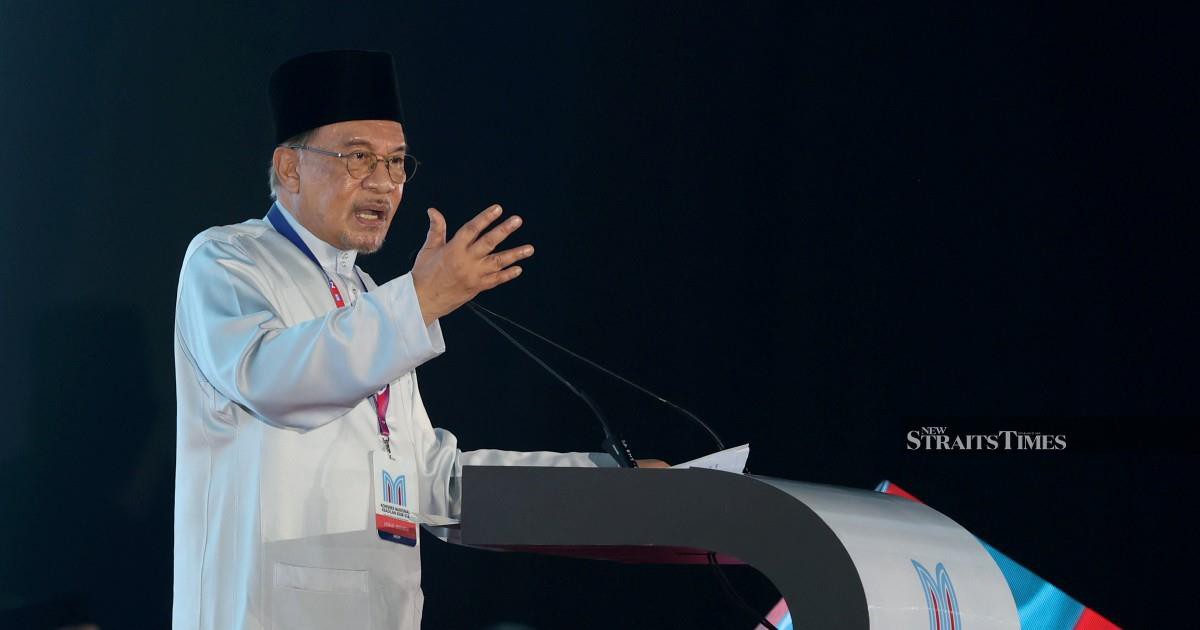
Prime Minister Datuk Seri Anwar Ibrahim has confirmed that the government intends to present its formal proposal to repeal the Universities and University Colleges Act 1971 (AUKU) to the Cabinet for decision this Wednesday, marking a critical juncture in a debate that has polarised Malaysian academia and civil society for decades. The announcement, made during a visit to Ayer Keroh, indicates that the Pakatan Harapan administration is pressing ahead with one of its most significant policy commitments regarding institutional autonomy and student activism on Malaysian campuses.
The AUKU, enacted over five decades ago, has long been one of Southeast Asia's most restrictive pieces of legislation governing university life. The law explicitly prohibits students and academics from participating in political activities, engaging in strike action, or organising public demonstrations without prior permission. Universities have relied on the statute to justify strict controls over student unions, guest speaker invitations, and campus discourse, citing national stability and institutional order. For generations of Malaysian undergraduates, these restrictions have represented a fundamental constraint on the freedoms that their counterparts at universities elsewhere in the region and globally take for granted.
The path to Wednesday's Cabinet meeting has been lengthy and contested. When Pakatan Harapan first took office in 2018, abolishing AUKU was part of its reform agenda. However, the promise has faced resistance from various quarters, including within the bureaucracy and among those who argue that unchecked student activism could destabilise institutions or compromise focus on academic excellence. The intervening years saw multiple announcements, consultations, and delays as different government factions weighed the costs and benefits of removal. For students and academics who have advocated for repeal, the repeated postponements have tested their patience.
The revival of the abolition proposal under Anwar's leadership reflects broader shifts in how the government conceptualises university governance and democratic participation. Senior officials have increasingly acknowledged that the blanket prohibition on student political engagement is counterproductive in an era when universities globally are expected to foster critical thinking and civic engagement. Removing AUKU could align Malaysia's higher education framework more closely with the liberal democratic values that the government claims to champion, whilst also potentially reducing the image gap between Malaysian and regional universities seeking to attract international talent and students.
However, the Cabinet decision will not automatically translate into swift parliamentary passage and implementation. The government must still navigate the legislative process, where opposition voices and institutional interests may raise objections. Some stakeholders remain concerned that withdrawal of AUKU-style restrictions could lead to ideological politicisation of campuses, radicalisation through extremist groups, or disruption to teaching and research. University administrators have also voiced apprehension about managing more assertive student bodies without the legal tools they have historically relied upon. These dynamics will likely shape the broader policy design around AUKU's replacement or sunset.
For Malaysian students, abolition would represent a watershed moment. It would legally permit student unions to operate, allow campus-based political clubs and associations, and create space for debate on contentious public issues within institutional settings. This aligns with global higher education norms and reflects how universities in neighbouring countries like Thailand and the Philippines, despite their own governance challenges, permit vastly greater student organising than Malaysia currently allows. Young Malaysians studying abroad already experience these freedoms; the domestic reform would level that discrepancy.
The regional dimension merits attention as well. Southeast Asia contains a diverse spectrum of university governance models. While Singapore, like Malaysia, maintains tight institutional control, countries including Indonesia and Vietnam have permitted greater student activism in recent years, sometimes with turbulent results but often with long-term institutional adaptation. Malaysia's decision to move in this direction would position it as more progressive than some neighbours whilst remaining cautious in comparison to mature democracies. The decision could influence discussions within ASEAN about university autonomy and academic freedoms as a development indicator.
Beyond the symbolic and governance aspects, abolishing AUKU has practical implications for university operations and recruitment. International academics and researchers sometimes cite Malaysia's restrictive campus environment as a factor in deciding whether to accept positions at local institutions. Student recruitment, particularly for postgraduate programmes, may also be affected by perceptions of limited intellectual freedom. Removing this perceived barrier could contribute incrementally to efforts to elevate Malaysian universities in global rankings and research output metrics, which have been a longstanding policy priority.
Anwar's public announcement of the Cabinet tabling appears calculated to build momentum and constrain backtracking. By signalling executive commitment at this stage, the Prime Minister signals to stakeholders—students, academics, civil society, and potential critics—that the issue is now moving toward resolution. This transparency also serves to reinforce his administration's reform credentials at a time when it faces various political and economic pressures. Successfully abolishing AUKU could be portrayed as a flagship achievement in democratisation and institutional modernisation.
The Cabinet meeting on Wednesday will reveal whether consensus exists within the government to proceed. If ministers approve the proposal, the next phase will involve crafting replacement regulatory frameworks to address legitimate institutional concerns about maintaining order and academic standards without resorting to blanket political prohibitions. This technical work could prove as consequential as the symbolic repeal itself, determining whether universities operate with genuine autonomy or merely the appearance of it. The real test of reform will lie not merely in AUKU's removal from the statute books, but in how institutions adapt to manage the academic freedom and student agency that its absence permits.

