Malaysia's Cabinet has ordered the Ministry of Home Affairs and Ministry of Transport to deliver a comprehensive strategy for fortifying airport security within two weeks, signalling urgent concern over lapses that have undermined confidence in the country's border defences. Home Minister Datuk Seri Saifuddin Nasution Ismail made the announcement during a visit to Sandakan, emphasizing that the government views recent security incidents as serious threats to Malaysia's international standing and institutional reliability.
The push for accelerated reform follows a cascade of incidents that have exposed vulnerabilities in Malaysia's airport screening protocols. Most notably, a Malaysian airline pilot was apprehended following the discovery of approximately 25 kilograms of MDMA at Indonesia's Soekarno-Hatta Airport, highlighting how illicit materials can reach international terminals despite supposedly robust checks. These breaches have created the troubling perception abroad that Malaysia's airports lack adequate safeguards, potentially affecting the country's reputation as a stable, secure destination for international travellers and investors.
Saifuddin elaborated that the government is moving swiftly to draft a detailed enhancement framework involving collaboration across multiple government agencies. The two-week timeline underscores the administration's determination to restore public and international confidence by demonstrating that security gaps will be plugged through concrete, coordinated action. The involvement of both transport and home affairs ministries reflects recognition that airport security requires integrated coordination between border management, customs, aviation authorities, and intelligence bodies.
Beyond airport security, the minister highlighted parallel diplomatic efforts to reverse negative perceptions of East Malaysian security. He revealed that several nations, including Japan and Switzerland, have already modified their travel warnings for Sabah's eastern coast following sustained government outreach and documented evidence of stability. This diplomatic rehabilitation effort addresses the collateral reputational damage caused by longstanding security concerns in the region, which have deterred tourism and business development.
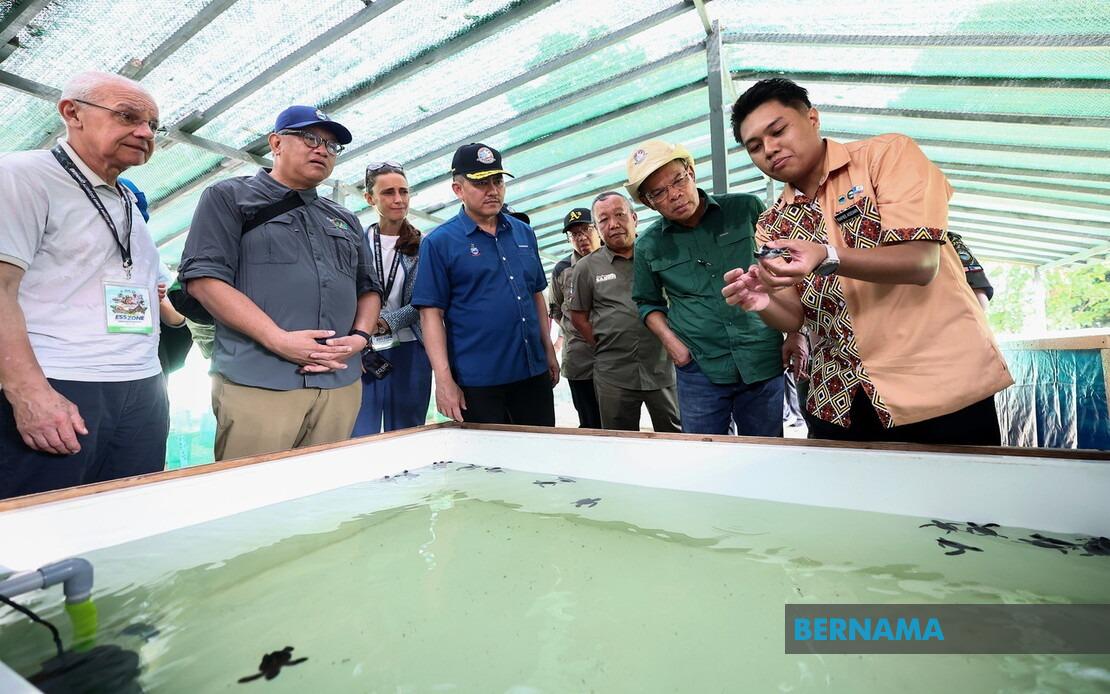
To underscore improvements on the ground, Saifuddin arranged a familiarisation tour for fourteen diplomatic representatives from various countries. These foreign officials visited the Eastern Sabah Security Zone and key tourist destinations to observe firsthand the progress in maintaining order and developing economic potential. The initiative reflects a strategic approach: demonstrating tangible improvements and encouraging diplomats to communicate balanced, evidence-based assessments to their home governments, rather than relying on outdated or exaggerated threat perceptions.
The Eastern Sabah Security Command, responsible for maritime and terrestrial security in a strategically sensitive region, has compiled an impressive operational record over the past six months. Between January and the end of June, ESSCOM conducted nearly 897,000 inspections and executed 307 arrests through rigorous checkpoint operations. The statistics provide substance to claims of enhanced vigilance, though they also suggest the volume of traffic and number of enforcement actions required to maintain control across the sprawling region.
Enforcement outcomes during the first half of the year further demonstrate the command's effectiveness in disrupting criminal networks and interdicting contraband. Authorities seized contraband valued at RM23.37 million through coordinated operations spanning land borders and maritime territories. These seizures reflect drugs, weapons, and other illicit goods that would otherwise have entered Malaysia or transited through the country, underscoring the real security threats that justify significant resource allocation to the region.
Government commitment to regional security infrastructure is reflected in substantial financial investment. Over ESSCOM's thirteen years of operation, the federal government has committed RM723 million to the Eastern Sabah Security Zone, covering equipment acquisition, operational expenses, and logistical support. This level of sustained funding indicates that safeguarding national sovereignty in this strategically important area—near maritime boundaries with the Philippines and Indonesia—remains a budgetary priority despite competing expenditure demands elsewhere.
For Malaysian readers and regional observers, the cabinet's directive carries multiple implications. Domestically, it signals that senior leadership acknowledges security lapses and is willing to allocate urgent attention and resources to correction. Internationally, it demonstrates that Malaysia takes its obligations to secure its borders seriously and will act decisively when vulnerabilities emerge. However, the timeline also raises questions about implementation depth: whether two weeks suffices for KDN and MOT to develop realistic, comprehensively coordinated protocols rather than superficial adjustments.
The broader context matters for Southeast Asia. Malaysia's major airports—including those in Kuala Lumpur, Penang, and Kota Kinabalu—serve as critical transit hubs for regional and global passenger flows. Weaknesses in Malaysian airport security create spillover risks for neighbouring states and regional aviation networks. Correspondingly, improvements benefit not only Malaysia but the broader security architecture that countries across the region depend upon for safe travel and commerce.
Looking ahead, the success of this initiative will depend on implementation rigour. The two-week submission deadline addresses the political imperative to demonstrate decisive action, but sustainable security enhancement requires sustained funding, adequate personnel training, modern technology deployment, and inter-agency coordination that extends far beyond the initial planning phase. Malaysian officials will need to ensure that measures announced satisfy international security standards while remaining operationally feasible given airport traffic volumes and resource constraints.

