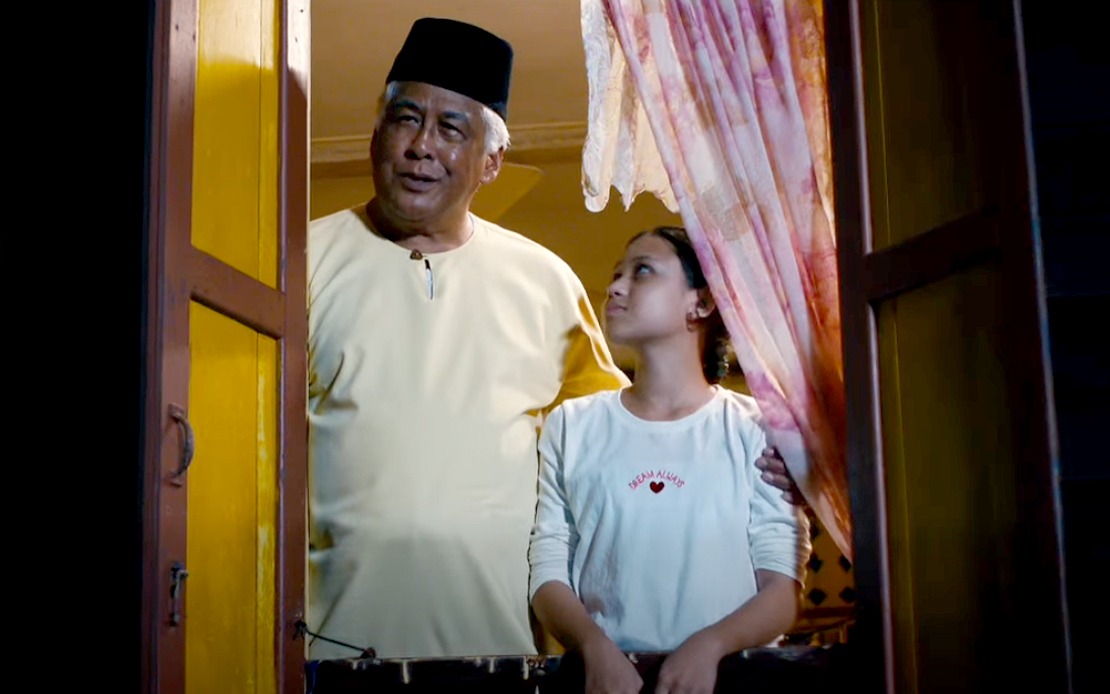
Malaysia's top government officials have orchestrated a concerted patriotic push across multiple digital platforms, seizing the nation's National Day period to mobilize public sentiment around themes of unity, sacrifice, and collective national responsibility. The coordinated messaging represents a deliberate effort by the Cabinet to reinforce the administration's emphasis on social cohesion at a moment when Malaysia continues navigating the complexities of its diverse, multi-ethnic composition.
The campaign gained particular prominence through Deputy Prime Minister Datuk Seri Fadillah Yusof, whose social media channels distributed an eight-minute emotional documentary featuring veteran actor Datuk Jalaluddin Hassan portraying an intergenerational conversation between grandfather and grandchild. The production deliberately framed national independence not as an abstract historical achievement but as a lived inheritance demanding active stewardship from contemporary Malaysians. Fadillah's accompanying address crystallized the government's framing: that Malaysia's existence as a sovereign nation represents a collective inheritance requiring constant vigilance and deliberate cultivation of national pride among all communities.
The Deputy Prime Minister's explicit invocation of the Jalur Gemilang as a unifying symbol served a dual rhetorical purpose—simultaneously appealing to patriotic sentiment while attempting to transcend traditional communal boundaries that have historically shaped Malaysian politics. His emphasis on "guarding sovereignty, respecting differences, and strengthening togetherness" reflected an ongoing governmental preoccupation with presenting national identity as encompassing rather than exclusionary, a calculated positioning particularly important for the Unity Government's broader political legitimacy.
Deputy Prime Minister Datuk Seri Dr Ahmad Zahid Hamidi extended this messaging through explicit reference to the 2026 National Day Perdana Address, positioning government policy announcements as evidence of institutional responsiveness to public sentiment. His remarks underscored the administration's assertion that development benefits flow comprehensively across all societal strata when policy-making centers citizen needs rather than narrow partisan interests. This framing implicitly addresses perennial critiques regarding uneven development distribution across Malaysia's regions and communities.
The National Unity Minister Datuk Aaron Ago Dagang introduced a more philosophically sophisticated argument into the campaign's narrative architecture. By explicitly rejecting assimilationist models of national unity—declaring that Malaysians need not abandon linguistic, cultural, or religious particularity to achieve cohesion—Dagang articulated a vision of pluralistic nationalism that has become increasingly prominent in contemporary Malaysian political discourse. His emphasis on constructing a "shared identity as Malaysians" positioned above communal affiliations represents an attempt to reconcile Malaysia's constitutional multiculturalism with practical governance challenges that frequently pit community interests against state imperatives.
Defence Minister Datuk Seri Mohamed Khaled Nordin reframed national security discourse by introducing the Total Defence framework, which distributes responsibility for territorial integrity and internal stability across civilian populations rather than concentrating defense concepts exclusively within military institutions. This approach acknowledges that contemporary security threats—encompassing everything from cyber vulnerabilities to social fragmentation—exceed traditional military capacities. By positioning ordinary citizens as essential contributors to national security through civic discipline and intercommunal respect, Khaled articulated a vision of patriotism grounded in everyday behavioral choices rather than ceremonial flag-waving.
Home Affairs Minister Datuk Seri Saifuddin Nasution Ismail connected Malaysia's 69th National Day theme—"Malaysia MADANI: Kesejahteraan Dinikmati" (Malaysia MADANI: Prosperity Enjoyed)—to foundational premises about peace as prerequisite for economic advancement. His formulation constructed an explicit causal chain linking personal security and political stability to economic growth and individual material welfare. For Malaysian audiences grappling with cost-of-living pressures and economic anxieties, this framing offered to situate their individual economic struggles within a larger matrix of national cohesion, potentially encouraging civic compliance as instrumental to personal prosperity.
Human Resources Minister Datuk Seri R. Ramanan echoed the administration's characterization of national diversity as foundational strength rather than managed problem, emphasizing that togetherness, industriousness, and patriotic commitment would generate shared prosperity. This messaging appears calibrated toward workforce audiences, implicitly connecting labor productivity and social responsibility to national progress.
Domestic Trade and Cost of Living Minister Datuk Armizan Mohd Ali grounded the patriotic rhetoric within the concrete domain of economic policy, situating National Day observance as an opportunity for citizens to renew commitments to ensuring prosperity distribution across all societal layers. By linking independence celebrations to responsibilities regarding equitable economic benefit-sharing, Armizan connected abstract patriotic sentiment to material concerns dominating contemporary Malaysian consciousness.
The coordinated campaign's deployment across Facebook, Instagram, and X demonstrates deliberate governmental engagement with digital spaces where Malaysian citizens increasingly construct political understanding. Rather than confining patriotic appeals to ceremonial contexts or state media, the Cabinet's strategy involves continuous social media presence throughout the celebration period, attempting to sustain national unity messaging in the everyday information environments where Malaysians encounter political communication.
For Southeast Asian observers, Malaysia's coordinated Cabinet patriotic campaign illuminates contemporary democratic governance strategies in culturally plural societies. The campaign's emphasis on inclusive nationalism, citizen participation in security provision, and connection between political stability and economic welfare reflects challenges confronting region-wide efforts to construct coherent national identities amid significant ethnic, religious, and economic diversity. The Cabinet's reliance on emotional storytelling, intergenerational messaging, and deliberate rhetorical inclusivity suggests that traditional top-down patriotic campaigns have yielded to more nuanced appeals acknowledging citizens' multiple, sometimes competing identities.

