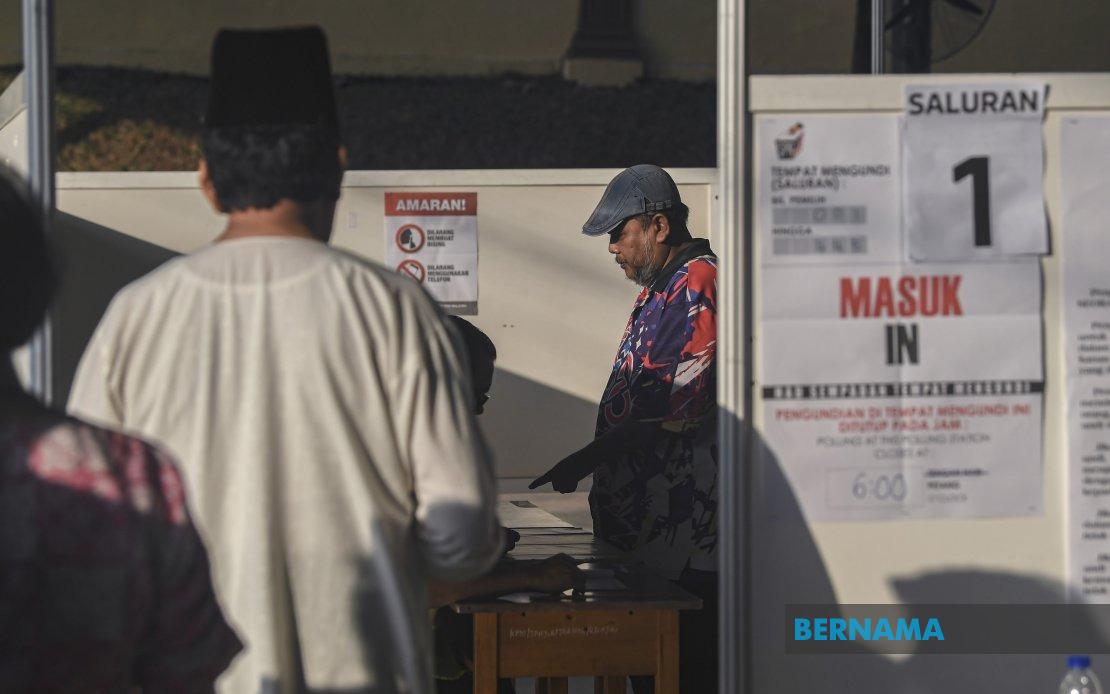
The 16th Johor State Election proceeded smoothly on July 11 as voting commenced across the state, with several prominent federal cabinet members fulfilling their civic duties at polling stations in their respective constituencies. The participation of ministers and deputy ministers underscored the significance of the electoral exercise, which aims to determine Johor's political leadership for the coming term. The voting process, which began at 8 am and was set to continue until 6 pm, represented a critical moment for Malaysia's second-largest state by land area, as voters prepared to select representatives who would shape regional development and governance priorities.
Datuk Seri Azalina Othman Said, the Minister in the Prime Minister's Department (Law and Institutional Reform), was among the first senior government figures to cast her ballot, arriving at Sekolah Kebangsaan Bandar Penawar in Pengerang at 8.15 am. Her early participation demonstrated the commitment of the federal administration to the democratic process and set a visible standard for civic participation among the country's leadership. The minister's presence at the polling station, situated in the eastern reaches of Johor, highlighted the geographical spread of government officials across the state during the election day.
Defence Minister Datuk Seri Mohamed Khaled Nordin voted at 8.30 am at Sekolah Kebangsaan Rinting 1 in Masai, exercising his constitutional right as a registered voter. Meanwhile, Plantation and Commodities Minister Datuk Seri Dr Noraini Ahmad participated in the electoral process by voting at Sekolah Menengah Kebangsaan Dato' Onn in Batu Pahat at 8.50 am, bringing senior economic ministry representation to a district known for its agricultural significance. The staggered voting times of these cabinet-level officials reflected the practical realities of managing schedules across the sprawling state while maintaining their ministerial responsibilities.
Deputy ministers also fulfilled their voting obligations during the morning hours. Deputy Works Minister Datuk Seri Dr Ahmad Maslan cast his ballot at 8.40 am at Sekolah Kebangsaan Seri Bahagia in Benut, while Deputy Communications Minister Teo Nie Ching voted at Sekolah Jenis Kebangsaan Cina (SJKC) Kulai Besar at 9.30 am, arriving approximately a quarter-hour before casting her ballot. The participation of these ministerial officers underscored the broad representation of Malaysia's federal government structure in the state election process.
The electoral infrastructure supporting the voting exercise proved to be substantial in scope. A total of 1,076 polling centres were activated simultaneously across Johor at the 8 am opening time, with these venues subdivided into 4,889 individual polling streams to accommodate the electoral participation of approximately 2.7 million registered voters. This logistical arrangement ensured that voters had reasonable access to polling facilities regardless of their residential location within the state, from urban centres like Johor Bahru to rural constituencies in the interior.
The election marked the conclusion of an intensive 14-day campaign period that had ended precisely at midnight the previous evening. During this fortnight, political parties and independent candidates had mobilised supporters, articulated policy positions, and conducted grassroots outreach across the state. The transition from the campaign phase to the voting phase represented a formal shift in the electoral cycle, with candidates and party machinery pivoting from persuasion efforts to mobilisation activities aimed at encouraging turnout among registered voters.
For Malaysian political observers, the Johor election holds particular significance given the state's economic importance, population size, and historical role as a bellwether for national political trends. As the second state to conduct general elections under the current electoral cycle and boundaries, the outcome could provide insights into voter sentiment regarding federal and state governance. The participation of federal cabinet members in voting served both practical and symbolic purposes, demonstrating government continuity while acknowledging the distinct nature of state-level electoral competition.
The polling day operations reflected standardised election management practices established by Malaysian electoral authorities. The simultaneous opening of all polling centres at 8 am ensured consistent start times across time zones and geographic regions, while the 10-hour voting window accommodated voters with varying daily schedules. The presence of returning officers, poll workers, and election observers at each polling stream maintained the transparency and integrity of the voting process.
The Johor election's conduct on July 11 represented a routine yet essential exercise of democratic participation for the state's electoral population. While national media attention often focuses on federal politics and parliamentary elections, state elections serve crucial functions in determining resource allocation, infrastructure development, and policy priorities at the regional level. The voting patterns that would emerge from Johor's 2.7 million voters would provide data points for political analysts seeking to understand shifting preferences among different demographic and geographic constituencies.

