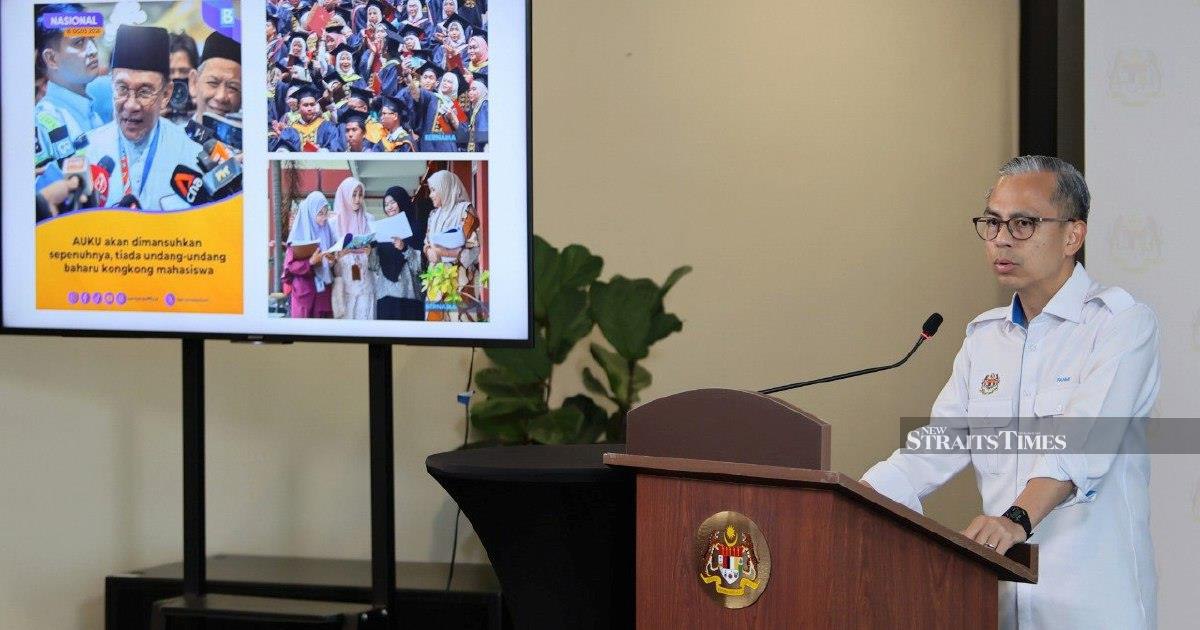
The Malaysian cabinet has not brought Prime Minister Datuk Seri Anwar Ibrahim's recent Taiwan remarks to the table for discussion, according to government spokesman Datuk Seri Fahmi Fadzil. The comments, which prompted a sharp rebuke from Taipei, appear to have not required a formal cabinet deliberation, suggesting the matter was handled at a different level or that officials considered no further discussion necessary at that forum.
The absence of cabinet-level discussion on the Taiwan matter is noteworthy given the diplomatic sensitivities involved. Taiwan remains one of the most complex geopolitical issues in the Asia-Pacific region, with multiple stakeholders holding competing positions. For Malaysia, navigating relations with both Beijing and Taipei requires careful diplomatic choreography, as any perceived favouritism towards one side can trigger tensions. The fact that no cabinet discussion took place suggests either confidence in how the matter was being managed or a conscious decision to avoid elevating the issue unnecessarily.
Anwar's remarks had attracted considerable attention in regional circles, drawing what observers describe as a strong and swift response from Taipei authorities. Such reactions typically signal that Taiwan's government viewed the statements as consequential enough to warrant an official response. The nature and substance of his comments remain central to understanding why they prompted such a reaction, and why the Malaysian government's response involved no formal cabinet deliberation. For Malaysian readers, understanding the diplomatic implications is crucial, as Taiwan-related statements can affect Malaysia's delicate balancing act in regional geopolitics.
The government's decision to rely on Fahmi's statement rather than a broader cabinet discussion reflects how modern governance sometimes handles diplomatic matters through spokesperson communications rather than formal cabinet sessions. This approach allows governments to respond to international developments swiftly without the procedural delays of full cabinet meetings. However, it also raises questions about how comprehensively a sensitive diplomatic issue was reviewed internally before any response was provided.
Malaysia's relationship with Taiwan has historically been shaped by its commitment to the One China policy, a position shared with most nations in the international community. However, Taiwan remains an important trading partner and has growing economic ties with Malaysia. This economic dimension adds complexity to purely political considerations, as governments must weigh diplomatic principles against commercial interests. The apparent lack of cabinet engagement on Anwar's Taiwan remarks suggests the government viewed the matter as falling within existing policy parameters that require no recalibration.
For the broader Southeast Asian context, Malaysian government responses to Taiwan-related issues carry weight beyond bilateral concerns. Regional nations carefully observe how each neighbour handles Taiwan matters, as these interactions can set precedents or influence regional norms. Taiwan itself is increasingly active in Southeast Asia, pursuing economic partnerships and people-to-people exchanges. Malaysia's handling of Taiwan-related diplomatic moments thus serves as a barometer for regional stability and consensus on how to manage cross-strait sensitivities.
The international environment surrounding Taiwan has grown more complex in recent years, with heightened scrutiny on any official statements about the island. Beijing has consistently sought to restrict space for international engagement with Taiwan, while Taipei has attempted to expand its diplomatic footprint. Malaysia, as a significant Muslim-majority nation in Southeast Asia and a key player in regional institutions, occupies an important position in this dynamic. Statements from Malaysian leadership on Taiwan are consequently monitored closely across the region and beyond.
Fahmi's clarification that the cabinet did not discuss the matter may itself carry a message about the government's confidence in how the issue was being managed at the working level. Malaysian diplomatic officials and foreign ministry personnel routinely handle such sensitivities as part of normal operations. By not requiring cabinet-level discussion, the government signalled that the matter fell within the scope of standard diplomatic practice and existing protocols. This reflects how established foreign policy positions often do not require repeated cabinet review unless circumstances materially change.
The episode underscores the practical difference between governance in theory and in practice. Not every diplomatic statement requires cabinet discussion, particularly when it concerns matters already covered by settled national policy. Malaysia's established positions on Taiwan, the One China policy, and non-interference in cross-strait matters provide the framework within which officials operate. When Prime Minister statements align with these positions, additional cabinet deliberation becomes redundant.
Looking forward, this incident highlights the importance of clear and consistent messaging from Malaysian leadership on sensitive geopolitical matters. The rapid rise of Taiwan-related discussions in international forums has made precision in official statements increasingly valuable. For Malaysia, maintaining its balanced approach to cross-strait issues while managing relationships with both Beijing and Taipei remains a delicate task. The decision not to escalate Anwar's remarks to cabinet-level discussion suggests confidence in the government's ability to manage such situations within existing frameworks.

