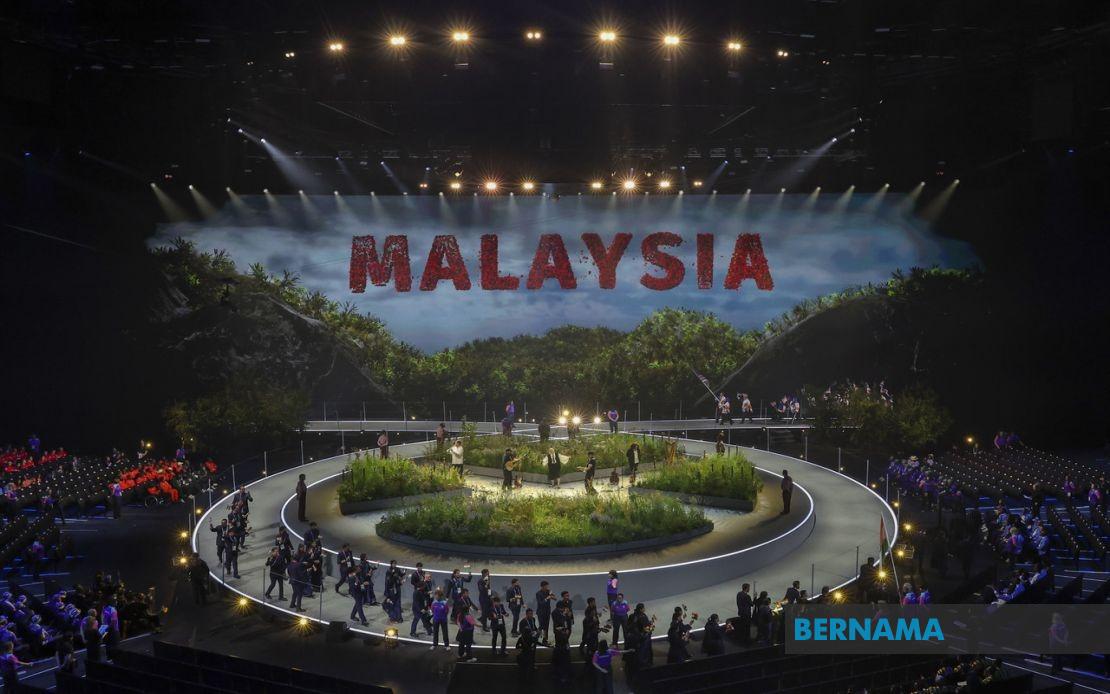
The Malaysian government has formally recognised the exceptional performance of the nation's athletes at the Glasgow 2026 Commonwealth Games, with the Cabinet issuing official congratulations for the contingent's medal haul that significantly surpassed expectations. Communications Minister and MADANI Government spokesman Datuk Seri Fahmi Fadzil announced the government's praise at a post-Cabinet meeting press conference in Putrajaya on Tuesday, underscoring the political importance placed on sporting achievement as a marker of national progress and international standing.
Malaysia's delegation to Glasgow secured eight gold medals, three silver and five bronze—a combined tally of 16 medals that substantially exceeded the initial target of five gold medals set for the campaign. This result marks the strongest Commonwealth Games performance for Malaysia in 16 years, surpassing all outcomes recorded since the New Delhi 2010 edition when the nation won 12 gold medals. The achievement demonstrates not only the quality of Malaysia's athletic development programmes but also reflects improved preparation and investment in training infrastructure that has begun yielding measurable results on the international sporting stage.
Fahmi emphasised that the government views such sporting triumphs as instrumental in building national confidence and projecting Malaysia as a competitive force globally. He stated that the success achieved by national athletes is anticipated to serve as motivation for other competitors to pursue international excellence and continue securing accolades that enhance Malaysia's reputation. The statement reflects broader government strategy linking sports performance to national identity and soft power, particularly relevant as Malaysia seeks to strengthen its regional standing amid evolving geopolitical dynamics in Southeast Asia.
The financial reward mechanism underpinning government recognition comes through the Sports Victory Incentive Scheme, commonly known as SHAKAM, which allocated RM1.1 million to compensate athletes who exceeded performance targets at Glasgow. This financial acknowledgment signals concrete government commitment to supporting elite athletics beyond rhetorical endorsement. The incentive structure represents an investment in sustaining athlete motivation and demonstrating that international success translates into tangible recognition at home—a critical factor in retaining top talent within Malaysia's sporting ecosystem rather than seeing athletes migrate to other countries offering greater financial support.
The Glasgow 2026 result carries particular significance given Malaysia's position within the Commonwealth sporting hierarchy. While larger nations with greater resources dominate medal counts, Malaysia's consistent improvement trajectory suggests that targeted investment and strategic focus on medal-winning sports are yielding returns. The improvement from the previous Commonwealth Games cycle indicates that recent government policies emphasising athlete development and infrastructure investment are beginning to materialise in competitive outcomes, validating the rationale for continued funding commitments to sporting programmes.
For Southeast Asian context, Malaysia's Commonwealth Games success reflects the region's broader sporting development. The nation competes directly with other ASEAN members and Commonwealth participants across South and East Asia, making performance comparisons instructive for understanding regional athletic standards. Malaysia's improvement positions it favourably within regional rankings and demonstrates that the nation remains capable of competing effectively against larger economies when strategic focus and adequate resourcing are applied.
The government's formal recognition through Cabinet discussion and public announcement underscores that sporting achievement receives high-level political attention in Malaysia. This stands in contrast to some governance systems where athletics occupy more peripheral policy space. The decision to allocate rewards through SHAKAM and issue official congratulations signals that the MADANI administration views sports as integral to national development objectives, including enhancing international reputation and fostering national pride—factors that governments increasingly recognise as complementary to economic and diplomatic efforts.
Looking forward, the Glasgow performance establishes a benchmark against which future Commonwealth Games campaigns will be measured. The government will likely face expectations to sustain or improve upon this result at the next edition, potentially increasing pressure on funding bodies and sports administrators to maintain performance standards. Athletes and coaches will similarly experience elevated expectations, creating both motivation and pressure as Malaysia positions itself within competitive international sporting hierarchies.
The Cabinet's response also reflects pragmatic recognition that sporting success generates positive media coverage and public morale—valuable commodities for any government seeking to demonstrate effective governance and national progress. Commonwealth Games medals represent concrete, internationally recognised achievement that transcends political divides and resonates across Malaysian society, making sports an efficient vehicle for projecting competence and inspiring national confidence.

