Malaysia's Cabinet has formally approved a set of constitutional amendments designed to overhaul how the nation selects its Public Prosecutor, marking a significant step in the government's push to clarify and strengthen the separation between judicial and executive functions. The decision, announced following a Cabinet meeting, reflects the MADANI administration's broader institutional reform agenda aimed at enhancing public confidence in the prosecution system through greater transparency and parliamentary scrutiny.
At the heart of the reforms lies a fundamental restructuring of Malaysia's prosecutorial framework. Currently, the Attorney General serves dual roles as both the government's chief legal adviser and head of prosecution, a combination that critics have long argued blurs institutional boundaries. The constitutional amendments seek to cleanly separate these functions, designating the Attorney General exclusively as a legal adviser to the King, Cabinet, and government ministers, while establishing the Public Prosecutor as an independent officer with sole authority over prosecution decisions. This distinction matters deeply for the rule of law, as it prevents prosecutorial decisions from being influenced by political considerations or executive pressure.
The legislative journey toward this moment has been methodical and deliberately inclusive. The Constitution (Amendment) (No. 2) Bill 2026 was first introduced in Parliament on February 23, following which lawmakers voted to refer the proposal to a specialised Select Committee on Constitutional Amendments Related to the Separation of Roles of the Attorney General and Public Prosecutor. This committee, composed of eleven members drawn equally from government and opposition benches, conducted seven substantive meetings to examine the Bill's provisions in detail. The committee-based approach underscores an attempt to build broad political consensus around fundamental constitutional changes, a necessary precaution given the supermajority requirements for amending Malaysia's federal constitution.
The Select Committee's report, presented to Parliament on June 22, incorporated input from a diverse range of stakeholders. Government and opposition MPs contributed their perspectives, while independent legal experts and civil society organisations offered technical and principled commentary. This consultation process proved influential in shaping the final amendments, particularly regarding how the Public Prosecutor should be appointed. Rather than resting appointment decisions solely with the executive or the King on executive advice, the revised framework introduces parliamentary involvement at a critical juncture, potentially creating checks that did not previously exist.
Under the amended provisions, candidate nominations for the position of Public Prosecutor will be submitted to the Speaker of the Dewan Rakyat, which will then table them before the full House for consideration. A designated Select Committee will scrutinise these candidates, evaluating their qualifications, experience, and suitability for an office that carries enormous power over criminal prosecution decisions. Following this parliamentary assessment, the Dewan Rakyat will formally recommend one or more candidates to the Judicial and Legal Service Commission, the body responsible for advising the King on judicial and senior legal appointments. The JLSC will then provide its own advice to His Majesty, who makes the formal appointment. This layered process contrasts sharply with previous practice, where the process occurred largely behind closed doors within the executive and palace.
The significance of these changes for Southeast Asia and Malaysia in particular cannot be understated. The region has faced persistent questions about the independence of prosecutorial systems, with concerns that political pressure influences decisions about which cases are pursued and which are dropped. Malaysia, as one of the region's larger democracies, has experienced its own episodes of perceived prosecutorial capture, where high-profile opposition figures faced criminal charges that critics viewed as politically motivated. While stronger institutional safeguards do not eliminate the possibility of political influence, they raise the barriers to abuse by introducing multiple veto points and requiring prosecution decisions to withstand scrutiny from elected representatives and experienced judges.
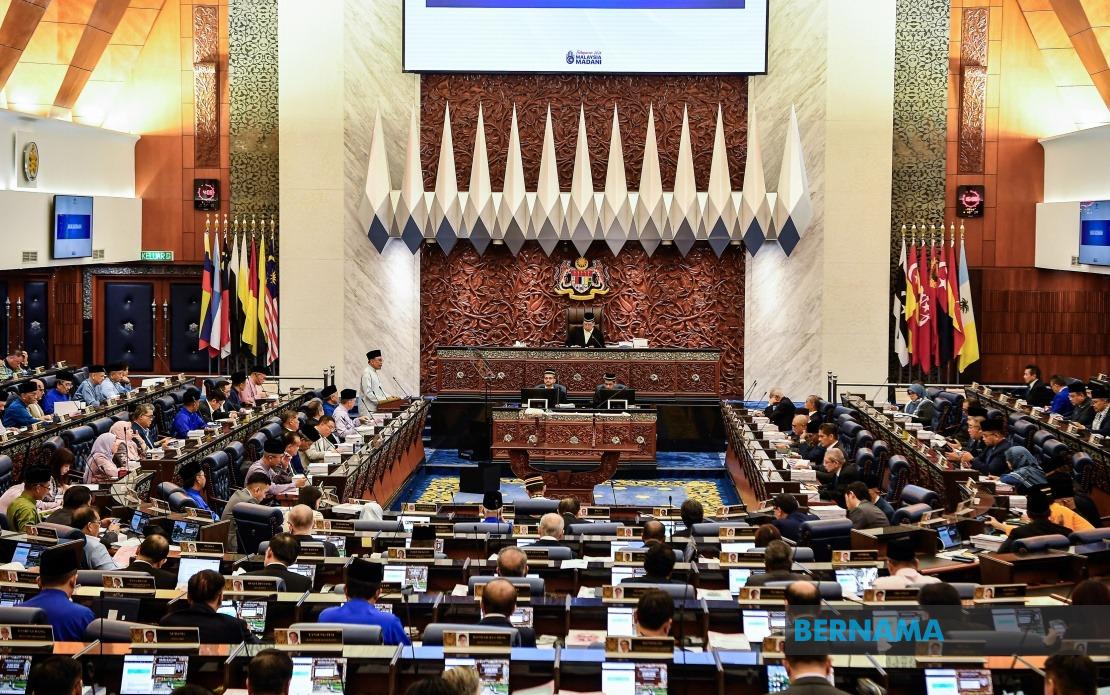
The Cabinet's approval paves the way for parliamentary debate on the amendments, scheduled for July 13 during the Fifth Session of the 15th Parliament. At that stage, lawmakers will have the opportunity to propose further refinements before a final vote. Given that constitutional amendments require a two-thirds supermajority, the government's decision to build cross-party support through the Select Committee process was strategically prudent. It is unlikely that opposition parties would have consented to the committee process or provided input if they anticipated being shut out of the final stages, suggesting the amendments as currently framed command reasonably broad support across the political spectrum.
Malaysia's prosecutors have wielded substantial power in shaping criminal justice outcomes. As gatekeepers to the formal criminal system, prosecutors decide whether charges proceed, which charges to bring, and what sentences to recommend. An independent prosecutor, insulated from political pressure, is essential to a functioning rule of law. Conversely, a politicised prosecutor willing to pursue charges based on government direction rather than legal merit becomes a tool of authoritarianism. The constitutional amendments represent a recognition by the current administration that public trust in institutions requires not just professions of independence but structural guarantees that make political interference more difficult.
The government's formal acknowledgment of input from civil society and legal experts also signals an openness to external scrutiny and expert guidance that has not always characterised Malaysian policymaking. The inclusion of opposition members in the Select Committee, and their apparent influence on the final shape of the amendments, suggests a commitment to consensus-building on foundational constitutional questions. This approach may offer a model for how other institutional reforms could be negotiated in an increasingly polarised political environment.
The amendments also reflect Malaysia's stated aspiration to align its governance standards with international best practices and global benchmarks for prosecutorial independence. Many established democracies have long separated the roles of Attorney General and Public Prosecutor, recognising that the combination presents inherent conflicts of interest. By moving toward this international norm, Malaysia signals its readiness to strengthen institutional integrity at home while enhancing its standing within the global governance community.
Looking ahead, the practical success of these reforms will depend heavily on implementation. Constitutional text provides the framework, but prosecutors' behaviour and political culture will ultimately determine whether the separation of functions becomes meaningful or remains merely symbolic. If the Public Prosecutor is selected through the new parliamentary process but subsequently faces pressure from government officials, the structural reforms will prove insufficient. Conversely, if the process genuinely produces an independently-minded prosecutor who is willing to resist improper influence, the amendments may represent a watershed moment in Malaysian institutional development.
The Cabinet's approval also underscores the MADANI government's stated commitment to institutional reform as a cornerstone of its mandate. Since taking office, the administration has signalled interest in various constitutional and governance changes aimed at strengthening democracy and rule of law. The Public Prosecutor amendment is one of several such initiatives, suggesting a broader vision of institutional renewal rather than ad hoc policymaking. As Malaysia navigates complex economic and security challenges in the coming years, the credibility of its institutions, including its justice system, will be crucial to national stability and prosperity.

