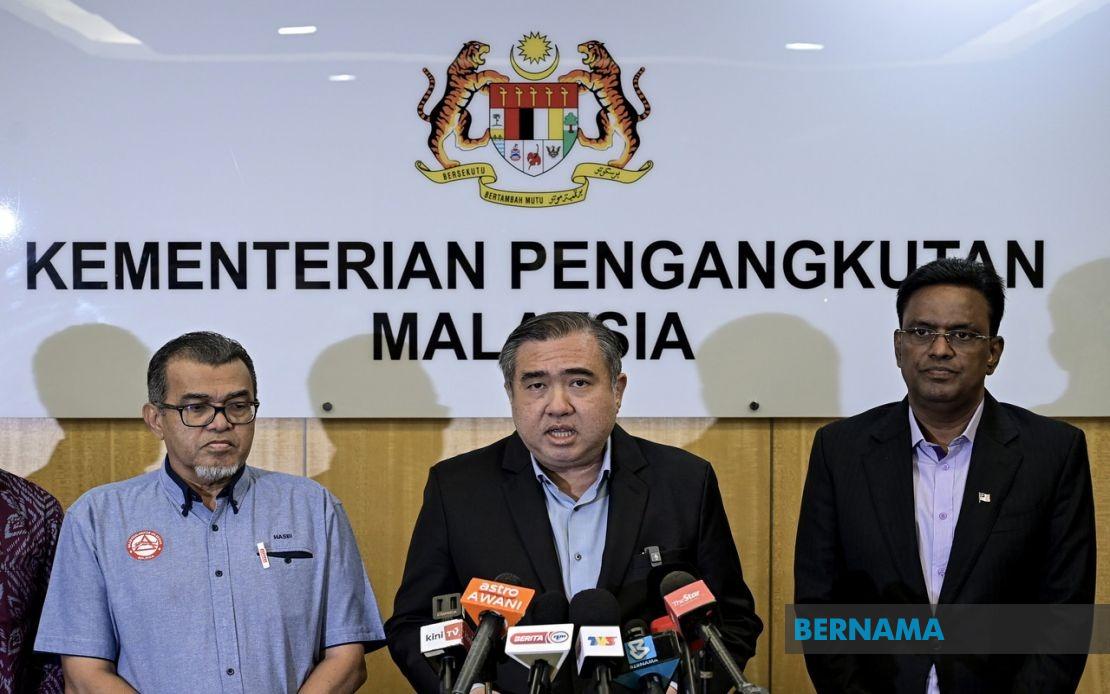
The Malaysian Cabinet has moved forward with a significant reform to road safety law, endorsing amendments to the Road Transport Act 1987 (Act 333) that would empower courts to require road offenders to pay compensation directly to accident victims and their families. Transport Minister Anthony Loke announced the decision at a press conference in Putrajaya on Wednesday, emphasising that the reform represents a fundamental shift in how Malaysia addresses the human cost of reckless driving and dangerous road behaviour.
Under the proposed amendments, compensation would function as an additional punishment layered onto existing penalties—not as a replacement for them. This means offenders could still face imprisonment, monetary fines, and driving disqualifications whilst simultaneously being ordered by the court to provide financial redress to those harmed by their actions. The approach reflects an understanding that traditional punitive measures, while necessary, do not directly address the suffering and economic losses borne by accident victims and bereaved families. By introducing this additional accountability mechanism, the government aims to create a more holistic response to road crime that acknowledges victims' experiences and provides tangible recompense.
Crucially, the mechanism departs from bureaucratic determination of compensation amounts. Rather than having the government administratively decide how much each offender must pay, individual courts will assess compensation based on the specific circumstances of each case. Judges will consider factors including the severity of the offence itself, the extent and nature of injuries sustained, whether death occurred, the documented financial losses to the victim or their family, and the offender's demonstrated capacity to pay. This case-by-case approach respects both the variability of harm across different accidents and the varying financial situations of those found responsible.
The proposed amendments are expected to encompass a broad range of serious road offences. Driving under the influence of alcohol or drugs and reckless driving are specifically cited as examples of conduct that could trigger compensation orders. The scope of offences to be covered, however, remains subject to further refinement through consultations with stakeholders. This openness to feedback is significant for Malaysian readers concerned with road safety, as the final legislation may be shaped by public and expert input over the coming months.
One important safeguard embedded in the proposal is that it will not diminish victims' existing legal remedies. Accident victims and their families will retain their right to pursue insurance claims against relevant policies and to initiate separate civil lawsuits against offenders through conventional legal channels. The compensation mechanism introduced by these amendments operates alongside, not instead of, these established avenues for recovery. This layered approach provides multiple pathways for victims to seek redress, recognising that no single mechanism adequately addresses all situations.
The reform process will now move into a detailed drafting phase. The Transport Ministry intends to engage extensively with other government departments, relevant agencies, and key stakeholders—notably the insurance industry—to work through the practical complexities of implementation. Among the technical matters requiring careful consideration are determining the precise definition of serious injury for compensation purposes, establishing protocols for situations where an offender lacks the financial means to pay court-ordered compensation, and defining the exact scope of cases that should fall under the new regime. These operational details will be refined before the bill is resubmitted to Cabinet and eventually presented to Parliament.
Transport Minister Loke has signalled an intention to seek cross-party parliamentary support by proposing that a special select committee be established to examine the bill in depth. This deliberate approach to building consensus reflects recognition that road safety reform commands broad public concern across political divisions in Malaysia. By inviting detailed committee scrutiny and backing from multiple parliamentary factions, the ministry aims to create legislation with durable support and to ensure that implementation benefits from diverse perspectives on how best to structure and administer the compensation system.
The government's timeline targets tabling the bill during Parliament's year-end sitting, provided that the drafting and stakeholder engagement processes proceed as planned. This schedule, while ambitious, reflects the priority placed on the reform. Notably, the amended legislation will apply only to offences committed after it receives parliamentary approval, as Malaysian law follows the principle that legislation cannot operate retroactively. This means offences committed under the current Act 333 will continue to be handled according to existing provisions, ensuring legal certainty and fairness for those charged under prior rules.
For Malaysian motorists and road safety advocates, these amendments represent an attempt to rebalance the equation between punishment and accountability in road crime. The current system, which primarily relies on imprisonment, fines, and driving bans, has long been criticised for failing to address the profound losses experienced by accident victims. By introducing court-ordered compensation as a standard element of sentencing for serious road offences, Malaysia joins jurisdictions that recognise the victim's stake in criminal justice outcomes. The reform acknowledges that someone who causes death or severe injury through reckless driving bears a responsibility that extends beyond serving time or paying a fine to the state—they bear responsibility to those whose lives they have damaged.
The insurance industry will play a crucial role in refining how these mechanisms interact with existing claims and coverage structures. Insurers will need to understand how court-ordered compensation affects policy limits, claims processes, and their own financial obligations. These conversations will be vital to ensuring that the compensation system complements rather than complicates recovery for victims. The ministry's commitment to detailed stakeholder engagement suggests awareness that implementation success depends on aligning the new legal framework with practical realities of how road accident claims are currently handled in Malaysia.
For Southeast Asian readers monitoring regional developments, Malaysia's move towards victim-centred sentencing in road crime contexts reflects broader global shifts in criminal justice thinking. Countries across the region grapple with alarming road fatality rates, and Malaysian policymakers appear to be recognising that traditional deterrence-based approaches—threatening imprisonment and fines—may be insufficient to change behaviour when those costs are borne primarily by the state rather than by offenders themselves. By making offenders directly responsible for victim losses, the law may create sharper incentives for careful driving than abstract penalties ever could.
The reform also carries implications for how Malaysian society conceptualises road safety responsibility. Currently, road accidents are often treated as misfortunes or inevitable consequences of urbanisation and motorisation. By embedding victim compensation into the criminal justice response, the amendments implicitly treat serious road offences as violations that carry personal accountability to those harmed—a philosophical stance that may gradually shift cultural attitudes toward dangerous driving practices. Whether the law achieves its intended deterrent effect and whether compensation mechanisms function smoothly in practice will become clear only after implementation, but the legislative direction reflects serious intent to make road safety a matter of mutual accountability rather than state punishment alone.

