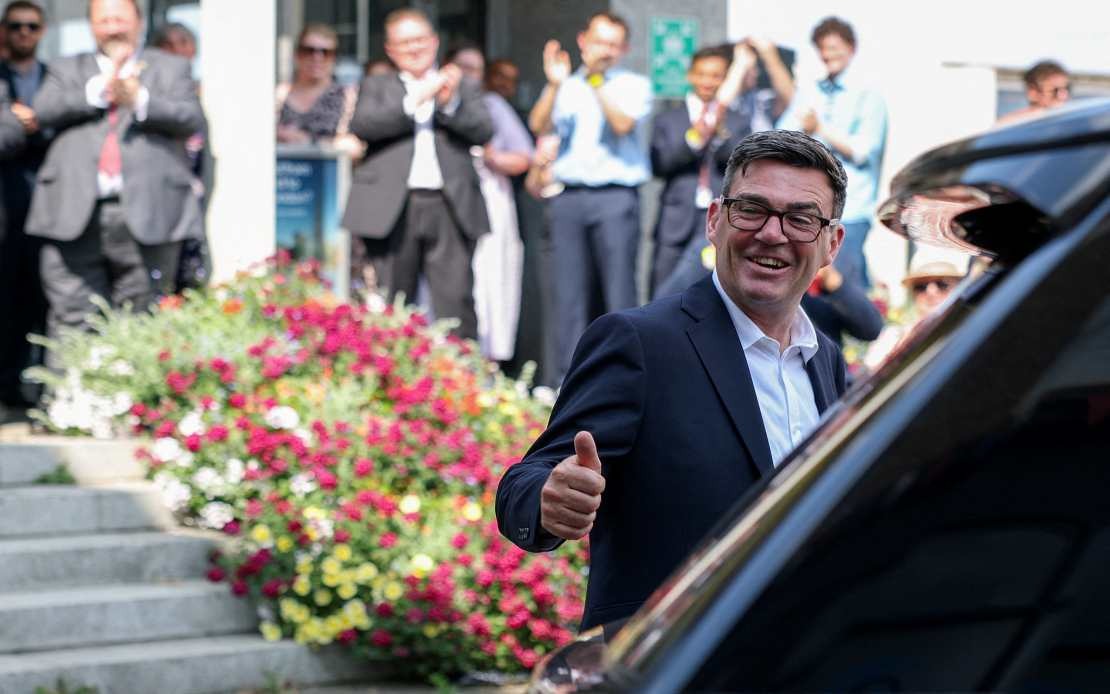
Andy Burnham takes the reins as United Kingdom Prime Minister on Monday, inheriting an office that has cycled through seven occupants in the past decade. The former mayor of Greater Manchester will use his inaugural address from Number 10 Downing Street to reset public expectations, emphasising that Britain requires both honesty about its predicaments and demonstrated capability to overcome them. His ascension marks a departure from the tumultuous recent history of British governance, with allies indicating that his opening message will stress the imperative for sustained political continuity and dependable leadership.
The incoming prime minister's theme of "reflection and resolution" reflects an attempt to recalibrate the national conversation following years of political instability. Burnham has been explicit that the UK's succession of leaders has undermined institutional credibility, and he intends his premiership to signal a return to steadier stewardship. This emphasis on stability carries particular resonance for Malaysian observers watching how Westminster's institutional resilience compares with governance challenges in Southeast Asia, where coalition building and political transitions equally demand careful management.
Burnham's rise through the Labour ranks occurred with remarkable speed, securing the party leadership without a contested election just over a month after returning to Parliament. This compressed timeline means his detailed policy architecture remains largely undefined, though he has outlined several foundational priorities that will shape his government's initial direction. His determination to devolve authority away from London indicates an intention to decentralise power, potentially offering regional governments greater autonomy in economic and social policy—a structural approach that contrasts with Westminster's traditionally centralised model.
Among his first-week announcements, the new prime minister will target the persistent squeeze on household finances, framing this as central to restoring public confidence in political institutions. He has already committed to scrapping Keir Starmer's digital identification scheme, redirecting those resources toward alleviating the cost-of-living crisis instead. This decision reflects a calculation that immediate tangible relief matters more than long-term administrative modernisation, suggesting a government prioritising short-term public welfare over institutional innovation.
Energy policy looms as a potential early test of Burnham's commitment to his stated priorities. Reports indicate he may expand North Sea oil and gas drilling to ease energy bills, yet this course directly contradicts Labour's 2024 election manifesto pledge to freeze new licensing. Environmental advocates have mounted pressure on Burnham to honour that commitment, warning that expanded drilling would not demonstrably reduce bills and would compromise climate ambitions. The contradiction highlights the tension between campaign promises and governing realities—a tension familiar to leaders across Southeast Asia navigating competing domestic pressures.
Thames Water presents another immediate challenge requiring decisive intervention. The water utility struggles under a £20 billion debt burden, with creditors signalling openness to discussions about potential temporary nationalisation or public sector involvement in restructuring. Burnham has previously voiced support for expanded public control of critical infrastructure, positioning him as potentially sympathetic to more aggressive state intervention than his predecessor. Whether he follows through on this inclination will signal his willingness to deploy unconventional remedies for systemic problems affecting millions of households.
Burnham's cabinet appointments will telegraph his governing philosophy and the relative influence of different Labour factions. Particular scrutiny attaches to the chancellorship decision, where Energy Secretary Ed Miliband and Home Secretary Shabana Mahmood are reportedly vying for the role. The choice between these candidates—each representing different policy emphases and internal power bases—will shape Treasury priorities and the government's economic direction. For regional observers, the composition of his economic team will indicate whether Britain intends a recalibration of its growth model or continuity with established frameworks.
The new government's framing of "breathing room" extends beyond mere rhetorical flourish; it encapsulates a public sector strategy aimed at reducing immediate pressures on households whilst constructing longer-term solutions. This dual emphasis acknowledges that political legitimacy requires both demonstrable near-term relief and credible medium-term planning. The approach mirrors challenges faced by governments throughout the region, where managing immediate popular expectations whilst implementing structural reforms demands careful sequencing and communication.
Burnham's trajectory from regional government to national leadership reflects the Labour Party's recent tendency to elevate candidates with executive experience outside Westminster. Unlike predecessors who built careers primarily through parliamentary advancement, Burnham governed a major metropolitan region, providing administrative experience and a demonstrable record of implementation. This background potentially equips him differently for navigating the practical constraints of office, though it also means testing period as his Westminster coalition-building skills develop under intense scrutiny.
The broader significance of Burnham's assumption of office extends beyond party or national boundaries. His emphasis on stability, devolution, and responsiveness to cost-of-living pressures mirrors governance debates occurring throughout the developed world. Southeast Asian policymakers watching British political evolution see ongoing grappling with how democratic systems can deliver sustained institutional performance whilst addressing populist demands for tangible improvements in living standards—challenges that resonate across the region's own political landscape.

