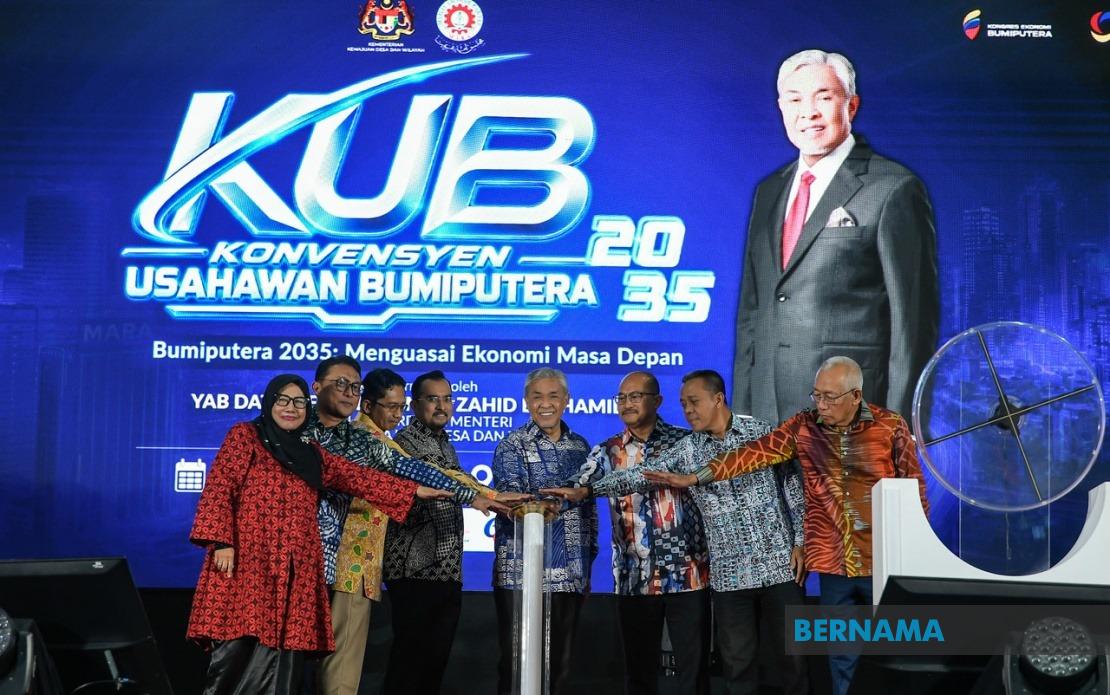
Deputy Prime Minister Datuk Seri Dr Ahmad Zahid Hamidi has urged Bumiputera entrepreneurs to transcend their traditional role as participants in Malaysia's economy and instead pursue genuine ownership of enterprises while substantially expanding their operations. Speaking at the Bumiputera Entrepreneurs Convention (KUB) 2035 Declaration closing ceremony in Alor Setar on August 27, Ahmad Zahid articulated a vision wherein business owners from the Bumiputera category gain meaningful command over the sectors they inhabit, rather than remaining dependent on the periphery of value creation.
The Deputy Prime Minister, who also serves as Rural and Regional Development Minister, acknowledged that decades of policy focus have concentrated on facilitating Bumiputera participation in commerce and industry. However, he contended that this foundational work must now yield to a more ambitious objective centred on building substantial equity ownership among this cohort. His remarks signal a philosophical recalibration in how the government conceptualizes support for indigenous business development, moving away from tokenistic participation toward structural economic empowerment.
Ahmad Zahid emphasized that while the government remains committed to providing opportunities and constructing a supportive business environment for Bumiputera entrepreneurs, the ultimate responsibility for expansion and success rests with the business owners themselves. He stressed the necessity for entrepreneurs to cultivate the courage required to enter new markets, withstand competitive pressures, and generate tangible economic value rather than relying indefinitely on government scaffolding. This reflects a broader policy shift toward fostering self-reliance and genuine competitiveness within the Bumiputera business community.
Central to Ahmad Zahid's vision are three strategic transformations needed within the Bumiputera entrepreneurship framework heading toward 2035. The first involves consolidating fragmented support mechanisms into a cohesive, interconnected ecosystem where entrepreneurs can access multiple resources through unified channels rather than navigating disparate systems. Currently, financing, skills development programmes, and market access opportunities operate through separate institutional pathways, creating inefficiencies and barriers to comprehensive business growth.
The second transformation requires a fundamental reorientation of how the government develops entrepreneurs. Rather than emphasizing the sheer production of new business owners, the focus should shift toward nurturing existing entrepreneurs through sustained, advanced support that enables genuine scaling. This distinction proves critical for Malaysia's economic development, as many Bumiputera enterprises remain micro or small businesses that struggle to transition into medium or large-scale operations capable of competing regionally or globally.
The third dimension involves aligning national economic growth strategies with the fortification of domestic companies. For Malaysia to achieve sustainable prosperity, its overall economic expansion must translate into tangible strengthening of local enterprises, particularly those led by Bumiputera entrepreneurs. This ensures that macroeconomic gains distribute more equitably across demographic groups rather than concentrating among established foreign firms or well-established domestic players.
Ahmad Zahid's diagnosis of the current entrepreneurship landscape reveals a fundamental structural problem: the ecosystem remains splintered across multiple agencies and programmes, each operating according to distinct mandates and criteria. This fragmentation imposes transaction costs on entrepreneurs seeking comprehensive support, as they must navigate bureaucratic channels to access capital, attend training programmes operated by different entities, and identify market opportunities through yet another set of intermediaries. Integrating these support structures would dramatically reduce friction and enable entrepreneurs to focus resources on actual business development rather than administrative navigation.
The push toward ownership and scale represents a significant departure from affirmative action frameworks that historically emphasized guaranteed participation for Bumiputera businesses through reserved quotas or preferential procurement policies. While those mechanisms remain relevant, Ahmad Zahid's remarks suggest that Malaysia's Bumiputera entrepreneurship policy must mature beyond guaranteeing market access and instead foster the development of genuinely competitive enterprises capable of commanding premium valuations, controlling supply chains, and exporting value internationally.
For Malaysian readers and Southeast Asian observers, this policy recalibration holds considerable significance. A more robust cohort of Bumiputera entrepreneurs operating at scale would strengthen Malaysia's overall economic competitiveness in regional markets, generate employment across broader demographics, and potentially reduce wealth concentration. The initiative also recognizes that indigenous entrepreneurship cannot remain indefinitely dependent on government support; sustainable economic empowerment requires that Bumiputera business owners develop resilience, innovation capacity, and competitive excellence.
Implementing the three strategic shifts Ahmad Zahid outlined will require substantial coordination among government agencies, private sector actors, and financial institutions. The integration of support mechanisms demands institutional reform that transcends typical bureaucratic boundaries. Moreover, shifting from entrepreneur production to entrepreneur growth requires more selective, intensive engagement with businesses demonstrating genuine potential for scaling, which may necessitate difficult decisions about resource allocation and programme restructuring.
The timeline toward 2035 provides a concrete planning horizon for both government policymakers and Bumiputera entrepreneurs themselves. This eight-year window allows for phased implementation of systemic changes while permitting sufficient time for competitive capabilities to develop within the private sector. Success will ultimately depend on whether the government delivers on integrated support systems while entrepreneurs themselves embrace the competitive mindset necessary for scaling, investing, and commanding greater ownership stakes in Malaysia's economic landscape.

