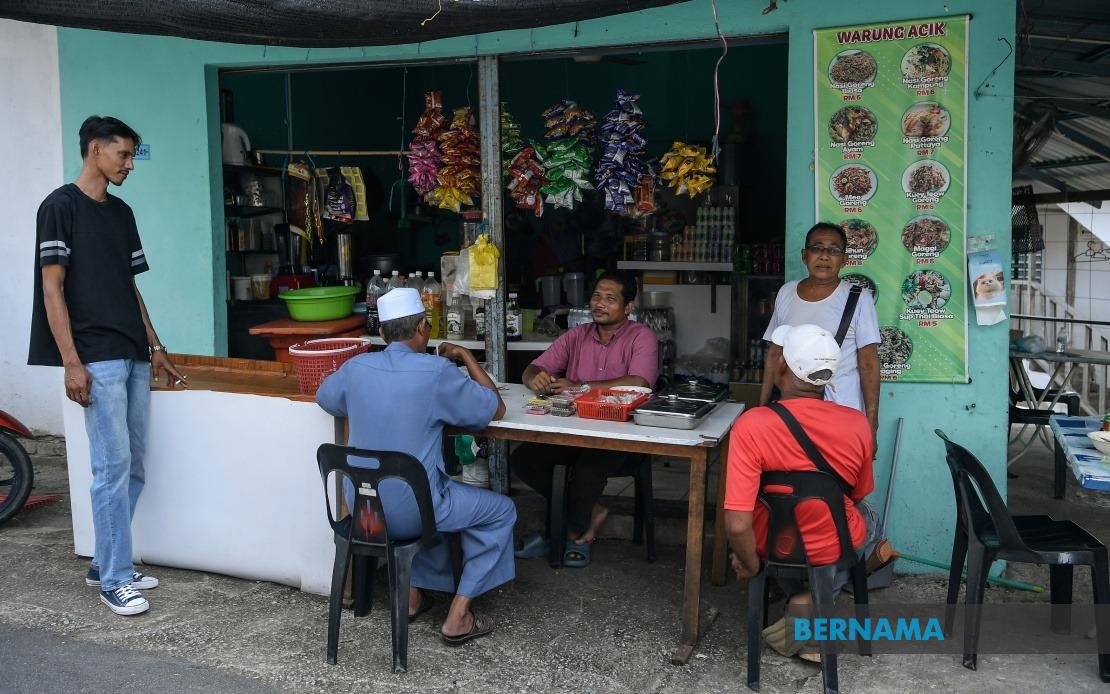
A tight-knit fishing community in Langkawi is fighting back against what residents describe as a decades-long campaign of unfounded accusations that has cast their neighbourhood as a gateway for illegal immigrants from Myanmar. Bukit Malut has become synonymous with refugee settlement narratives in local discourse, yet the people who call this place home are asserting that the reputation bears no resemblance to their actual reality—and they are determined to set the record straight.
Mohamad Fadzli Abdullah, chairman of the Bukit Malut Neighbourhood Watch, articulated the frustration that has accumulated among residents who find themselves regularly blamed for issues beyond their control. Whenever news breaks of irregular maritime arrivals in the Langkawi archipelago, fingers inevitably point toward Bukit Malut, he explained, despite the absence of substantive evidence linking the settlement to such incidents. The pattern has become so predictable that residents have resigned themselves to enduring these accusations, treating them as an occupational hazard of living in a coastal community. Yet resignation has now transformed into activism, with community leaders determined to dismantle the narrative through public advocacy and factual clarity.
The geographic realities of Bukit Malut's location actually contradict the refugee landing allegations, according to Mohamad Fadzli. The settlement sits in immediate proximity to operational bases belonging to three major Malaysian security institutions: the Malaysian Maritime Enforcement Agency, the Royal Malaysian Customs Department, and the Royal Malaysian Navy. This concentration of maritime surveillance infrastructure would render clandestine smuggling operations and landing attempts extraordinarily difficult to execute undetected. The presence of these agencies represents continuous monitoring capacity that makes the alleged activities impractical, if not impossible. Yet this protective geographic positioning has somehow failed to dislodge the negative perceptions from public consciousness, suggesting the stigma transcends logic and evidence.
Beyond dispelling specific allegations, Bukit Malut residents are also challenging the broader narrative that portrays their area as somehow restricted or dangerous. Contrary to rumours circulating through social media channels, there exist no entry prohibitions or security cordons around the settlement. Authorities maintain regular patrols and oversight, but these protective measures serve the entire community rather than facilitating hidden activities. The atmosphere, residents contend, remains safe and welcoming to visitors who might venture to experience the community firsthand—an invitation that few appear to accept, given the prevailing negative perceptions shaped by misinformation rather than direct observation.
The demographic composition of Bukit Malut further undermines the refugee settlement narrative. Approximately 85 percent of residents earn their livelihoods through fishing, representing a traditional maritime economy that has sustained coastal Langkawi for generations. The remaining population encompasses traders, vehicle rental operators, civil servants, uniformed personnel including military and police stationed in the region, and university-educated professionals working across diverse sectors. This occupational diversity reflects a stable, established community integrated into Malaysia's formal economy and security apparatus—hardly the profile one would expect from a settlement allegedly functioning as a refugee processing centre.
Hasanah Zakaria, a 42-year-old resident with two decades of residency in the settlement, has become a vocal advocate for dismantling the stigma through direct community engagement. She encourages visitors to observe Bukit Malut with their own eyes rather than accepting allegations disseminated through social media platforms, where sensationalised claims circulate unchecked by fact-checking mechanisms. Her invitation reflects confidence in what outsiders would discover: a village community functioning according to normal patterns, without the criminal pathologies or humanitarian crises that hostile narratives suggest. The negative perceptions have created collateral damage extending into educational contexts, affecting her child's experience at a boarding school in Langkawi, where classmates have absorbed the stigmatising narratives. Yet she persists in encouraging her child to transcend these allegations and concentrate on academic achievement—a personal resilience strategy that many community members have adopted.
Abas Salam, among Bukit Malut's earliest settlers with more than three decades of residence, provides historical testimony that directly contradicts the refugee settlement narrative. Through his extensive tenure, he has witnessed the community's evolution from its pioneering phases when residents constructed homes, mosques, and religious schools through collective effort and limited external assistance. Never once during his 30 years has he encountered evidence of Myanmar refugees residing in the settlement, according to his direct observation. His testimony carries particular weight because he occupies the position of a founder who watched the community develop organically according to its own internal dynamics, rather than emerging suddenly as an externally-imposed settlement for displaced populations.
Abas emphasises the Malaysian citizenship credentials of the overwhelming majority of residents, articulating frustration with specific allegations that conflate the community with Rohingya populations. The residents identify themselves as Kedah Malay-Muslims and legitimate Malaysian citizens, grounded in Malaysia's constitutional framework and administrative systems. The false equation between Bukit Malut and Rohingya populations appears to stem from superficial associations linking any maritime community with irregular migrant narratives—a conflation that erases the distinction between indigenous Malaysian communities and international refugee populations. This identity displacement represents perhaps the deepest dimension of the stigmatisation, reducing established citizens to potential outsiders in their own country.
The developmental trajectory that Abas describes—from primitive settler conditions to contemporary prosperity offering educational opportunities for descendant generations—exemplifies the community's integration into Malaysian society. The provision of schools, religious institutions, and basic infrastructure reflects not the secretive parallel structures one might expect from a refugee settlement, but rather the normal institutional apparatus supporting an established Malaysian neighbourhood. The progress achieved through residents' own initiative and accumulated social capital over three decades provides material evidence of a community invested in long-term stability and social advancement, inconsistent with the temporary, liminal status that refugee settlement allegations imply.
The campaign by Bukit Malut residents to reclaim their community's reputation addresses a broader Southeast Asian challenge regarding coastal communities' susceptibility to stigmatisation around maritime migration. As irregular population movements continue affecting multiple Southeast Asian countries, established communities proximate to maritime routes face persistent suspicion regardless of their actual involvement in transnational movements. Bukit Malut's struggle illustrates how geographic proximity to shipping lanes and international waters can trigger reputational contamination that persists despite contradicting evidence. The residents' advocacy strategy—combining factual correction, demographic transparency, and invitations for direct community observation—represents a model for how established populations can resist unfounded narratives through public engagement and institutional accountability.
Moving forward, the residents' push for recognition hinges upon shifting public discourse from social media allegations toward evidence-based understanding of their community's actual composition and activities. This requires engagement from local and national media institutions willing to investigate claims before amplifying them, as well as public receptiveness to revising established perceptions when confronted with contradicting facts. The Bukit Malut case ultimately reflects broader questions about how Malaysian communities can maintain social cohesion and individual dignity when subjected to persistent external stigmatisation based on geographic circumstance rather than actual conduct or institutional reality.

