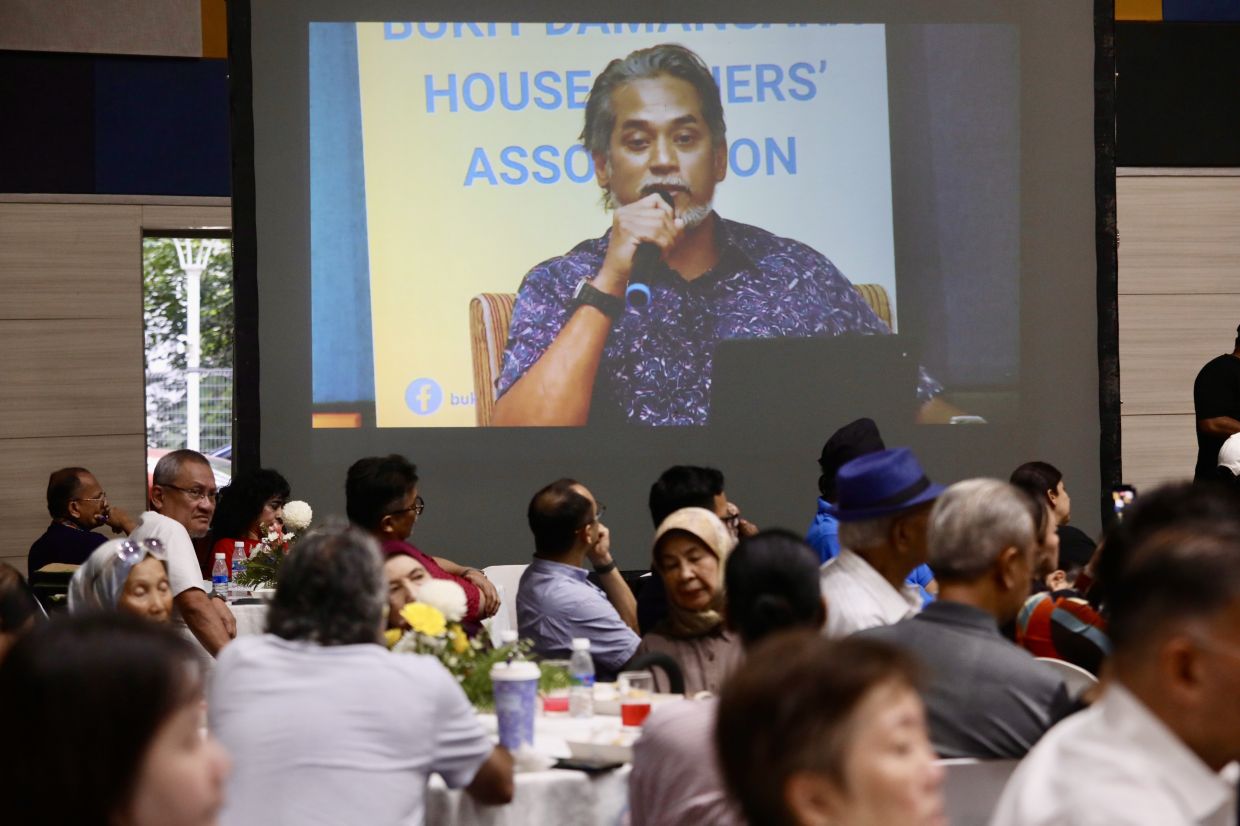
Approximately 400 residents of the upmarket Kuala Lumpur neighbourhood of Bukit Damansara gathered at their first town hall under new association president Khairy Jamaluddin to demand that the Kuala Lumpur City Hall withdraw its approval for a residential renovation project that has become a flashpoint in the community. The three-hour dialogue session, held at Pusat Komuniti Bukit Damansara under the theme "Your Voice Matters", revealed deep frustration with what residents characterise as inadequate consultation and a decision that fundamentally alters the visual coherence of their residential row.
The contentious project centres on a semi-detached property that the owner seeks to expand from two storeys to three storeys. City Hall granted its initial approval in December 2025, prompting immediate resident opposition. A stop-work order followed in January 2026, yet the municipality reversed course in June of this year, reinstating the permit. Construction has since progressed to approximately ten percent completion, with structural pillars now visible on the site. This reversal underscores a broader tension between property owners' development rights and neighbourhood associations' influence over urban planning decisions in the capital.
Resident A. Zakki explained the architectural and community concerns driving the campaign against the permit. The row of semi-detached houses in Bukit Damansara maintains a consistent two-storey design that unifies the streetscape and defines the neighbourhood's character. The addition of a third floor to one property disrupts this visual uniformity and sets a precedent that could encourage similar expansions elsewhere. More troubling for immediate neighbours, the ongoing construction has already caused visible structural damage, with cracks appearing in adjacent properties. Zakki noted that nineteen neighbouring households have signed a petition opposing the project, indicating substantial grassroots resistance.
The development also raises practical concerns about construction management and site safety. Beyond aesthetic objections, residents worry about the quality of oversight during the building process and whether developers have implemented adequate protections for surrounding properties. The appearance of cracks in neighbouring houses suggests that either construction standards are inadequate or that the density of work in this residential setting poses inherent risks to nearby structures. Such issues frequently plague dense residential areas in the Klang Valley, where older neighbourhoods experience heightened stress from intensive development pressures.
City Hall's Planning Department, represented at the dialogue by town planner executive director Rosli Nordin, acknowledged the residents' grievances and pledged to review the concerns raised. Rosli indicated that the department would carefully evaluate the issues emerging from the renovation process, though he stopped short of committing to withdrawing the permit outright. This measured response reflects the municipality's position that the permit was legally issued according to existing regulations, even if the decision proved unpopular with the affected community. The presence of Brickfields deputy police chief Supt Ahmad Firdaus Mustafia Kamal at the event also signalled official attention to the matter, though policing concerns at the dialogue centred primarily on traffic rather than the development dispute itself.
Traffic congestion near two schools in the immediate vicinity emerged as a secondary but significant concern. Residents reported gridlock between 7am and 7.30am, coinciding with morning school drop-offs, and again from 2pm to 4pm during afternoon collection times. The congestion occurs outside both SK Bukit Damansara and Stella Maris International School Damansara. Supt Ahmad Firdaus assured residents that traffic police were aware of the problem and addressing it according to standard procedures, though the response suggested a reactive rather than proactive approach. The parent-teacher association chairman, Ameirul Azraie Mustadza, revealed that the school has appealed to parents to avoid double-parking but lacks resources to deploy Rela (the civilian volunteer corps) for enforcement. The association has requested that traffic police provide daily rather than intermittent monitoring during peak hours.
This traffic situation reflects a wider challenge facing many Kuala Lumpur neighbourhoods, where residential streets were designed decades ago for vehicle densities far below current levels. The presence of two schools in such proximity intensifies the problem, creating predictable bottlenecks that inconvenience both residents and parents. The inadequacy of police resources and school associations' inability to fund private traffic management highlight infrastructure gaps in even affluent areas.
Water supply reliability emerged as a third pressing issue, with residents requesting that Air Selangor conduct comprehensive inspections of the ageing pipeline network serving Bukit Damansara. Recent burst incidents underscore the infrastructure challenges affecting even premium residential zones in the federal territory. An Air Selangor representative acknowledged that the company is aware of the pipe bursts and has begun planning a replacement programme for the deteriorating network. While this response suggests that the water utility is engaged with the problem, residents would likely prefer a more concrete timeline and commitment to remedial works.
Khairy Jamaluddin's role in moderating the town hall and his stated commitment to fast-track solutions carries particular weight given his political stature and previous ministerial positions. By positioning the event as a bridge between residents and decision-makers, Khairy signalled that his tenure as association president prioritises channelling community concerns upward through both formal and informal networks. His undertaking to follow up on residents' complaints suggests that the Bukit Damansara association intends to leverage political connections to influence City Hall's reconsideration of the renovation permit.
The town hall exemplifies an increasingly common dynamic in Malaysian urban governance: property development decisions that satisfy regulatory requirements yet provoke organised community opposition. The Bukit Damansara case illustrates how approval processes that lack meaningful resident consultation before permits are issued can generate legitimacy deficits, regardless of whether decisions conform to planning codes. The subsequent reversal of a stop-work order despite resident objections deepens the perception that City Hall prioritises developer interests over neighbourhood stability.
For Malaysian property-owners and homeowners' associations elsewhere, the Bukit Damansara dispute offers instructive lessons about the importance of early and transparent engagement with residents over development applications that affect streetscapes and neighbourhood character. The episode also underscores how political connections and community mobilisation can influence municipal decision-making, particularly when an elected official assumes leadership of a residents' association. Whether Khairy's advocacy ultimately persuades City Hall to revoke the permit will likely depend on whether officials believe reversing their approval poses greater reputational or political risk than maintaining the current stance.

