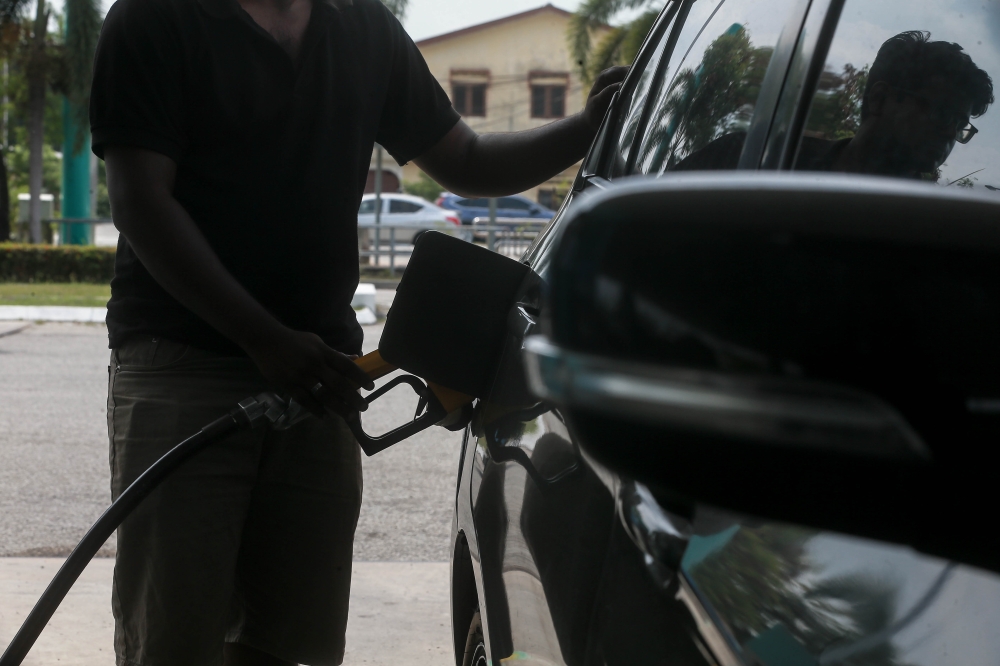
Prime Minister Datuk Seri Anwar Ibrahim has moved to defend the government's decision to limit subsidised BUDI95 fuel entitlements to 200 litres monthly, insisting that this cap reflects realistic usage patterns among Malaysian motorists and represents a fair balance between supporting drivers and managing fiscal pressures. The statement comes as the fuel subsidy scheme continues to attract scrutiny regarding whether the revised allocation strikes the right equilibrium between affordability and budgetary sustainability in an economically challenging climate.
Anwar's position rests on data suggesting that the typical Malaysian driver consumes approximately 100 litres of RON95 fuel each month, a figure he has cited as justification for setting the subsidy threshold at double this level. By establishing the quota at 200 litres, the government seeks to accommodate the majority of ordinary motorists while simultaneously containing the escalating costs associated with fuel subsidies—a significant expenditure item in the national budget. The Prime Minister's framing emphasises that drivers whose consumption falls within or below this range experience no financial hardship from the new arrangement, as they continue to access subsidised pricing for their entire monthly fuel requirements.
The BUDI95 initiative represents the government's attempt to target subsidies more precisely toward middle and lower-income households who depend on affordable fuel to sustain their livelihoods and daily commuting needs. Unlike blanket fuel subsidies that benefit all consumers regardless of income level, the BUDI95 scheme ties subsidised rates to a capped volume, creating an incentive structure that rewards moderate consumption while gently discouraging excessive usage. This approach aligns with broader fiscal consolidation efforts undertaken by the administration as it seeks to redirect resources toward healthcare, education, and infrastructure while maintaining social safety nets for vulnerable populations.
However, the narrative surrounding the 200-litre quota extends beyond simple arithmetic regarding average consumption. High-fuel users—including commercial drivers, taxi operators, and those undertaking lengthy commutes—have expressed concern that the cap imposes genuine hardship by forcing them to purchase additional fuel at full market rates once their monthly allocation is exhausted. For individuals whose work demands significant vehicle usage, the distinction between 100 and 200 litres represents a meaningful but potentially insufficient buffer. These constituencies argue that their elevated consumption stems not from profligacy but from economic necessity, and that cutting subsidies disproportionately penalises those whose circumstances require greater mobility.
The government's decision to frame the subsidy in terms of average consumption patterns reflects a deliberate policy choice to shift from universal subsidies toward means-tested or consumption-based support mechanisms. This transition embodies a philosophy that emphasises fiscal discipline and budgetary efficiency, recognising that unlimited subsidies create unsustainable fiscal liabilities and can paradoxically distort market signals, thereby encouraging wasteful consumption patterns. By communicating that 200 litres encompasses the needs of the typical driver, the administration attempts to normalise the reduction and position it as both rational and equitable.
The quota system also provides the government with greater predictability regarding subsidy expenditure, enabling more accurate budget forecasting and reducing vulnerability to international crude oil price fluctuations. When subsidies operate without volume constraints, sudden global energy market disruptions can trigger unexpectedly large fiscal drains. A capped system, by contrast, establishes a defined ceiling on government spending, allowing officials to plan with greater certainty and allocate resources to other pressing policy priorities. This budgetary logic underlies much of the rationale for tightening fuel subsidy mechanisms across the region and globally.
Yet the political economy of fuel subsidies remains deeply contentious in Malaysia, where consumer expectations regarding affordable energy have historically anchored political legitimacy. Any reductions in subsidy generosity risk generating public discontent, particularly among constituencies whose genuine consumption needs exceed the stipulated cap. The government must therefore navigate a delicate balance between fiscal prudence and political sustainability, ensuring that the subsidy framework is perceived as supportive rather than punitive. Anwar's emphasis on the average consumption figure represents an attempt to establish this equilibrium rhetorically, though its effectiveness may depend on whether higher-usage drivers accept the underlying logic or view the quota as arbitrary and unfair.
The implementation of the 200-litre threshold also raises questions about fairness across different demographic and geographic segments of the population. Rural drivers who must travel longer distances to access services, commercial operators whose income depends on mobility, and residents of regions with limited public transportation face circumstances fundamentally different from urban commuters with access to efficient transit networks. A uniform quota, regardless of these contextual variations, may inadvertently impose differential burdens across the country. Policymakers attempting to justify such schemes must address these distributional concerns alongside macroeconomic arguments about fiscal sustainability.
Anwar's public articulation of the subsidy rationale also signals the government's commitment to transparency regarding fiscal constraints and policy trade-offs. Rather than obscuring difficult budgetary decisions, the Prime Minister has chosen to engage directly with the reasoning behind the quota, suggesting confidence that informed public discussion will support these measures or at least render them more politically palatable than if they were implemented silently. This communicative strategy reflects broader governance orientations emphasising dialogue and explanation, though its persuasive power ultimately depends on whether the government's economic narratives resonate with citizens' lived experiences of fuel costs and mobility requirements.
Looking forward, the BUDI95 subsidy architecture will likely continue evolving as the government confronts competing demands for fiscal resources and grapples with global energy market volatility. The 200-litre quota represents a current configuration, but future adjustments may prove necessary if oil prices surge, consumption patterns shift, or political pressures intensify. The government's ability to manage this ongoing policy evolution will significantly influence both its fiscal outcomes and its broader political standing among Malaysian voters whose economic security remains closely tied to energy affordability. The robustness of Anwar's economic arguments will be tested repeatedly in coming months as real-world consumption data emerges and individual motorists navigate the practical implications of the subsidy cap.

