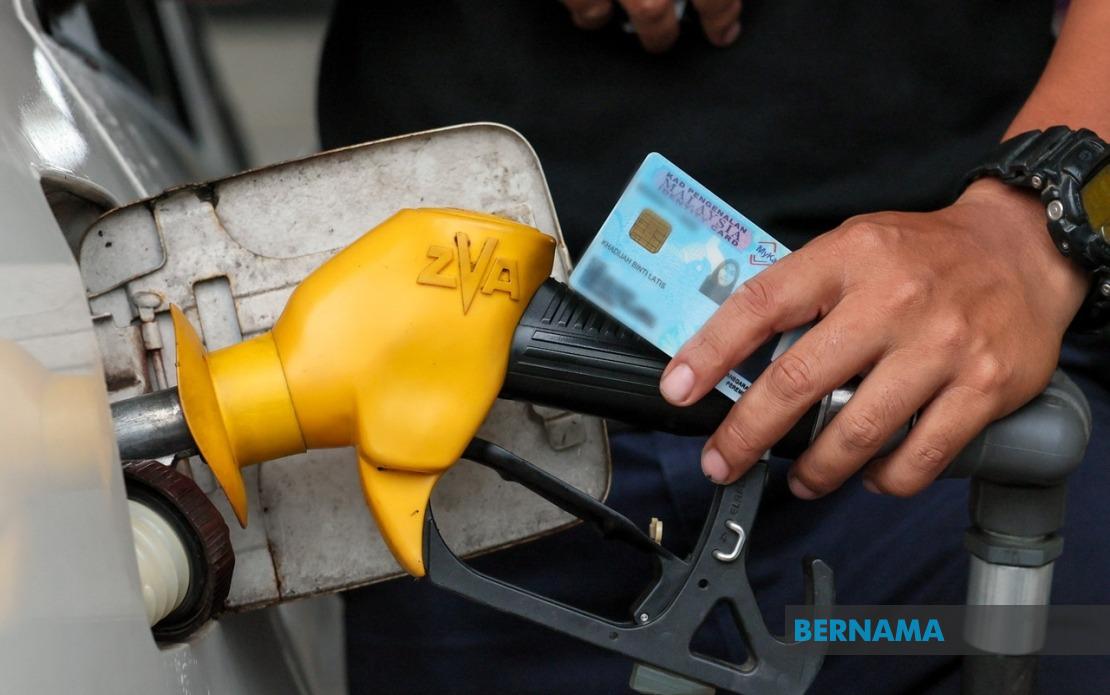
The government has moved to ease financial pressures on Malaysian workers and small traders by restoring and expanding fuel quotas under the BUDI MADANI subsidy scheme, a decision that has drawn widespread approval from various segments of society. Prime Minister Datuk Seri Anwar Ibrahim unveiled the changes during his 2026 National Day 'Amanat Perdana' address at the Putrajaya International Convention Centre (PICC), announcing that the assistance quota for RON95 petrol would rise from 200 litres to 300 litres, whilst diesel quota would increase from 300 litres to 400 litres, with both changes taking effect immediately.
The restoration of these quotas addresses mounting concerns about household budgets and operational costs that have constrained Malaysian families and small businesses. Workers commuting daily to employment centres have particularly felt the squeeze as fuel expenses consume an increasing portion of monthly income, and the reinstatement of the BUDI MADANI programme at higher allocation levels responds directly to this persistent challenge facing Malaysia's workforce.
For private sector employees navigating urban sprawl and long commutes, the expanded quota offers measurable financial breathing room. Furzani Ahmad, a 24-year-old worker whose daily journey covers approximately 30 kilometres, views the increase as substantive assistance rather than symbolic support. With access to 300 litres monthly, he anticipates sufficient coverage for his transport needs with room to spare, allowing reallocation of savings toward other household expenses—groceries, utilities, and education costs that have equally climbed. This pattern reflects the lived reality of Malaysia's commuter class, where petrol costs represent a non-negotiable expense that directly reduces discretionary spending power.
Younger workers similarly acknowledge the practical value of the expanded programme. Darwisy Khairudin, aged 23, highlights the unpredictability of work-related travel demands that extend beyond standard commute distances. When official duties require site visits or field assignments, fuel consumption spikes unexpectedly, creating monthly shortfalls under the previous 200-litre allocation. The rise to 300 litres provides buffer capacity that accommodates these operational fluctuations, reducing the anxiety surrounding month-end fuel expenditure calculations.
The programme's impact extends beyond salaried workers to the informal economy and small business proprietors whose operational viability depends directly on transport costs. Abdul Manan, a 63-year-old fruit trader operating a diesel vehicle for wholesale stock procurement, illustrates how fuel subsidies cascade through supply chains and ultimately affect consumer prices. His sourcing network sometimes requires travel to distant producing regions, generating substantial diesel consumption that previously cut into already-thin retail margins. The increase to 400 litres in the diesel quota reduces logistics expenses materially, enabling him to maintain competitive pricing for customers while protecting his working capital—a balance essential for survival in hawker and street-vending economies.
The broader strategic objective underlying BUDI MADANI remains the targeted distribution of fuel subsidies to households and small operators who depend most heavily on transport for income generation. By calibrating quotas rather than implementing blanket subsidies, the scheme attempts to concentrate government support toward those facing genuine hardship whilst managing fiscal sustainability. Malaysia's fiscal framework cannot accommodate universal fuel price controls indefinitely, making the quota mechanism a pragmatic middle ground between abandoning vulnerable populations and unsustainable subsidy bills.
The timing of this announcement carries significance within Malaysia's economic and political calendar. Announced on National Day, the policy revision signals government responsiveness to constituent concerns about living standards. For an administration navigating post-pandemic economic adjustment and inflation pressures, demonstrating tangible improvements in household purchasing power represents meaningful political communication, particularly as Malaysia approaches various electoral cycles where voter satisfaction with economic management proves decisive.
The regional context amplifies Malaysia's policy importance. Across Southeast Asia, fuel pricing and subsidy mechanisms remain contentious political issues affecting government stability. Indonesia, Thailand, and the Philippines have each experienced social friction linked to fuel costs and subsidy adjustments. Malaysia's approach of maintaining targeted support while carefully managing fiscal obligations presents a model other regional governments monitor closely, particularly smaller economies facing comparable budget constraints.
For Malaysian readers directly affected by these changes, the practical implications warrant clear understanding. The 300-litre RON95 quota suits standard commuters with moderate daily travel, though those undertaking extensive driving for work or family obligations may still require supplementary fuel purchases at unsubsidised market rates. Similarly, the 400-litre diesel allowance benefits small commercial operators and traders, yet larger logistics enterprises will continue absorbing fuel costs within operational budgets. The BUDI MADANI programme thus functions as partial relief rather than comprehensive solution, acknowledging government limitations whilst directing support toward the most economically vulnerable.
Looking forward, the sustainability of these quota levels depends on global crude oil market dynamics and Malaysia's fiscal position. Petroleum prices, determined by global supply-demand fundamentals beyond government control, could eventually force recalibration of subsidy levels. Nevertheless, the current expansion demonstrates official commitment to cushioning citizens from transport cost volatility, recognising that daily commuting and small-scale commerce represent irreducible economic necessities for millions of Malaysians earning modest incomes. The restoration of these quotas, therefore, reflects not merely budgetary arithmetic but underlying recognition that social stability and inclusive economic participation require government intervention in essential commodity markets.

