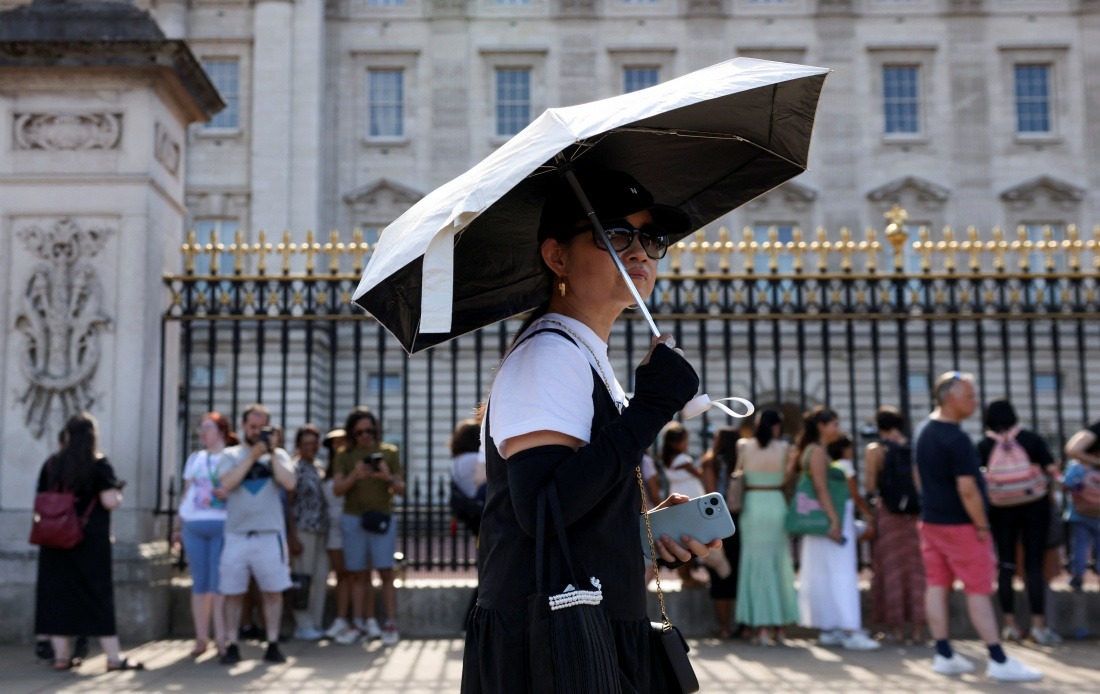
The United Kingdom's Household Division has taken the unprecedented step of cancelling ceremonial guard changes at Buckingham Palace, Windsor, and central London this week in response to a severe heatwave that threatens the safety of soldiers, military horses, and assembled spectators. The decision reflects growing concerns about extreme weather events across the nation, with meteorological agencies issuing rare red heat alerts for multiple regions including London, Wales, and surrounding counties.
The Met Office issued its red weather warning on Monday, signalling dangerous conditions as the UK experiences temperatures forecast to peak at 39 degrees Celsius on Wednesday and Thursday. Such forecasts have not been typical for June in the United Kingdom, and weather officials have warned that some areas may record even higher readings than currently predicted. This anticipated temperature surge is expected to challenge the June heat record for the nation, underscoring the severity and unusual nature of the current weather pattern affecting the British Isles.
The Household Division's statement prioritised the wellbeing of its soldiers, the military working horses that form an integral part of Britain's ceremonial traditions, and the large crowds that typically gather to witness these iconic events. Rather than proceeding with full ceremonial pageantry as originally scheduled, the institution determined that suspending guard changes entirely on Tuesday, Wednesday, and Thursday represented the most prudent course of action. The decision demonstrates how extreme weather can disrupt even the most established institutional routines in the modern era.
The Royal Horse Guards' parade, traditionally scheduled for Wednesday, will proceed in modified form—relocated to earlier morning hours when temperatures remain relatively lower, and stripped of the elaborate ceremonial elements that characterise the usual display. Military personnel involved will be positioned in shaded areas where possible and rotated at more frequent intervals to prevent heat-related exhaustion or collapse. These practical measures illustrate how institutions must adapt operational procedures when facing environmental challenges that threaten human and animal welfare.
The impact of this unprecedented heatwave extends far beyond London's ceremonial centres. Educational institutions across southern England have shuttered their doors, with local authorities implementing closure protocols across multiple counties. Somerset county council announced that approximately 100 schools would remain closed throughout the period of extreme heat, while Buckinghamshire reported a similar figure. Gloucestershire saw more than 80 educational establishments suspend classes, and London itself witnessed nearly 10 major schools cancel in-person instruction. These closures affect tens of thousands of students and families across the affected regions.
The geographical distribution of school closures reveals how the red weather warning zone encompasses some of England's most densely populated areas. Somerset, Buckinghamshire, Gloucestershire, Wales, and Greater London all fall within the affected zone, meaning the disruptions touch multiple education sectors and serve populations spread across significant distances. The scale of these closures suggests that authorities regard the heatwave as presenting genuine risks to children's safety in non-climate-controlled school environments.
This situation carries particular relevance for Southeast Asian readers accustomed to tropical climates, as it demonstrates how temperate nations grapple with heat events that exceed their infrastructure's design parameters. While Malaysian and other regional residents experience sustained high temperatures regularly, the UK's population, buildings, and institutions have evolved to manage moderate conditions. The psychological and physical impact of unexpected extreme heat in traditionally cooler climates can be more severe than the same temperatures experienced in heat-adapted societies.
The cancellation of Buckingham Palace's guard changes represents a symbolic moment in how climate variability increasingly affects institutional life worldwide. These ceremonies have persisted through wars, political upheavals, and economic crises, yet extreme weather now forces their suspension. The precedent suggests that as climate patterns become more volatile globally, even the most ceremonially important events may require flexibility and environmental consideration in planning.
For businesses and organisations operating across multiple climates, including Malaysian companies with UK operations, such disruptions highlight the need for climate-resilient operational planning. Heat-related workplace closures and schedule modifications represent emerging costs of doing business in regions previously considered climatically stable. The UK's approach to this crisis—prioritising human and animal welfare over ceremonial tradition—may offer instructive lessons for tropical nations increasingly grappling with their own extreme weather events.