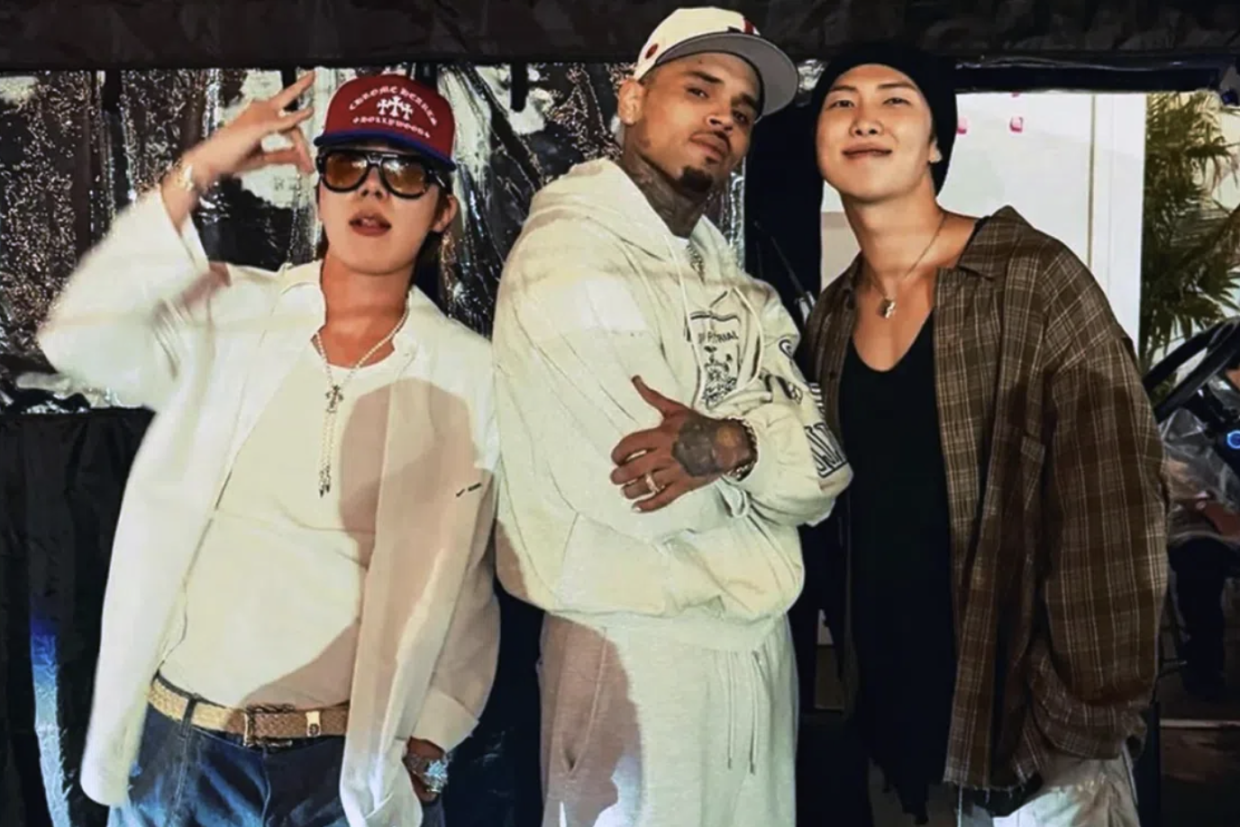
The K-pop phenomenon BTS has found itself at the centre of a contentious debate about artist responsibility and moral accountability after two of its members were photographed attending a Chris Brown concert in Canada earlier this month. The controversy, sparked when Brown posted images with BTS leader Kim Namjoon (RM) and member Jung Hoseok (J-Hope) on August 13, quickly ignited fierce discussion across social media platforms about the ethics of celebrity associations and what it means for influential artists to publicly support figures with troubling histories.
Chris Brown's track record has been extensively documented in legal proceedings spanning over a decade. His 2009 conviction for assaulting his then-girlfriend Rihanna marked a defining moment in discussions about celebrity accountability, yet subsequent incidents suggest an ongoing pattern of concerning behaviour. In 2016, Brown faced arrest for allegedly threatening a woman with a firearm at his Los Angeles residence, leading to his release on bail. The following year brought allegations of sexual assault at his home, though the matter was ultimately resolved through settlement. A 2019 accusation of rape during his time in Paris was similarly dropped, while more recently, a 2022 incident involving accusations of drugging and sexual assault aboard a yacht in Miami drew serious attention from authorities. Beyond criminal matters, a Los Angeles jury determined Brown bore liability for US$12.9 million in damages stemming from his dog's attack on his housekeeper's sister, further underscoring a pattern of incidents raising questions about his conduct.
The backlash from BTS's fanbase, known collectively as ARMY, revealed deep fissures within the community regarding principles and influence. Many supporters expressed disappointment that members of a group they admired would be associated with someone carrying such a documented history of violence and abuse allegations. The criticism extended beyond simple disapproval; some fans articulated how the situation felt personally painful. One ARMY member shared that she herself had experienced sexual assault and felt betrayed by artists she had looked to as role models choosing to associate with an individual accused of similar crimes. Her statement that "I am a woman before I am an Army" captured the tension many felt between their fandom and their broader values regarding gender-based violence and accountability.
Defending artists in the face of legitimate criticism has become a reflexive behaviour within fan communities, and BTS's situation demonstrated this dynamic playing out in real time. Numerous supporters rushed to justify the members' attendance at the concert, contending that celebrities retain the right to enjoy music and attend events regardless of personal preference. This argument positioned the issue as a matter of individual liberty, suggesting that scrutinising where famous people spend their leisure time represented an unreasonable intrusion into privacy. However, critics countered that this framing fundamentally misunderstood the nature of celebrity influence and the responsibilities that accompany global platforms reaching millions of devoted followers.
The response from users across social media platforms like X presented a more nuanced perspective on the implications of celebrity behaviour. Several commentators highlighted how public support from influential figures inevitably affects broader cultural conversations about accountability and consequences. When artists with massive followings associate themselves with individuals facing serious allegations, the implicit message extends beyond personal choice; it reverberates through fan communities and shapes how millions of people process questions of morality and responsibility. One particularly pointed observation noted that fan posts defending the singers' actions, while ostensibly directed at abstract critics, would actually reach fellow fans who had experienced domestic violence or abusive relationships, potentially causing genuine harm to vulnerable community members.
The philosophical underpinning of the backlash centred on the concept of moral responsibility in systems where silence and inaction function differently than they might for ordinary individuals. Several commentators drew distinctions between personal conduct and complicity through association, explaining that remaining silent while prestigious figures normalise relationships with accused abusers perpetuates a system allowing such behaviour to continue. This differs from the typical conception of individual responsibility precisely because celebrity platforms amplify messages far beyond what ordinary citizens could achieve. When BTS members attended a Chris Brown concert and this attendance became publicly visible, the action carried implications that transcended personal entertainment choices.
Another important perspective emerged when observers referenced comparable situations in the entertainment industry. Swedish artist Zara Larsson, who has previously collaborated with BTS, provided a contrasting example when she publicly discussed maintaining a curated list of abusers she refuses to support on streaming platforms, explicitly naming Brown. This juxtaposition highlighted how different artists navigate similar ethical questions and raised broader questions about what consistent principles might look like across the industry. If artists of Larsson's stature can make deliberate choices to distance themselves from individuals with records of abuse, the reasoning suggested, should not similarly influential figures like BTS members consider whether their public presence at such events aligns with stated values regarding respect and safety?
The timing of this controversy alongside other recent developments added layers of context to the discussion. The BTS-Google Gemini collaboration, showcased on the Las Vegas Sphere and designed to celebrate the intersection of technology and art, had itself drawn criticism from fans regarding environmental considerations and corporate responsibility. These successive controversies within a brief window suggested growing expectations among supporters that their idols demonstrate consistent ethical reasoning across multiple domains, from personal associations to environmental advocacy to corporate partnerships. The cumulative effect has been to position BTS within broader conversations about what accountability means for global cultural figures.
For Malaysian and Southeast Asian audiences, the controversy carries particular significance given the region's substantial K-pop fanbase and the cultural influence these groups exert among young people. The discussion raises important questions about how fan communities engage critically with their heroes, how information about allegations and historical incidents circulates across different cultural contexts, and what responsibility both artists and audiences bear in addressing gender-based violence and abuse. The BTS situation ultimately illustrates that in an era of global connectivity and instant information sharing, the personal choices of international celebrities ripple outward in ways that affect how millions of people, particularly young women in developing markets, process their own relationships with power, accountability, and safety.

