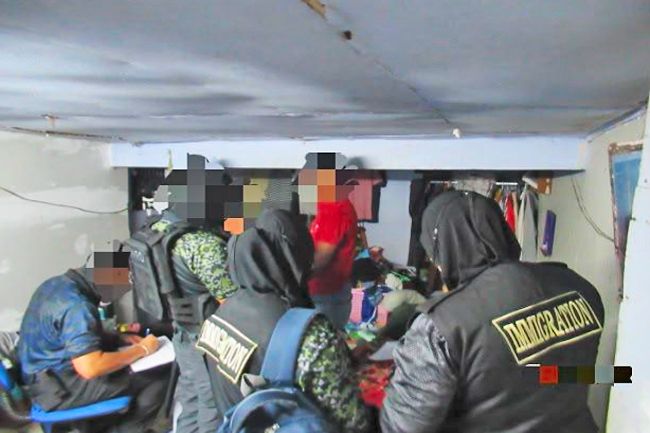
Brunei's Immigration and National Registration Department is ramping up its campaign against immigration violations across the sultanate through a coordinated series of enforcement operations collectively known as 'Operasi Kakas 2026'. The intensified push reflects growing official concern about undocumented work, visa violations, and irregular migration patterns affecting the nation's labour market and public security. Recent operations have uncovered systematic breaches of immigration law, with authorities detaining dozens of foreign nationals for offences ranging from working illegally on visitor permits to remaining in the country beyond authorised periods.
The first major operation, designated 'Operasi Kakas 86/2026', focused on commercial areas in Mukim Sengkurong where enforcement teams inspected thirteen foreign nationals at a market. Seven individuals were taken into custody and transferred for investigation after preliminary evidence suggested they were employed while holding only temporary visit passes. The violation contravenes Regulation 9(4) of the Immigration Regulations under Chapter 17 of Brunei's legal framework, which strictly prohibits economic activity by visitors. This particular offence represents one of the most common immigration violations in Southeast Asia, where migrants often transition into informal employment without updating their visa status, creating a grey economy that authorities struggle to regulate.
A second operation, 'Operasi Kakas 87/2026', targeted residential rental accommodations in Mukim Berakas 'A', reflecting official suspicion that informal housing compounds often shelter undocumented workers. Three foreign nationals were examined during this raid, with two detained for investigation. Like their counterparts in the market operation, these individuals allegedly violated the same regulation by working while possessing only visitor documentation. The targeting of rental properties suggests authorities recognise that unauthorised workers frequently cluster in shared housing arrangements, creating concentrated pockets of immigration non-compliance that facilitate detection through strategic enforcement.
The third operation, 'Operasi Kakas 88/2026', produced the most significant enforcement result. At a rented house also in Mukim Berakas 'A', officers inspected eight foreign nationals, detaining six after discovering they could not produce original immigration documents. Investigation revealed that five faced multiple charges: overstaying beyond their visa expiry dates under Section 15(1) of the Immigration Act, and simultaneously breaching Regulation 15(2) of the Immigration Regulations by working for employers different from those listed on their original authorisation. This pattern of compound violations—combining expired status with unauthorised employment and employer changes—indicates sophisticated labour trafficking or exploitation networks where workers are moved between employers without proper legal channels.
For Malaysian readers, these operations carry particular relevance given the substantial cross-border movement between Malaysia and Brunei. The enforcement patterns observed in Bandar Seri Begawan likely mirror challenges confronting Malaysian authorities managing the Sarawak-Brunei frontier and the larger Klang Valley industrial zones. The emphasis on document verification, overstay detection, and workplace inspections reflects best practices increasingly adopted across ASEAN, where member states coordinate immigration enforcement amid expanding regional labour mobility and rising concerns about human trafficking.
The fourth operation, 'Operasi Kakas 89/2026', served a validating function when enforcement teams inspected four foreign nationals at a rented residence in Mukim Berakas 'B' and discovered all possessed properly maintained documentation and unexpired immigration passes. This successful compliance case demonstrates that enforcement operations occasionally encounter lawful migrants, and suggests the Immigration Department applies consistent inspection protocols regardless of outcome. Such balanced enforcement—combining rigorous scrutiny with recognition of legitimate immigration status—enhances operational credibility and reduces claims of discriminatory targeting.
The violations uncovered reveal structural vulnerabilities in labour migration governance. Overstaying typically occurs through either administrative negligence (workers unaware of expiry dates) or deliberate evasion (employers retaining documents or workers fearing return to origin countries). The prevalence of unauthorised employer changes indicates workers possess limited mobility rights, forcing them into informal arrangements when initial employment proves exploitative or unsustainable. Document production failures, recorded in the third operation, often reflect confiscation by employers—a control mechanism that deepens worker vulnerability and complicates enforcement differentiation between willing visa violators and trafficking victims.
Brunei's intensified immigration enforcement reflects broader sultanate priorities concerning workforce composition and public order. As a small wealthy nation heavily dependent on migrant labour yet culturally protective of national identity, Brunei maintains comparatively restrictive migration policies relative to larger ASEAN neighbours. The emphasis on visit-pass workers engaging in employment particularly targets low-skilled migrants who may work in domestic service, construction, or hospitality—sectors traditionally filled by temporary visitors rather than permanent residents. This enforcement strategy polices labour market boundaries while maintaining plausible deniability about migrant worker dependence.
Regional implications merit consideration. Brunei's enforcement operations may influence worker behaviour across the ASEAN region, as foreign nationals increasingly aware of enforcement risks calculate migration strategies accordingly. Workers may seek employment in Malaysia or Singapore where visa procedures, though rigorous, offer clearer pathways than attempting informal work in highly policed jurisdictions. Conversely, heightened Brunei enforcement may compress migration flows into informal channels, potentially increasing vulnerability to trafficking networks that operate outside state detection systems.
The sustained nature of 'Operasi Kakas 2026' suggests authorities regard immigration compliance as requiring continuous attention rather than episodic enforcement. The numbering system (86, 87, 88, 89) implies operations are ongoing and likely to continue through 2026, indicating commitment to maintaining immigration regulatory pressure. For businesses and workers in Brunei, this represents a signal that employment relationships must observe strict documentation and visa requirements, with diminished tolerance for informal arrangements previously tolerated during less stringent enforcement periods.

