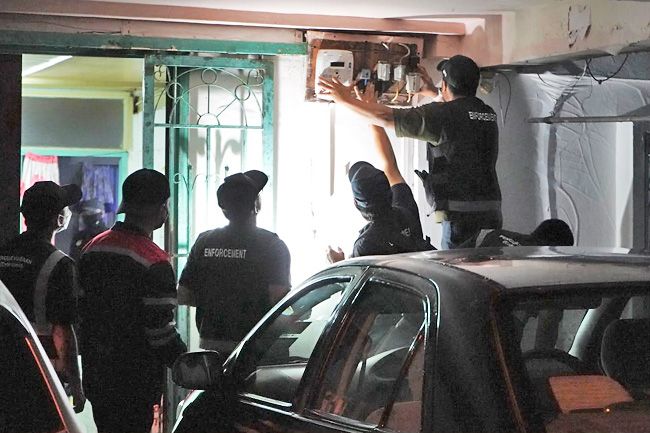
Authorities in Brunei have wrapped up a sweeping joint enforcement operation across Bandar Seri Begawan that revealed numerous regulatory breaches spanning immigration law, workplace standards, and electrical safety. The coordinated effort, which mobilised more than 200 personnel from the police force and allied government agencies, resulted in the detention of two foreign nationals for immigration violations and the discovery of multiple labour and electrical code transgressions.
The Immigration and National Registration Department apprehended one foreign male and one foreign female during the operation at two separate premises within the capital's jurisdiction. Both individuals are being held for investigation under provisions of the Immigration Act, though additional details regarding the specific nature of their alleged violations have not been disclosed. The immigration component of the operation underscores ongoing efforts to maintain border security and ensure compliance with residency requirements across Brunei-Muara District.
Labour inspections conducted during the same enforcement action identified five separate workplace violations. The Labour Department documented three breaches under Section 81 of relevant employment legislation, concerning employers' failures to furnish workers with appropriate accommodation facilities and their inability to maintain adequate environmental hygiene standards as mandated by law. A further two offences were recorded under Section 86, specifically relating to employers' neglect in declaring worker residential arrangements within their Foreign Worker Licence documentation. These findings suggest ongoing concerns about working conditions and transparency in labour-related operations within the capital region.
Electrical safety compliance also featured prominently in the operation's findings. The Department of Electrical Services identified two separate violations of the Electricity Act (Chapter 71), indicating that some premises may not be adhering to established safety standards and installation requirements. Electrical code compliance is a critical public safety matter, as deficiencies in this area can create fire hazards and pose serious risks to residents and workers.
A significant component of the operation involved human trafficking prevention efforts. The Human Trafficking Investigation Unit conducted interviews with 19 individuals across both operational locations as part of a preventive screening protocol. Despite this extensive interviewing process, no actual human trafficking offences were detected during the operation, a positive indicator for the capital's regulatory environment, though the interviews themselves reflect authorities' vigilance in this sensitive area.
The scale of the operation demonstrates the coordinated approach that Brunei has adopted toward law enforcement and regulatory compliance. Acting Commanding Officer of the Brunei-Muara Police District Superintendent Mohamad Noor Abd Rahman led the initiative, which drew resources from an extensive network of government bodies. Beyond the police force's Human Trafficking Investigation Unit and Public Relations Unit, participating agencies included the Immigration and National Registration Department, the Narcotics Control Bureau, the Royal Customs and Excise Department, the Internal Security Department, the Labour Department, the Department of Electrical Services, the Bandar Seri Begawan Municipal Department, and the Religious Enforcement Division.
This multi-agency approach reflects the evolution of enforcement operations across Southeast Asia, where governments increasingly recognise that workplace violations, immigration breaches, and electrical safety deficiencies often cluster in the same problem areas. By deploying teams from diverse regulatory backgrounds simultaneously, authorities can detect overlapping violations and identify premises or operators that may pose broader compliance risks. The operation's scope suggests that officials had identified particular concern zones within the capital worthy of intensive scrutiny.
For Malaysia and other regional economies that host significant migrant workforces, Brunei's operation carries relevant lessons. The detection of accommodation and licensing violations among foreign worker employers highlights challenges that affect multiple Southeast Asian nations. Malaysian authorities overseeing similar migrant labour frameworks may find the findings instructive, particularly regarding the gaps that emerge between official licensing requirements and actual workplace conditions. The focus on accommodation standards and environmental hygiene connects directly to worker welfare concerns that have drawn scrutiny from international labour organisations.
The operation also underscores the importance of inter-agency cooperation in combating regulatory evasion. Brunei's coordination across immigration, labour, customs, electrical, religious, and municipal authorities represents a model that transcends traditional police functions. Such arrangements enable authorities to cross-check information, identify patterns of non-compliance, and pursue violators across multiple jurisdictional boundaries. For Malaysia, where labour exploitation and workplace safety remain policy priorities, the collaborative framework evident in this operation offers a template worth examining.
The Royal Brunei Police Force's framing of the operation as reflecting continued governmental commitment to public safety and compliance suggests that such coordinated sweeps may become regular features of the capital's regulatory landscape. Officials appear committed to maintaining visibility on worksite conditions, particularly those involving migrant employees. The fact that comprehensive interviewing for trafficking indicators occurred alongside routine compliance checks demonstrates how prevention and enforcement have become integrated aspects of modern law enforcement strategy in the region.
Looking forward, the operation's findings will likely inform policy discussions within Brunei regarding labour inspection frequency, accommodation standards for foreign workers, and electrical code enforcement. The detection of violations does not necessarily indicate systemic failures but rather demonstrates that regulatory mechanisms are functioning and that breaches, when identified, are being pursued through official channels. For foreign businesses operating in Brunei and the broader region, the message is clear: compliance with accommodation, licensing, and safety requirements remains subject to active scrutiny and enforcement action.

