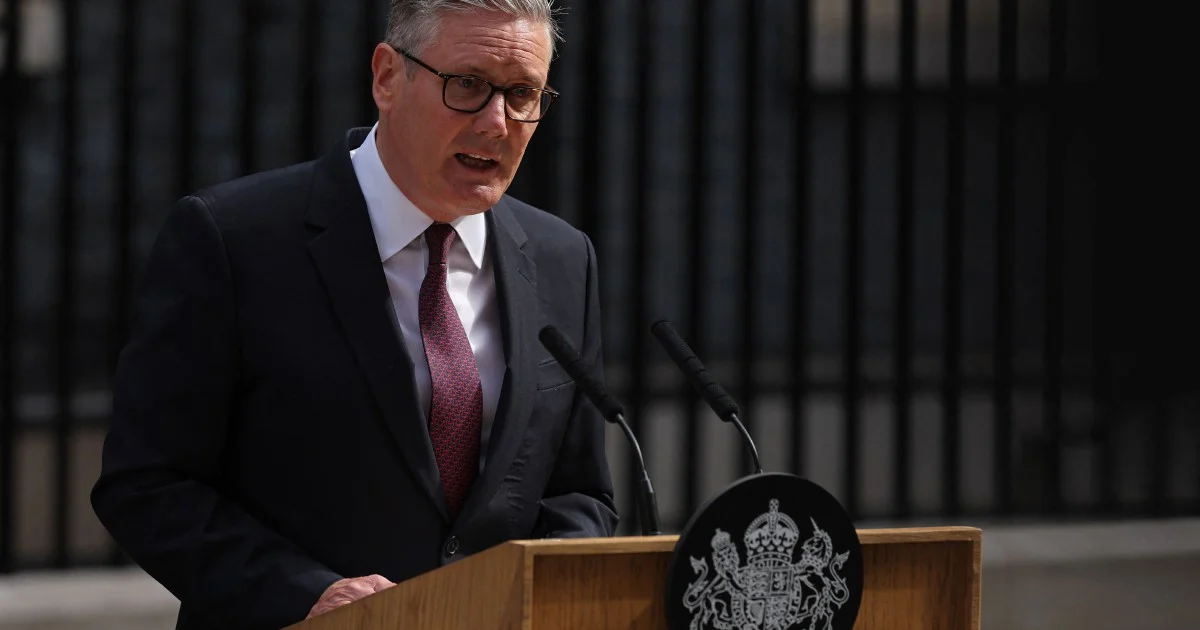
Britain will soon install its seventh prime minister in ten years following Keir Starmer's resignation announcement on Monday. The announcement has triggered urgent questions about how the Labour Party will navigate the process of selecting a replacement before parliament reconvenes next month, a timeline that will compress an already complex procedure into mere weeks. The revolving door at 10 Downing Street reflects the turbulence of British politics since 2015, when David Cameron still held office.
The Labour Party's leadership election process differs significantly from the informal mechanisms that sometimes govern transitions in other democracies. Rather than allowing the sitting Prime Minister to designate a successor or relying on backroom consensus among senior figures, Labour operates under formal rules established by the party membership. These regulations, refined over multiple iterations in recent years, give voice to MPs, party members, and affiliated trade unions, creating a more distributed decision-making structure than exists in many competing democracies. The involvement of these three distinct constituencies ensures that the next Labour leader cannot be anointed by a narrow elite, though it also means the election will demand significant organisational effort.
Membership representation carries particular weight in this process. Every card-holding member of the Labour Party receives a vote in the leadership election, fundamentally different from the Westminster convention where only MPs choose between candidates. This democratisation of the selection process was implemented following Ed Miliband's victory in 2010 and represents Labour's attempt to reconnect with grassroots supporters. For Malaysian observers, the model offers an interesting contrast to the more tightly controlled mechanisms in Commonwealth parliaments where party hierarchies traditionally exercise gatekeeping functions.
Parliamentary Labour MPs play an essential filtering role before the membership gets involved. Candidates must secure nominations from at least 34 Labour MPs to appear on the ballot paper, a threshold designed to prevent the ballot becoming unwieldy with dozens of contenders. This creates a natural selection mechanism where backbenchers who lack broad support among their colleagues face elimination before members cast votes. The threshold significantly influences which potential candidates choose to contest the election, sometimes encouraging relative consensus around leading figures.
Trade unions affiliated with Labour constitute the third pillar of the electoral system. These organisations, which collectively represent millions of British workers, cast votes weighted according to their membership. The unions' role reflects Labour's historical roots as the political expression of the labour movement, though their influence has sparked periodic debate about whether unions exercise disproportionate power within the party structure. Their participation nonetheless ensures that the selection process extends beyond Westminster and the metropolitan constituencies where party members concentrate.
The timing Starmer announced creates significant complications for the process. With parliament due to return in early September, the Labour Party must compress what typically requires months into a matter of weeks. Normal leadership elections have unfolded across the summer with candidates touring regional hustings and engaging with members across the country. The abbreviated timeline will force innovations in how candidates connect with voters, likely accelerating reliance on digital platforms and concentrated media activity.
For Malaysian and Southeast Asian readers, the instability afflicting British politics offers cautionary lessons about institutional fragility. The United Kingdom, with centuries of parliamentary tradition, has witnessed three prime ministers within three years from 2022 to 2024. The frequency of leadership transitions undermines long-term policy planning and international standing. Britain's inability to maintain executive continuity stands in stark contrast to more stable regional governments, though it does reflect democratic legitimacy derived from elected representatives.
The substance of policy will inevitably dominate the leadership campaign. Candidates will face demands to articulate positions on economic management, public services reform, industrial relations, and Britain's international role. The new leader must simultaneously prosecute the case against the Conservative opposition while uniting a Labour Party fractionalised by multiple ideological tendencies. Whoever emerges will inherit a government barely six weeks old, presenting the surreal prospect of a third Prime Minister within months.
The selection of Starmer's successor will also reflect broader struggles over Labour's identity and direction. The party has oscillated between ideological poles in recent years, and the next leadership election will inevitably revisit those tensions. Candidates representing different visions of how Labour should govern, what policies should prioritise the party's energy, and how to rebuild public confidence will contest vigorously for member support. These internal debates, while democratic, come at a moment when the party desperately needs to project cohesion and competence.
International governments and businesses that depend on long-term stability in Britain will watch this transition with undisguised unease. The repeated churning of leadership creates uncertainty about whether policies will persist and whether Britain's diplomatic commitments maintain continuity. Regional partners in Southeast Asia, many of whom have established stable working relationships with British counterparts, now face the prospect of relationship-building from scratch with a new Prime Minister.
The September deadline represents both opportunity and constraint. It allows sufficient time for the party to organise the election and for candidates to make their case before parliament returns to legislative business. Yet it permits no margin for error, and any procedural complications or unexpected developments could threaten the timeline. The Labour Party administration will need to execute flawlessly while the nation watches.
Ultimately, the process demonstrates democracy in action, albeit at an uncomfortable velocity. Labour members will choose their leader through mechanisms explicitly designed to distribute power beyond elite circles. Whether the compressed timeframe and fractious circumstances produce a leader capable of governing effectively and bringing stability to British politics remains the crucial question. The chosen successor will inherit not merely the office but an accumulated burden of public disillusionment with the political establishment.