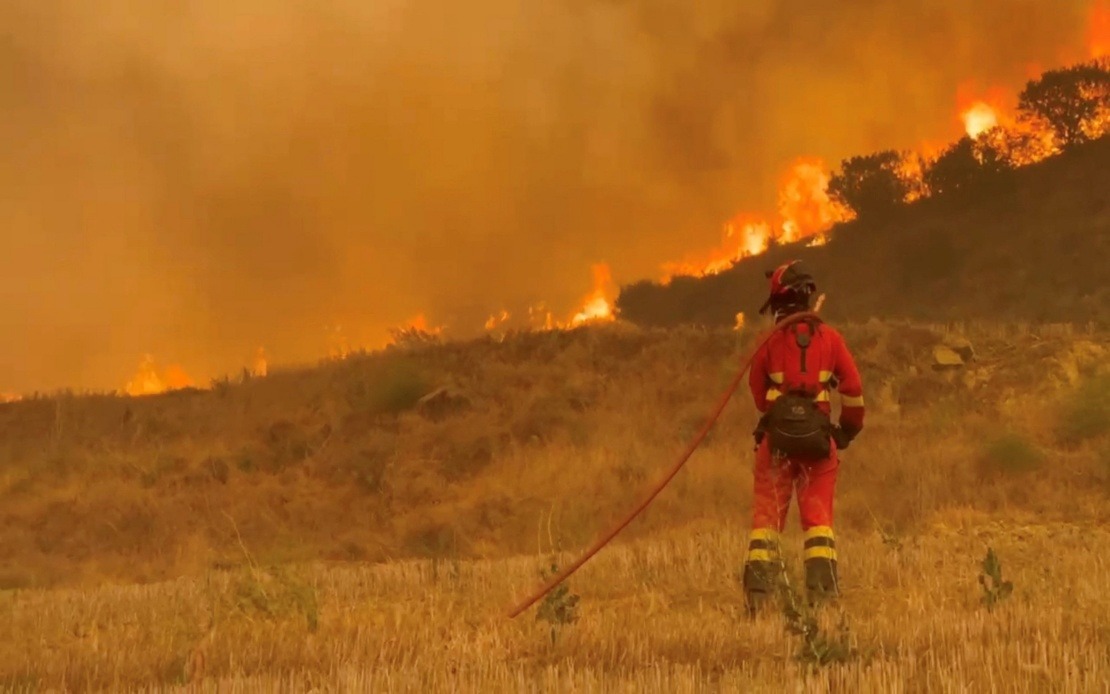
The British government is convening an urgent Cobra meeting on Wednesday to coordinate its response to an intensifying weather emergency that has left firefighters, agricultural workers, and healthcare staff stretched across the country. The high-level crisis session underscores deepening concerns about the cumulative impact of sustained extreme temperatures, widespread drought declarations, and significant wildfire incidents that have emerged this week alone.
Prime Minister Andy Burnham will oversee the emergency gathering, bringing together senior officials to assess the government's preparedness and response strategies. The convening of a Cobra meeting—reserved for national emergencies—signals the severity with which authorities are treating the convergence of climate-related crises. Officials have acknowledged that multiple frontline services are grappling with mounting pressures directly linked to deteriorating weather conditions, creating systemic strain across critical infrastructure and public services.
The timing of the emergency session reflects an escalating crisis pattern across the United Kingdom. On Monday alone, additional areas of England were formally designated as drought zones, expanding the geographic footprint of water scarcity affecting the country. Meanwhile, firefighting personnel continue intensive operations to contain a major wildfire spreading through the New Forest region in Hampshire, demanding substantial resource deployment and coordination across multiple emergency services.
The UK's meteorological authority has issued a rare amber extreme heat warning specifically for Thursday, a classification that appears with uncommon frequency and signals dangerous temperature conditions. The Met Office has further indicated that current weather trajectories suggest the nation is tracking toward its hottest summer on record when measured by average temperature across the season. This projection carries significant implications for infrastructure, public health, and agricultural productivity throughout the remainder of the warm season.
Drought declarations have now spread across substantial portions of the country. Wales formally entered drought status on July 30 as persistent high temperatures combined with inadequate rainfall to create acute water supply concerns. England's situation mirrors this pattern, with half the nation already declared in drought conditions following record-low precipitation levels and extended periods of elevated temperatures that have depleted water reserves more rapidly than seasonal recovery can replenish them.
The public health dimension of this crisis carries particular weight. During the May and June heat waves, the UK Health Security Agency documented 2,877 excess deaths—a figure nearly doubling the 1,504 excess deaths recorded during the summer of 2025. These statistics underscore that extreme heat represents a direct mortality threat, particularly among vulnerable populations including elderly residents and those with pre-existing health conditions. The NHS now faces simultaneous pressures from heat-related medical emergencies and the operational challenges of maintaining services amid challenging working conditions.
The environmental and policy response has drawn scrutiny from opposition voices within Westminster. Zack Polanski, leader of the Green Party, has seized on the emergency meeting to advocate for transformative climate measures. He contends that Britain requires immediate, decisive action grounded in climate science rather than negotiated compromise, arguing that conventional policy approaches have proven insufficient to address the accelerating nature of weather-related disasters. His proposed measures include imposing substantial taxes on fossil fuel corporations to fund wildfire suppression capabilities, establishing cooling centres in communities vulnerable to heat stress, implementing workplace temperature limits to protect workers, and halting new oil and gas development in the North Sea.
These policy proposals reflect broader debates about whether incremental adjustments to energy and environmental policy can adequately address the trajectory of climate-related crises now manifesting across British territory. The Green Party's emphasis on redirecting fossil fuel industry revenues toward climate adaptation infrastructure represents one strand of thinking about how financial resources should be mobilised in response to escalating weather emergencies. The proposal for maximum working temperature regulations suggests an emerging consensus that occupational health frameworks may require restructuring as extreme heat becomes a recurring feature of British summers.
The convergence of multiple climate stressors—heat, drought, and fire—demonstrates how climate impacts rarely occur in isolation. Agricultural producers face simultaneous threats to water availability and crop viability, with sustained heat accelerating evapotranspiration and depleting soil moisture. Emergency services confront fragmented demands across firefighting, flood management, and heat-response operations, each competing for finite resources and personnel. Healthcare systems absorb both direct impacts through heat-related illness and indirect pressures from service disruptions and staffing challenges.
For Southeast Asian observers, Britain's climate emergency carries instructive dimensions. Nations across ASEAN have long contended with extreme heat, flooding, and drought as interrelated hazards. The British experience demonstrates how even highly developed nations with substantial infrastructure capacity and advanced warning systems face significant challenges when multiple climate stressors compound simultaneously. The questions Britain now grapples with—how to resource emergency services adequately, how to protect vulnerable populations, how to maintain critical infrastructure—resonate across the region where climate impacts often outpace institutional adaptation capacity.
The emergency meeting represents recognition that existing governance frameworks and resource allocations may require substantial recalibration. Whether the outcome produces meaningful policy shifts or primarily addresses immediate operational challenges remains uncertain. What appears clear is that British policymakers increasingly perceive climate-related weather events not as episodic disruptions but as persistent features requiring systemic institutional responses.

