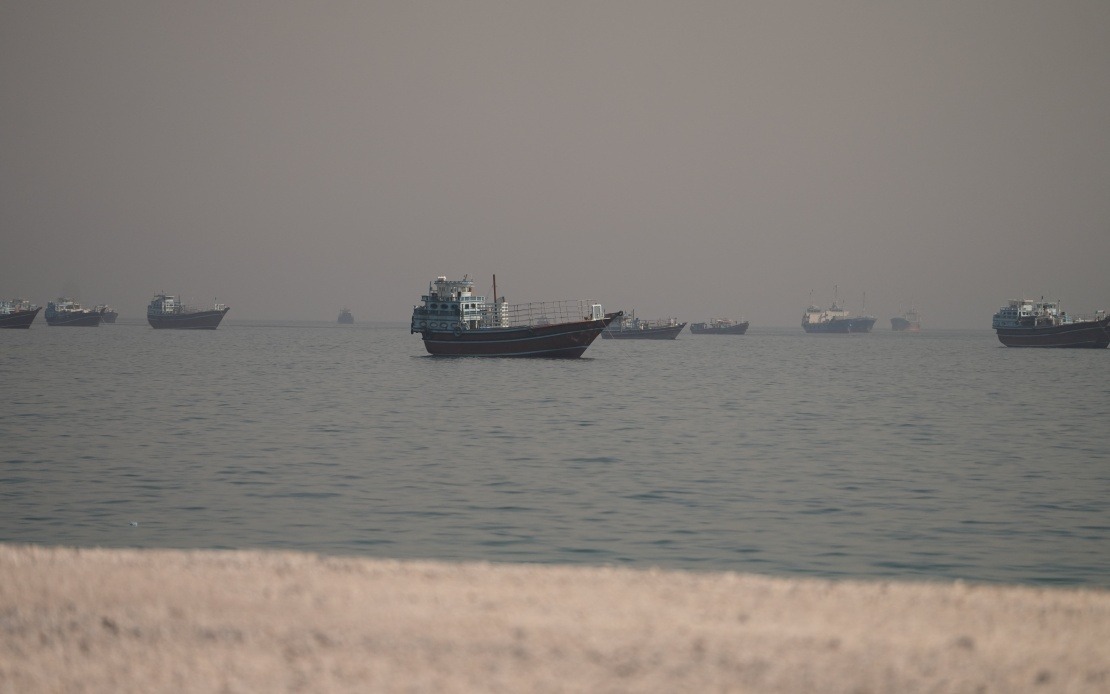
Britain and France have declared their readiness to establish a multinational military operation aimed at guaranteeing safe passage through the Strait of Hormuz, one of the world's most critical maritime arteries. The announcement, made through a joint statement by British Prime Minister Keir Starmer and French President Emmanuel Macron, represents a significant escalation in Western efforts to maintain freedom of navigation through waters that have become increasingly contested. The declaration underscores growing concerns about maritime security in the region and signals European determination to protect global economic interests, despite robust objections from Tehran.
The Strait of Hormuz occupies an irreplaceable position in global energy supply chains and international commerce. Through its narrow passage between Iran and Oman, approximately one-third of the world's seaborne oil and liquefied natural gas transits daily, making disruptions to shipping lanes a matter of genuine international concern. The British and French leadership acknowledged this critical importance in their statement, describing the waterway as vital to the functioning of the global economy. For Southeast Asian nations like Malaysia and Singapore, which depend heavily on stable energy supplies and predictable shipping routes, the security of this passage carries direct implications for economic stability and energy security.
The joint initiative gains particular significance with the involvement of Oman, a littoral state whose cooperation provides diplomatic legitimacy to the multinational framework. Both London and Paris have secured Oman's agreement to facilitate their efforts within Omani territorial waters, a crucial development that distinguishes this approach from purely external intervention. This arrangement demonstrates sensitivity to the principle of national sovereignty while simultaneously creating an operational foundation for the broader mission. The European powers framed their endeavour as complementary to regional stability rather than as a challenge to existing geopolitical arrangements, though this characterisation remains contested.
The UK and France explicitly committed themselves to upholding international law, respecting state sovereignty, and maintaining global security standards through their coordinated action. Their statement emphasised the importance of close partnerships and cooperation with allies to achieve these objectives. This multilateral orientation reflects an understanding that sustainable solutions to maritime security require consensus-building and burden-sharing among multiple stakeholders. The emphasis on partnership also signals to regional actors that this mission extends beyond any single bilateral relationship and commands broader international support.
Iran has consistently and vehemently rejected foreign military involvement in the Strait of Hormuz, viewing such operations as infringement upon its regional prerogatives. Tehran maintains that littoral states alone should bear responsibility for the waterway's security, an argument rooted in both sovereignty principles and strategic interests. Iranian officials have repeatedly warned extra-regional powers against deploying military assets in the area, creating a fundamental contradiction with the Western approach. This confrontational stance has become more pronounced as tensions between Iran and Western powers have intensified over recent years, particularly regarding nuclear negotiations and regional influence.
The timing of this announcement reflects deteriorating diplomatic relations and a pattern of maritime incidents that have heightened anxieties about Strait security. Previous confrontations, including ship seizures and attacks attributed to Iranian-affiliated actors, have reinforced Western determination to establish protective mechanisms. From an Asian perspective, these developments create uncertainty about energy supplies and trading routes that are essential to regional prosperity. Malaysia, as a major trader and energy consumer, has a substantial stake in maintaining predictable maritime conditions through this chokepoint.
The proposed multinational force represents a Western-led response to challenges that transcend traditional bilateral diplomacy. By anchoring the mission within a broader coalition framework, Britain and France aim to distribute responsibility and demonstrate international consensus around freedom of navigation principles. However, this approach risks further alienating Iran and potentially triggering countermeasures that could exacerbate tensions. The sustainability of such a force depends significantly on whether it can prevent incidents without becoming a lightning rod for confrontation.
For Southeast Asian nations, the implications extend beyond immediate shipping concerns. The Strait's security intersects with broader questions about regional autonomy, great power competition, and the maintenance of rules-based international order. Malaysia and its neighbours must navigate between supporting open maritime access—essential for their economic interests—and avoiding entanglement in great power rivalries. The British-French initiative may also influence how regional states position themselves regarding Western-led security arrangements versus alternative frameworks favoured by other powers.
The success of this multinational mission will likely depend on its ability to prevent escalation whilst maintaining credible deterrence. Iran's consistent warnings suggest that any Western military presence, no matter how carefully calibrated diplomatically, will face determined resistance. The involvement of Oman provides a regional anchor, but whether this suffices to prevent the waterway becoming a focal point for direct confrontation between Iran and Western powers remains uncertain. For global commerce and energy markets, including those serving Malaysia and the region, the coming months will reveal whether diplomatic coordination can translate into stable, incident-free maritime conditions.

