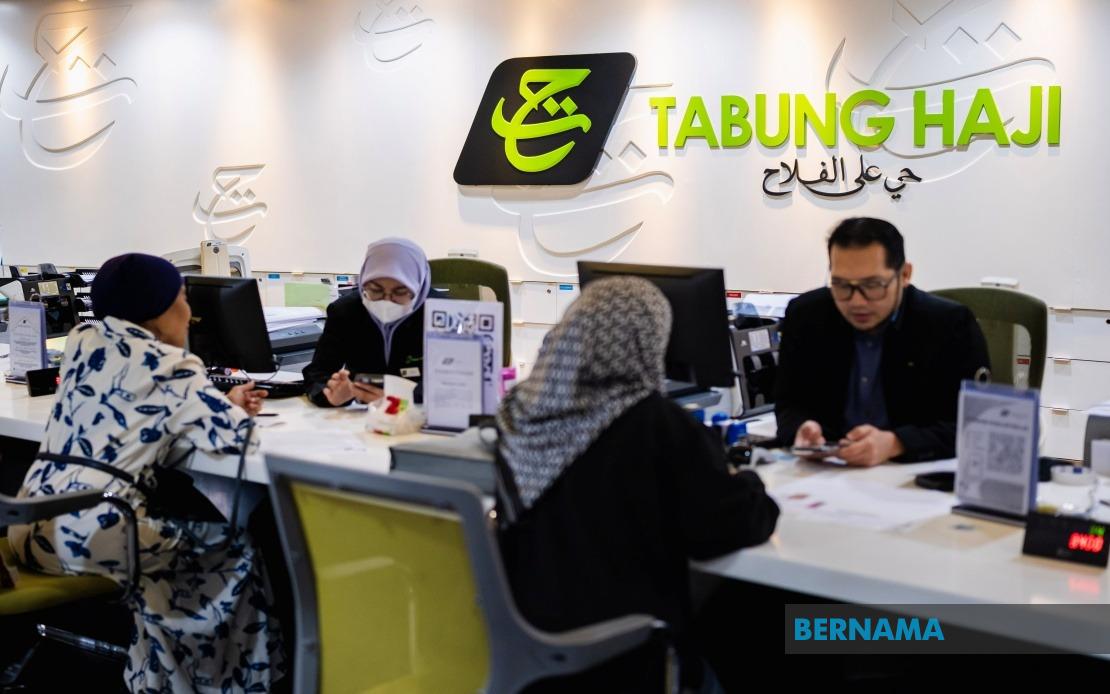
The path forward for Tabung Haji (TH) depends fundamentally on insulating the institution from political pressure and eliminating politicised appointments, according to analysts responding to the Royal Commission of Inquiry's findings on its management crisis. With more than three-quarters of RCI recommendations now in place, the consensus among Malaysian academics and governance experts is clear: unless political influence is decisively removed from TH's decision-making structures, depositor confidence and the institution's credibility with the Muslim community will remain fragile.
The crisis that engulfed Tabung Haji has exposed how deeply entrenched political interests became within an organisation tasked with the sacred responsibility of managing haj savings and facilitating one of Islam's five pillars. Analysts universally point to this intersection of politics and professional management as the root cause of governance failures that ultimately cost the institution and its members dearly. The lesson, they emphasise, extends beyond the immediate financial losses; it represents a fundamental breach of trust with Malaysia's Muslim population, who entrusted their pilgrimage funds to what was supposed to be an independent, professionally-managed entity.
Prof Dr Azmi Hassan, a fellow at the National Council of Professors and senior analyst at the Nusantara Academy for Strategic Research, articulated the core problem facing TH's recovery efforts. The institution has become so thoroughly enmeshed with political interests that virtually every significant decision—including the recent tabling of RCI findings in parliament—carries political overtones rather than being driven by institutional merit or depositor welfare. This systematic politicisation creates a credibility gap that transcends individual reforms or financial recoveries. Restoring genuine confidence, Hassan argued, requires a demonstrable shift toward professional leadership entirely divorced from political party affiliations, with competent individuals selected purely on merit and capability.
The broader governance challenge extends beyond TH itself, raising questions about institutional autonomy across Malaysia's state-linked enterprises. Dr Mohd Amim Othman, a senior lecturer at Universiti Putra Malaysia's Faculty of Human Ecology, pointed to instructive comparisons with the Employees Provident Fund and Permodalan Nasional Berhad, both of which have maintained greater independence from political manipulation. Malaysia possesses an abundance of qualified professionals capable of steering TH with expertise and integrity, he noted; the genuine constraint is political reluctance to relinquish control over an institution with significant resources and reach. The RCI recommendations addressing ministerial powers, board composition, and regulatory oversight provide a roadmap, but implementation requires genuine political will to cede influence.
The specific mechanics of how political interference damages investment decisions have become painfully apparent through TH's troubled portfolio. Dr Saizal Pinjaman, director of Universiti Malaysia Sabah's Centre for Economic and Policy Development, highlighted the Al-Rawda investment in Saudi Arabia as instructive. This venture, which became TH's largest single loss, proceeded despite incomplete due diligence processes—a failure that would likely never occur under arm's-length professional governance. When political considerations override risk assessment protocols and investment discipline, the inevitable consequence is capital destruction. Independent management boards must possess genuine authority to reject investments that fail rigorous scrutiny, regardless of political preferences or relationships.
Beyond eliminating political interference, TH faces the more nuanced challenge of rebuilding participation and deposits among the broader Muslim community, particularly younger Malaysians who represent crucial growth potential. The post-crisis environment demands proactive institutional reinvention rather than defensive holding patterns. Dr Mohd Amim suggested that TH requires fresh product offerings and enhanced accessibility to remain competitive with alternative savings and investment vehicles. The decline in contributions from existing members following the RCI revelations threatens the long-term sustainability of investment funds. Attracting younger generations will require demonstrating that TH management prioritises member interests above all other considerations, an assurance that only complete separation from political influence can credibly provide.
The transparency dimension of TH's recovery deserves particular emphasis, according to security and political analyst Dr Noor Nirwandy Mat Noordin of Universiti Teknologi MARA's Centre for Media and Information Warfare Studies. TH must actively reconstruct its identity as an institution representing Muslim civilisation, heritage, and collective pride—a positioning that becomes impossible if it appears to serve political masters rather than its depositing community. Transparency in management decisions, investment processes, and financial disclosures forms the foundation upon which trust rebuilds. Citizens need to understand not merely the outcomes of TH's decisions but the reasoning and governance processes underpinning them.
Noor Nirwandy also recommended that TH move beyond internal capability by engaging external expertise to evaluate competitive positioning, investment strategies, and member incentives. This approach acknowledges that isolated institutional reform, however well-intentioned, may prove insufficient in an evolving financial landscape. External advisors bring objectivity and specialised knowledge that can strengthen TH's competitive positioning while simultaneously signalling commitment to professional best practice rather than insider decision-making. The combination of internal governance reform and external expert engagement creates multiple accountability layers that reinforce institutional independence.
The timeline for implementing these reforms carries significance for both TH and the broader Malaysian political economy. Every month that TH remains entangled with political interests represents opportunity cost in terms of depositor confidence and competitive positioning against alternative institutions. The RCI has provided clear recommendations; parliament and the government now face a choice between genuine structural reform or incremental adjustments that preserve political influence while offering cosmetic improvements. The Muslim community's faith in TH's stewardship of haj savings represents far more than a financial metric; it reflects fundamental questions about institutional integrity and whether Malaysia's governance structures genuinely prioritise citizen welfare over political advantage.

