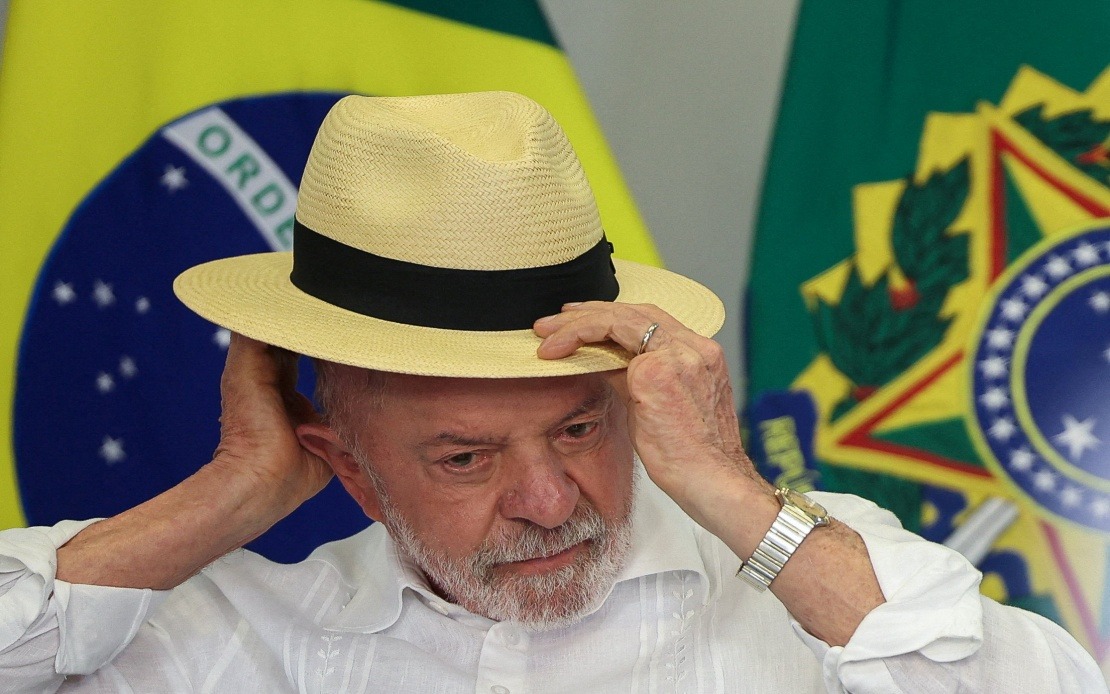
Brazilian President Luiz Inacio Lula da Silva maintains a razor-thin advantage over Senator Flavio Bolsonaro as the country races toward its October presidential election, fresh polling data suggests. A Quaest survey commissioned by media conglomerate Globo indicates the incumbent would secure 43 per cent of the vote in a runoff matchup, compared with 40 per cent for his principal right-wing challenger, translating to a margin so narrow that it sits within the survey's two-point margin of error.
The poll, conducted between August 10 and 13 among 2,004 respondents, represents a modest shift from earlier surveys. Just five days prior, Lula had commanded a slightly larger spread, leading 44 per cent to 39 per cent in comparable polling. The apparent tightening of the race underscores how fluid the contest remains, despite the incumbent's incumbency advantages and Bolsonaro family's controversial recent history in Brazilian politics.
Should no candidate secure an outright majority of valid votes in the first round—a likely scenario given Brazil's fragmented political landscape—the constitution mandates a runoff between the top two finishers. In the initial-round scenario measured by the same poll, Lula emerges with 38 per cent support, substantially outpacing Bolsonaro's 31 per cent. Other candidates fragment the remainder: Renan Santos and Ronaldo Caiado each claim four per cent, whilst Romeu Zema trails with two per cent. This first-round distribution suggests the incumbent would enter any subsequent runoff battle from a position of relative strength, though far from dominant.
Flavio Bolsonaro has effectively inherited his father's mantle as the standard-bearer for Brazil's conservative movement following former President Jair Bolsonaro's disqualification from electoral participation. The elder Bolsonaro's removal from contention stems from multiple legal entanglements: Brazil's superior electoral tribunal deemed him ineligible for abusing executive authority, whilst separate proceedings resulted in conviction related to an alleged conspiracy to reverse his 2022 election defeat to Lula. This sequence of legal events has fundamentally reshaped the right-wing opposition's leadership structure and raised questions about whether Flavio possesses the same political magnetism his father commanded among conservative voters.
Lula formally commenced his re-election campaign on August 2 at his Workers' Party's convention in São Paulo, deliberately positioning the contest within a sovereignty framework. He emphasised protection of Brazil's strategic mineral endowments from foreign acquisition, implicitly directing criticism toward both established powers and emerging competitors. His rhetoric explicitly warned that China, the United States, and France should not expect unfettered access to Brazil's rare earth elements and critical minerals without demonstrating respect for Brazilian sovereignty. The emphasis on national independence constitutes a deliberate campaign strategy, signalling to Brazilian voters that he intends to defend their country's interests against external pressure during a period of intensifying great-power competition for resource control.
The incumbent's messaging pointedly addresses perceived threats emanating from the Trump administration, which maintains established relationships with the Bolsonaro family. In June, Lula issued a public admonition to Trump, explicitly requesting non-interference in Brazil's electoral processes and invoking a principle of reciprocal non-involvement. "Don't meddle in the Brazilian elections, because the Brazilian elections are a Brazilian problem, just as American elections are their business, not mine," he declared, establishing clear boundaries whilst maintaining diplomatic restraint. This rhetorical positioning serves multiple strategic objectives: it shields Lula from accusations of weakness toward powerful external actors, energises nationalist sentiment among his base, and potentially complicates any Trump-backed strategy to mobilise conservative Brazilian voters through international diplomatic channels.
For Malaysian and Southeast Asian observers, Brazil's electoral dynamics carry broader implications regarding the international order's trajectory. The contest fundamentally reflects tensions between nationalist-oriented leadership and more internationally-aligned alternatives, a dichotomy increasingly visible across the Global South. Brazil's approach to controlling its mineral wealth and resisting great-power pressure on resource extraction directly parallels similar debates unfolding across Southeast Asia regarding Chinese investment, American strategic competition, and regional countries' capacity to maintain genuine policy autonomy. The election outcome will substantially influence whether BRICS—the influential coalition of Brazil, Russia, India, China, and South Africa—maintains its current direction or shifts toward greater accommodation with Western powers.
Polling conducted two months before the October election indicates the race remains genuinely competitive despite Lula's narrow statistical advantage. The movement within the margin of error between successive surveys suggests considerable volatility in voter preferences, potentially driven by campaign messaging, economic conditions, or emerging scandals. Neither candidate appears poised for the overwhelming mandate that typically emerges from decisive electoral victories. Instead, both face the prospect of governing with constrained popular legitimacy, potentially complicating their ability to implement ambitious policy agendas or command consensus on critical issues including economic reform, inflation management, and environmental stewardship of the Amazon rainforest.
The political configuration underpinning this contest differs markedly from 2022, when Lula defeated Bolsonaro amid heightened polarisation. Flavio Bolsonaro, though commanding significant conservative support, has not achieved identical levels of voter enthusiasm as his father among some demographic segments. Whether the senator can consolidate right-wing voters who might feel less enthusiastic about his candidacy compared to the former president remains an open question that polling may struggle to capture fully. Similarly, Lula's capacity to expand his coalition beyond his core support base will prove crucial to securing a clear victory that grants sufficient political capital for governing.
With approximately eight weeks separating the polling from election day, campaign dynamics will inevitably shift. Economic developments, unexpected political incidents, or campaign-trail missteps could substantially alter the electoral landscape. The current statistical tie in the runoff scenario suggests the election remains genuinely undecided, defying any narrative of inevitability surrounding either candidate. For Brazilian democracy and regional stability, this competitive environment provides voters with meaningful choice, though it simultaneously guarantees a closely contested, potentially contentious conclusion.

