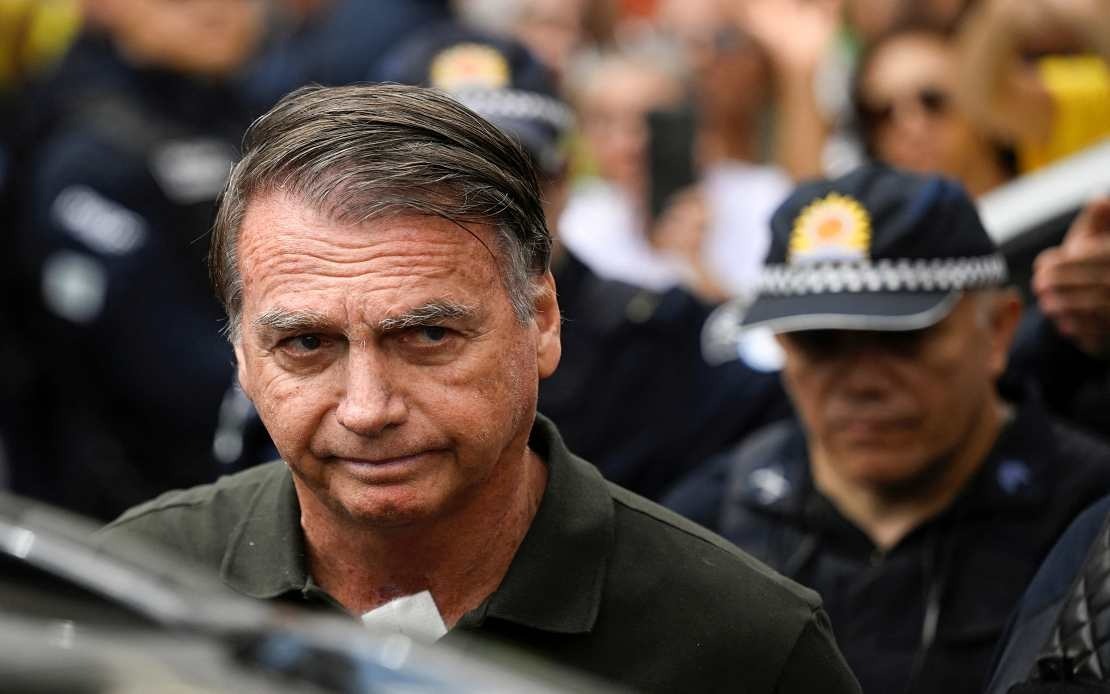
A Brazilian judicial decision this week has thwarted plans for Argentine President Javier Milei to visit Jair Bolsonaro at the former Brazilian leader's Brasília residence, marking the latest twist in a saga dominated by legal constraints and regional political manoeuvring. Judge Alexandre de Moraes rejected the request for the meeting, which had been scheduled for July 25, by citing house arrest conditions that were themselves reinforced just a day prior. The ruling underscores the increasingly restrictive environment surrounding Bolsonaro's detention and the courts' determination to prevent him from leveraging his influential network during a critical election cycle.
Bolsonaro, once Brazil's most powerful political figure, now navigates life under house arrest following a conviction on charges related to an alleged coup attempt that earned him a sentence exceeding 27 years. Rather than serve his term in prison, he has been permitted to remain at home on grounds of health concerns—an arrangement that nevertheless comes with mounting restrictions designed to isolate him from political activity. The former president's confinement has become a focal point for his supporters and allies across South America, many of whom view his situation as emblematic of perceived political persecution rather than lawful judicial process.
Milei's intended visit carried significant symbolic weight in the region's rightist political ecosystem. The Argentine leader has positioned himself as a champion of libertarian economics and cultural conservatism, stances that align him ideologically with Bolsonaro. Both men command substantial followings among Latin America's right-leaning constituencies and frequently champion anti-establishment narratives that resonate with their respective voter bases. Milei's trip to Brazil was explicitly framed as an opportunity to demonstrate solidarity with his Brazilian counterpart and, crucially, to lend visible support to Flávio Bolsonaro, the former president's son, who is pursuing his own presidential ambitions in the October election.
The timing of Judge Moraes' decision to tighten house arrest conditions reveals how Bolsonaro's legal predicament directly intersects with the upcoming presidential race. On Friday, the judge had implemented new restrictions that specifically prohibit Bolsonaro from hosting visits of a political or electoral character through the end of the election campaign in October. Additionally, Moraes forbade the dissemination of political statements by the former president through intermediaries—a provision that appears directly prompted by Bolsonaro's recent behaviour. The jurist dismissed Milei's proposed visit as legally irrelevant to the defence's arguments, categorising it as moot in light of the reinforced conditions.
The catalyst for the stricter measures centres on Bolsonaro's own apparent breach of his existing house arrest terms. The former president's son Flávio had published a handwritten letter on social media in which Jair Bolsonaro explicitly endorsed his son's presidential campaign. This act of public political expression, undertaken through a family member as an intermediary, violated the conditions prohibiting such activity—a violation that apparently prompted Moraes to close loopholes and prevent further infractions. The court determined that this letter constituted material breach of the house arrest arrangement and justified the imposition of tighter controls moving forward.
For Malaysian observers and Southeast Asian policymakers, this sequence of events illustrates broader tensions within Brazil's democratic and judicial systems. The relationship between the judiciary and political actors has grown increasingly fraught, with Bolsonaro's supporters contending that courts have overstepped constitutional boundaries in pursuit of partisan objectives. Conversely, supporters of the current government argue that such judicial interventions are necessary to preserve democratic integrity and prevent former leaders from leveraging their influence to undermine electoral processes. The international dimension—evidenced by Milei's interest in visiting—demonstrates how Brazilian internal politics increasingly engage regional actors and reflect broader ideological divisions within South America.
Flávio Bolsonaro's presidential campaign represents a significant continuation of his father's political legacy, particularly as incumbent President Luiz Inácio Lula da Silva prepares to seek re-election. Lula, who previously served as president before his own legal entanglements and subsequent return to power, faces a complex political landscape where his former nemesis's family remains electorally significant. The court's decision to prevent Milei's visit effectively constrains the elder Bolsonaro's capacity to organise political support for his son—a limitation that serves Lula's electoral interests by restricting the symbolic power of cross-border right-wing coalition-building.
The broader implications extend to questions about how democracies manage the legal and political consequences when former leaders face serious criminal charges. Bolsonaro's conviction on coup-related offences represents one of the most serious prosecutions of a former head of state in recent Latin American history. The house arrest arrangement itself, while unusual in severity, reflects an attempt to balance security and health considerations against the gravity of the charges. Yet each restriction imposed raises fresh questions about whether judicial authorities are appropriately calibrating their interventions or whether they risk politicising the legal process itself.
For Milei, the blocked visit presents a diplomatic and political setback, though hardly a definitive one. The Argentine president maintains multiple channels through which to coordinate with Brazilian allies, and a cancelled visit, while symbolically significant, does not fundamentally alter the underlying ideological alignment between the two leaders. Nevertheless, the incident demonstrates that regional actors increasingly navigate not merely the formal positions of elected governments but also the operational constraints imposed by their judiciaries. The episode foreshadows the complex diplomatic and institutional landscape that will define South American politics through the October election and beyond.
As Brazil's electoral calendar advances toward the crucial presidential contest in October, the courts' role in shaping the permissible political environment becomes ever more pronounced. Bolsonaro's inability to receive visits of an explicitly political character limits his sphere of influence during this critical period, potentially advantaging incumbent forces while simultaneously galvanising his supporters' perceptions of judicial overreach. For regional observers, the episode exemplifies the intricate interplay between legal proceedings, electoral politics, and international relations that characterises contemporary South American governance.

