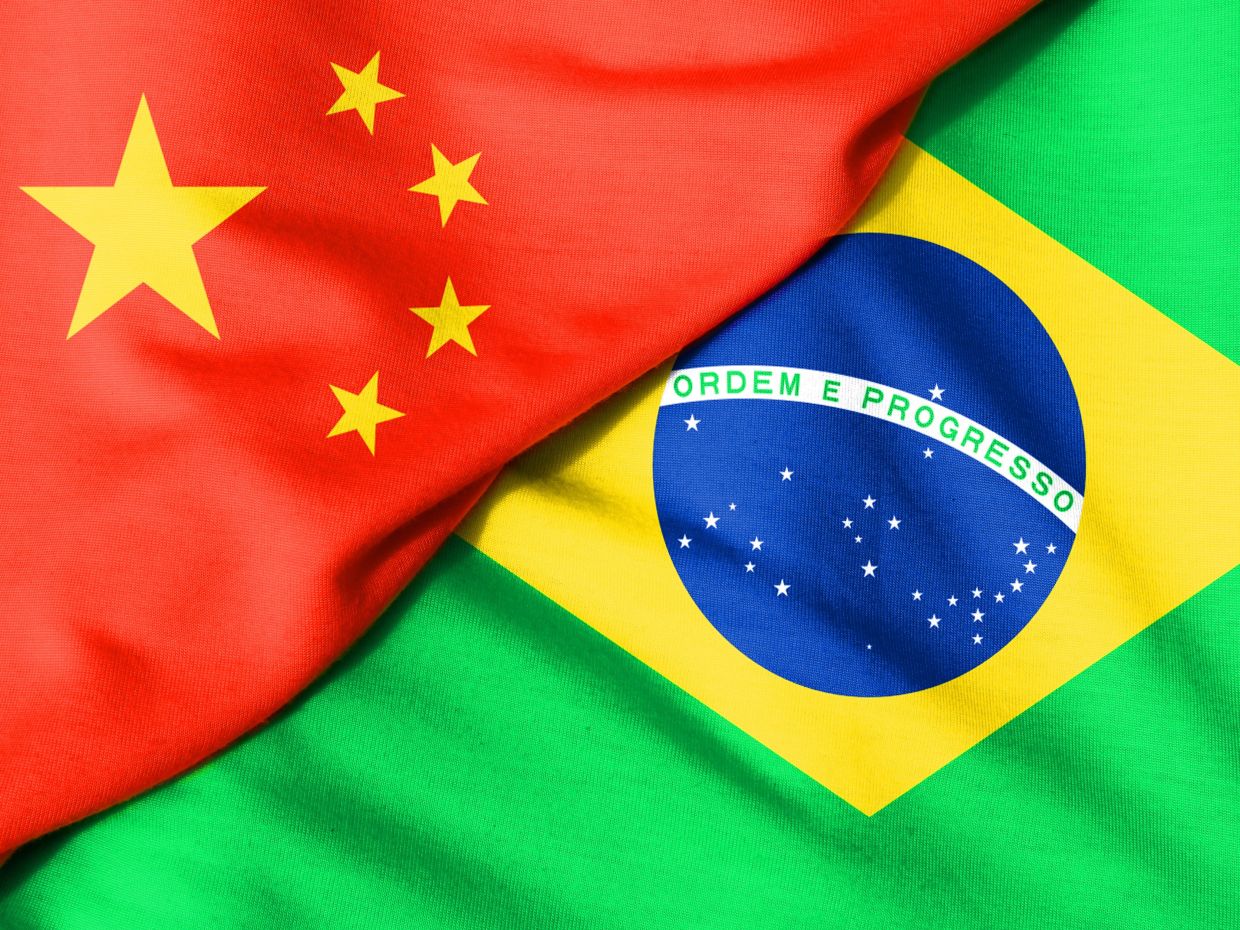
Brazil is preparing to establish itself as a routine borrower in the Chinese yuan market, marking a significant shift in how the South American nation finances itself and facilitates corporate access to Asian capital. According to Francisco Segundo, deputy secretary for public debt at Brazil's National Treasury, the inaugural issuance should occur within the next few months, though the amount remains modest relative to the country's overall external borrowing needs. With foreign debt representing just four per cent of the federal government's total debt stock, this debut is as much a strategic positioning move as it is a financing requirement.
The real objective behind Brazil's yuan ambitions transcends the immediate capital raised. Segundo articulated the treasury's underlying calculus with unusual clarity: the initiative is fundamentally about market access and credibility building rather than tapping a large new funding source. By establishing a regular presence in yuan markets, Brazil hopes to construct what traders call a sovereign curve—a pricing reference that reflects the government's creditworthiness across different maturity dates. This benchmark becomes invaluable for Brazilian companies attempting to borrow directly in Chinese capital markets, a pathway that currently carries significantly lower costs than traditional dollar financing.
The financial mathematics are compelling. Data compiled by Bloomberg reveals that foreign issuers accessing yuan markets this year have paid average coupons of just 1.97 per cent, compared to borrowing costs of 4.5 to 5.5 per cent in dollar-denominated debt for the same borrowers. However, these deals typically operate on a smaller scale than their dollar equivalents—roughly one-fifth of the volume—and shorter tenors, generally ranging from three to five years. For Brazilian corporations seeking cheaper, longer-term financing, the existence of a government benchmark becomes crucial for investor confidence.
Brazil's formal entry into this market gained momentum in June when Finance Minister Dario Durigan delivered a letter of intent to Pan Gongsheng, governor of the People's Bank of China, who signalled institutional readiness to facilitate the issuance. Confusion has surrounded the intended size of the debut, with Durigan initially suggesting up to five billion yuan (US$735 million) while Treasury Secretary Daniel Leal subsequently indicated a target closer to ten billion yuan (US$1.48 billion). The discrepancy matters because it determines whether Brazil will surpass Indonesia's July benchmark of seven billion yuan, which currently stands as the largest sovereign yuan debut on record.
Secondo confirmed that the application process has been approved and only procedural hurdles remain, including engagement with a Chinese credit rating agency that has never previously assessed Brazil's creditworthiness. What distinguishes Brazil's approach is its explicit commitment to repetition. Treasury officials have rejected the episodic borrowing model that characterised previous external financing campaigns, which often resulted in extended absences from particular markets. Segundo stressed that success requires consistent annual participation: "In every market where we conclude there is success and there is potential, we have to be active. We have to go once, we have to go twice, three times. We have to be there every year."
This philosophy emerged directly from Brazil's European experience, where prolonged absence from the eurozone debt market created distortions in the sovereign curve. The treasury concluded that irregular access actually undermines the purpose of establishing reliable pricing benchmarks. By committing to regular issuances regardless of immediate financing requirements, Brazil aims to prevent the scarcity dynamics that previously disrupted its overseas borrowing patterns and made it harder for Brazilian enterprises to reference stable pricing in foreign markets.
The mechanism through which a sovereign curve stimulates corporate activity is backed by market evidence. Alexandre Lowenkron, chief executive of Bocom BBM (Brazil's Bank of Communications subsidiary), noted that the relationship is empirically observable: more than half of corporate issuances in a given currency window typically materialize shortly after a sovereign government accesses that same market. The sovereign issuance essentially validates the market, reassures investors about political commitment, and provides the technical infrastructure necessary for corporations to follow.
Suzano, a Brazilian pulp and paper company, has become an important proof of concept for this thesis. As the first non-financial, non-government company in the Americas to issue panda bonds—the colloquial term for yuan-denominated debt—Suzano has raised 2.6 billion yuan across three transactions beginning in 2024. Its debut green bond priced at 2.8 per cent, delivering more than fifty basis points of savings relative to Suzano's dollar borrowing costs after hedging expenses. Emilio Yeh, Suzano's chief financial officer for Asia operations, reported that Chinese investors repeatedly questioned the company about Brazil's sovereign issuance timeline during transaction discussions in Shanghai, treating it as a critical validation signal for the entire market.
A structural constraint currently limits Brazil's competitive position in yuan markets: all three major credit rating agencies classify Brazil as sub-investment grade, below the threshold that obligates many large institutional funds to respect. Consequently, while Brazilian companies can sometimes command higher individual ratings than the government—Vale sits two notches above Brazil's sovereign rating, Suzano one notch above—they cannot overcome the sovereign ceiling that affects institutional investor appetite. Petrobras, the state oil company, remains trapped at Brazil's own sovereign rating level, despite Fitch's assessment that the company independently qualifies as investment grade.
During discussions with Chinese investors, scale and credit quality matter, but so does what Lowenkron termed "China flavour"—operational or commercial connections to the Chinese economy that justify the currency choice. Brazilian corporations attempting yuan issuances without such linkages face steeper investor scepticism. Finance Minister Durigan articulated the reciprocal Brazilian interest in his June comments: companies had explicitly requested government yuan borrowing to make their own issuances viable and to reduce domestic currency volatility by building yuan liquidity pools within Brazil itself.
The political dimension underlying this initiative reflects Brazil's broader recalibration of its external relationships. Rather than viewing yuan borrowing as alternative financing, Brazilian policymakers increasingly understand it as essential infrastructure for corporate competitiveness in Asia-Pacific markets. Suzano's two-year isolation as Latin America's sole corporate panda bond issuer underscores how dependent companies are on government signalling about market commitment. By establishing regular sovereign presence, Brazil essentially gives corporate treasurers permission to explore Chinese capital markets as routine rather than exceptional venues for capital raising.

