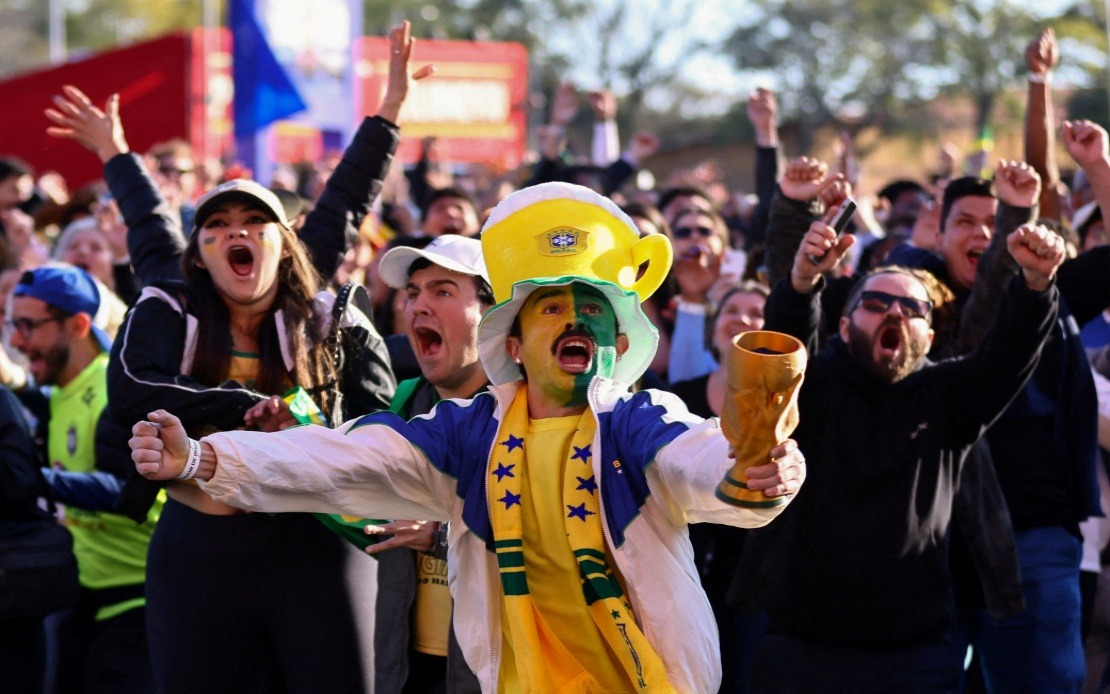
Brazil's passage to the Round of 16 of the 2026 FIFA World Cup came courtesy of a hard-fought 2-1 triumph over Japan at Houston Stadium, capping a match that revealed the Selecao's capacity to overcome defensive discipline and tournament pressure when it matters most. The contest, played in the preliminary knockout stage, illustrated the gulf between established World Cup powerhouses and emerging challengers still seeking their breakthrough moment on football's grandest stage.
Japan's tactical setup in the opening period demonstrated why defensive organisation remains a legitimate pathway for nations without Brazil's array of attacking talent. Deployed in a 5-4-1 formation, the Samurai Blue suffocated the Brazilian midfield and frustrated their opponents' attempts to build attacking momentum through wide channels. Brazil's dominance in possession proved meaningless against a structure that prioritised compactness and discipline, suggesting that Carlo Ancelotti's tactical approach required significant adjustment to break through such resolute defending.
The match's pivotal moment arrived unexpectedly in the 29th minute when Kaishu Sano seized upon a careless Danilo mispass deep in Brazil's territory. Rather than simply recovering possession, Sano launched a counterattack that demonstrated Japan's willingness to exploit spaces in transition. His composed finish from outside the penalty area, struck low and beyond goalkeeper Alisson, represented Japan's first genuine moment of World Cup knockout-stage joy, a milestone their football association has pursued across multiple tournament campaigns.
Japan's halftime position represented a watershed moment for Asian football's most consistent World Cup performers. Entering the interval with a one-goal advantage against a five-time world champion carried symbolic weight extending far beyond the immediate stakes of group-stage progression. For a nation that has historically struggled to translate regular appearance at world tournaments into tangible knockout success, the possibility of claiming their first World Cup knockout victory hung tantalizingly within reach during those 15 minutes of respite.
Brazil's transformation after the interval reflected both tactical urgency and the psychological weight of trailing a team considered inferior in global hierarchy. The Selecao abandoned their patient build-play in favour of more direct attacking play, particularly through the flanks where their superior athleticism could overwhelm Japan's defensive structure. This aggressive repositioning, typical of teams responding to unexpected setbacks, created the numerical advantages required to penetrate Japan's defensive shape through aerial bombardment and cross-based attacking sequences.
Equality arrived in the 56th minute through Casemiro's opportunistic header at the back post, converting Gabriel Magalhaes' precisely delivered cross past goalkeeper Zion Suzuki. This restoration of parity fundamentally shifted the match's psychological complexion, transforming Japan's defensive achievement into a liability as they faced mounting pressure without the psychological benefit of leading against a superior opponent. Brazilian supporters in the stadium, recognising their team's typical pattern of late-match dominance, sensed an inevitable outcome approaching.
The concluding moments delivered the heartbreak that Japanese football knows all too intimately on this stage. Bruno Guimaraes' driving run towards the penalty area in the 90+5th minute created the situation from which Gabriel Martinelli finished clinically despite Suzuki's desperate hand reaching the ball. This final blow, delivered in injury time when Japan's depleted defensive resources were stretched beyond capacity, encapsulated the cruel mathematics of modern tournament football where margins separate triumph from elimination.
Brazil's advancement carries them toward a Round of 16 fixture against either Norway or Ivory Coast, opponents they will confront with the psychological momentum generated by overcoming a structured defensive challenge. For Japan, elimination ends another campaign without the knockout breakthrough that would validate their consistent World Cup participation and signal a transition toward genuine contention rather than respectable participation.
The encounter carries broader significance for Southeast Asian and Asian football observers assessing whether defensive solidity and tactical discipline can genuinely level the playing field against traditional powerhouses, or whether individual quality and experience ultimately determine outcomes at the sport's highest level. Japan's performance demonstrated that organisation and discipline remain prerequisites for success, yet proved insufficient without complementary offensive capacity capable of converting limited opportunities into tournament advancement. For Malaysian football and the broader regional context, the lesson remains that sustained investment in systematic development across all tactical dimensions remains essential for future World Cup ambitions.

