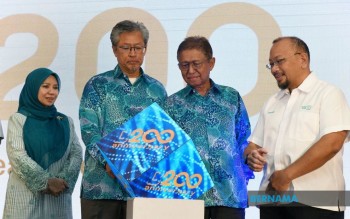
Boustead Holdings Bhd has unveiled an ambitious growth strategy that would see the century-old Malaysian conglomerate nearly triple its current revenue to RM30 billion over the next five years, marking a significant shift from its roots as an agricultural trading house towards defence manufacturing and urban development. The strategic repositioning was announced during the soft launch of a bicentennial celebration event in George Town, signalling that the company's transformation reflects both shareholder expectations and government directives aligned with Malaysia's emerging defence industry ambitions.
The evolution from a company that once specialised in coconut trading and warehouse operations to a defence-focused conglomerate represents one of the most dramatic corporate transformations in Malaysian business history. This pivot aligns closely with the National Defence Industry Policy unveiled by the government in January, which seeks to build a robust local capability in military technology and equipment manufacturing. For Boustead, the shift positions it as a critical pillar in executing this policy, leveraging its historical operational experience and government connections to lead initiatives that many private companies lack the capacity or mandate to undertake.
According to group managing director Datuk Dr Ahmad Sabirin Arshad, the company intends to establish a substantial local defence industry ecosystem by nurturing approximately 400 vendors and suppliers who will support defence manufacturing operations. This vendor development strategy represents a deliberate effort to create a complete supply chain rather than relying on isolated projects, potentially generating sustained employment and technological advancement across Malaysia's industrial base. The focus on building this ecosystem suggests that Boustead sees itself as an anchor institution capable of attracting and coordinating private sector participation in what has traditionally been a government-dominated sector.
A cornerstone of Boustead's transformation centres on achieving at least 30 per cent local content in defence industry technology products by 2030. This target, while ambitious, reflects the government's desire to reduce reliance on foreign suppliers and build indigenous engineering expertise. Local content requirements not only protect national security interests by reducing supply chain vulnerabilities but also create opportunities for Malaysian technology companies to develop capabilities in advanced manufacturing, systems integration, and defence-grade electronics—sectors that could generate competitive advantages across civilian industries as well.
Four major defence projects have been assigned to Boustead under government direction, each representing distinct technological challenges and commercial opportunities. These include satellite development, which could position Malaysia as a regional aerospace player; rolling chassis production for armoured vehicles, building on existing automotive manufacturing expertise; light weapons manufacturing, establishing Malaysia's capacity for small arms production; and development of a Combat Management System, which requires sophisticated software and systems integration capabilities. The breadth of these mandates suggests that Boustead is being positioned as a national champion capable of managing complexity that smaller contractors cannot handle.
Beyond defence procurement, Boustead has been tasked with leading development of the Batu Cantonment strategic project in partnership with the Armed Forces Fund Board. This undertaking involves consolidating nine military camps within Kuala Lumpur and transforming the vacated land into a modern commercial and mixed-use development hub. For a city grappling with constrained land availability and the need for urban revitalisation, this project could generate significant property value while modernising military infrastructure—a rare convergence of defence modernisation and urban renewal objectives that promises returns across multiple stakeholder groups.
Chairman General (Retired) Tan Sri Abdul Aziz Zainal emphasised that the transformation must be executed with rigorous governance and accountability, particularly given that Boustead manages assets and contributions from Malaysian Armed Forces members and pensioners. This governance emphasis is not merely procedural; it reflects the complexity of balancing shareholder returns with fiduciary obligations to military contributors whose livelihoods depend on sustainable institutional performance. The credibility of defence industry initiatives depends heavily on transparent operations and demonstrable efficiency, factors that Malaysian taxpayers and international partners will scrutinise closely.
The acquisition of technology through strategic international partnerships forms a critical component of Boustead's defence strategy. Rather than attempting to develop all capabilities indigenously, the company plans to forge alliances with credible overseas defence contractors who can facilitate technology transfer while respecting Malaysian security requirements. This approach acknowledges that Malaysia cannot develop cutting-edge defence systems in isolation but can build local capabilities by absorbing foreign expertise and adapting it to national contexts. The selection of international partners will be crucial, as choices here will determine whether technology transfer creates genuine local mastery or remains superficial vendor relationships.
Boustead's continued investment in tourism and insurance subsidiaries indicates that the company views defence transformation as complementary to, rather than exclusive of, its established revenue streams. Tourism assets and insurance operations provide stable cash flows and diversification that can subsidise high-risk, capital-intensive defence ventures during their development phases. This balanced portfolio approach differs from pure-play defence contractors and allows Boustead to weather industry cycles while maintaining the financial resources necessary for sustained technology development and ecosystem building.
For Malaysian policymakers, Boustead's transformation represents an institutional mechanism for implementing the defence industry policy without establishing entirely new government bureaucracies. By leveraging a profitable, established company with government connections and operational expertise, authorities can accelerate defence capability development while maintaining private sector discipline and efficiency standards. However, success depends critically on clear performance metrics, transparent allocation of government contracts, and realistic timelines that acknowledge the complexity of establishing new industrial sectors.
The regional implications of Boustead's defence ambitions should not be overlooked. A Malaysian defence industry producing indigenous satellites, armoured vehicles, and weapons systems would alter regional procurement dynamics and potentially position Malaysia as a regional supplier of defence technology. Other Southeast Asian nations facing similar modernisation imperatives might look to Malaysian solutions, creating export opportunities that extend beyond domestic procurement. This potential positions Boustead not merely as a national champion but as a foundation for Malaysia's emergence as a defence technology exporter within Asia.
The ambitious RM30 billion revenue target, while substantial, appears calibrated to anticipated defence spending increases and the commercial value of property development projects like Batu Cantonment. Achieving this target will require disciplined execution across multiple unrelated business domains, sustained government support through procurement policies favouring local suppliers, and technological breakthroughs that prove Malaysian systems competitive with international alternatives. Whether Boustead can deliver on these fronts will determine not only the company's financial success but also the viability of Malaysia's broader ambitions to establish a credible domestic defence industrial base.

